
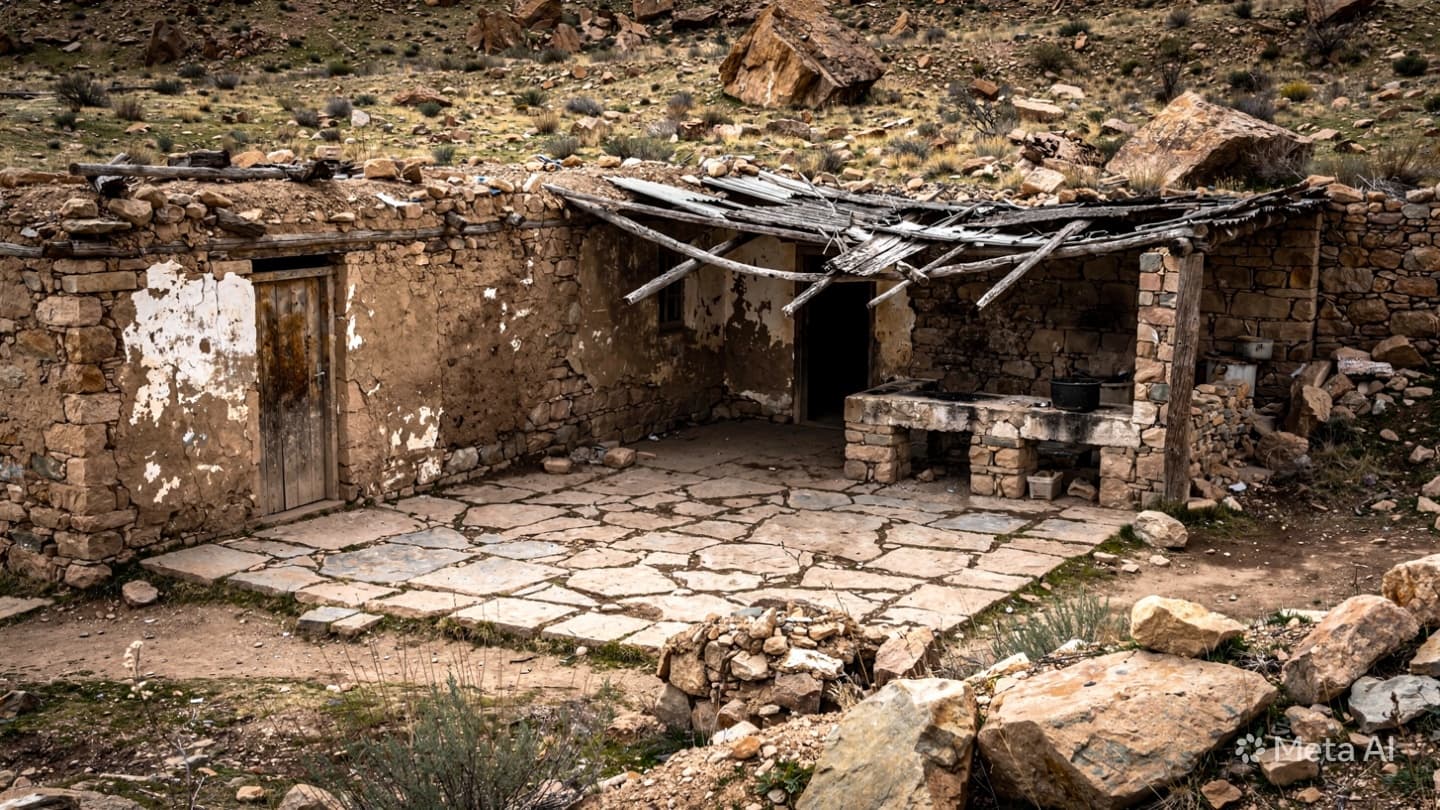
There is an eerie, singular geometry to the way a landscape changes when the ground itself decides to move. In the Xinjiang region, where the horizon is dominated by the imposing mass of the Tian Shan, a 7.1 magnitude earthquake arrived in the pre-dawn hours of June 29, 2026, to rewrite the local topography. This was not a slow, geological erosion, but a sudden, violent reordering of the physical world that left forty-seven homes in a state of final, shattered collapse.
The morning arrived with the jarring sound of falling stone and the sudden, frantic motion of people seeking safety in the darkness. In the rural reaches of Wushi, the architecture of daily life—the modest dwellings, the walled courtyards, the quiet rooms—was undone in a matter of seconds. For the six individuals who sustained injuries, the night became a long, harrowing ordeal of survival, a visceral experience of the instability that lies beneath even the most solid, mountain-anchored foundations.
The scale of such an event is often measured in reports and casualty lists, but its true impact is felt in the immediate, tactile experience of the survivors. To walk through the rubble of a home is to confront the sudden, absolute loss of personal space. The items salvaged from the wreckage—a book, a piece of clothing, a remnant of a kitchen—serve as small, poignant reminders of the domestic routine that was interrupted, and perhaps permanently altered, by the movement of the earth’s crust.
As the sun began to illuminate the mountain passes, the collective response of the region began to take shape. It was a movement of professionals—medical teams, rescue units, and civil authorities—who arrived to impose a sense of order on the disarray. They worked in the cold, thin air of the high altitude, their voices and the sounds of their equipment the only things breaking the silence of the mountainous landscape that had, just hours earlier, unleashed such significant force.
The regional authorities, acting with the momentum of a well-rehearsed emergency plan, quickly prioritized the stabilization of the area. It is a strange, necessary duality: the brutal, uncaring power of a seismic event met with the methodical, deeply human desire to mend what has been broken. The evacuation of thousands into temporary shelters, the careful monitoring of aftershocks, and the assessment of structural integrity all speak to a commitment to preserve the community in the face of nature’s volatility.
There is a reflective, almost meditative quality to the process of recovery in a landscape as vast and indifferent as this. The mountains do not care for the structures we build, yet they remain the setting for everything we do. The residents, in their resilience, seem to understand this fundamental truth, moving with a quiet, persistent energy that refuses to be defined solely by the disaster. They gather, they build, and they look toward the horizon, waiting for the ground to settle into its next, uncertain period of quiet.
In the aftermath, the news is a matter of numbers—forty-seven houses lost, six injured—but these figures are mere anchors for a much larger, more human narrative. The story of this event is one of transition, from the sudden, terrifying shock of the tremor to the steady, calm labor of the rescue. It is the story of a region that continues to exist in a delicate balance with the land, aware that the earth is not a static stage, but a living, breathing participant in our lives.
As the day progressed, the initial urgency faded into the deeper, quieter work of long-term assessment. The roads remained clear, the services were slowly restored, and the community began to orient itself toward the next phase of life in the shadow of the Tian Shan. The earthquake was a singular, punctuation mark in the timeline of the region, a reminder of the fragility of our structures and the enduring, if shifting, nature of the world we inhabit.
Note: This article was published on BanxChange.com and is powered by the BXE Token on the XRP Ledger. For the latest articles and news, please visit BanxChange.com