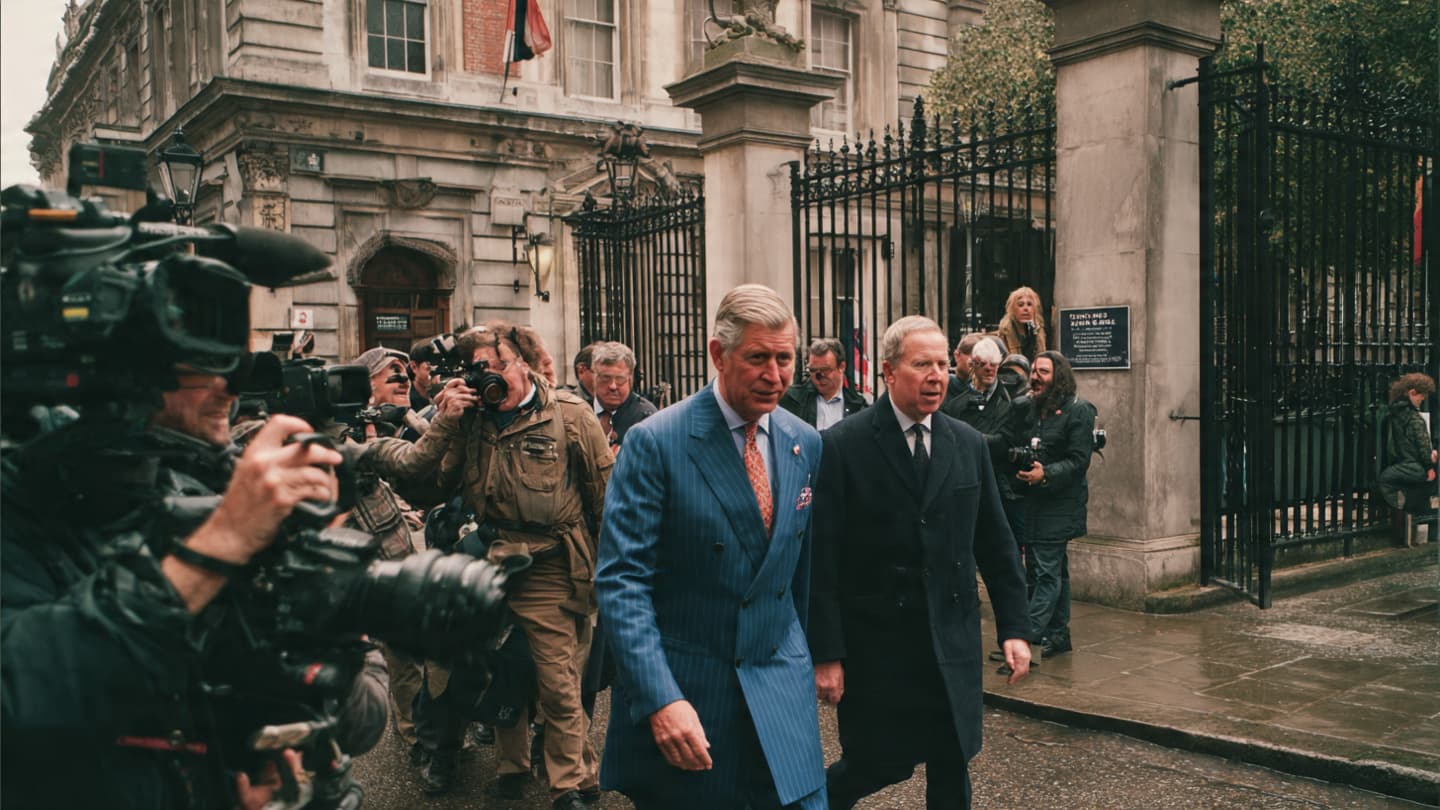
In Britain, power has often moved not only through elections or official appointments, but through quieter channels — old friendships, inherited access, familiar surnames, and institutions that continue operating with remarkable continuity beneath changing headlines. Titles may fade, reputations may fracture, and public roles may disappear, yet influence itself rarely vanishes cleanly. It lingers in corridors, introductions, and the enduring memory of establishment networks built over generations.
That lingering influence has resurfaced in public debate following questions surrounding how Prince Andrew — once stripped of most formal royal duties after years of scandal and scrutiny — reportedly became connected to an envoy-style diplomatic role despite his withdrawal from frontline royal life. The issue has reignited wider conversations in Britain about accountability, privilege, and the enduring reach of elite relationships within public institutions.
Prince Andrew, the Duke of York, largely retreated from public duties following widespread criticism over his association with convicted sex offender Jeffrey Epstein and the fallout from his controversial 2019 BBC interview. In 2022, Queen Elizabeth II removed his military affiliations and royal patronages, while Buckingham Palace announced he would no longer use the style “His Royal Highness” in official capacities.
For many observers, those developments appeared to mark a decisive institutional distancing between the monarchy and one of its most controversial senior figures. Yet reports suggesting Andrew later became involved in diplomatic or envoy-related activities have raised questions about how unofficial influence continues functioning even after formal status is reduced.
Critics argue the situation reflects a broader characteristic of Britain’s establishment culture, where personal networks and elite familiarity can sometimes preserve access long after public credibility has weakened. Supporters, however, contend that former royals and senior public figures often retain informal international relationships valuable in business, diplomacy, and charitable initiatives even outside official government structures.
The ambiguity surrounding the role itself has fueled much of the debate. Reports indicate the position was not necessarily part of formal state diplomacy in the traditional governmental sense, but rather connected to business outreach, relationship-building, or unofficial representation linked to international interests. That distinction matters legally and constitutionally, though it has done little to quiet public criticism.
At the center of the controversy lies a deeper British tension between formal accountability and informal influence. Britain’s constitutional culture has long depended heavily on convention, discretion, and unwritten understandings — systems critics increasingly argue can blur the boundaries between private privilege and public responsibility.
Prince Andrew’s case has therefore become symbolic beyond the individual himself. To some, it represents evidence that elite systems remain capable of quietly rehabilitating insiders regardless of reputational damage. To others, it reflects the complicated reality that former public figures often continue operating through private channels even after official roles end.
The monarchy’s position in modern Britain further complicates those perceptions. Unlike elected institutions, royal influence often exists through symbolism, access, and soft diplomacy rather than direct political authority. Members of the royal family historically cultivated international relationships through trade missions, charitable patronages, and ceremonial engagements that blurred the lines between national branding and diplomacy.
Prince Andrew himself once played a highly visible role as the United Kingdom’s special representative for international trade and investment, a position he held for nearly a decade. During that period, he developed extensive contacts with foreign leaders, investors, and business figures across Europe, the Middle East, and Asia. Supporters of his earlier diplomatic work argued he possessed strong networking abilities and familiarity with international commerce. Critics, however, repeatedly raised concerns about transparency and associations surrounding those relationships.
The renewed scrutiny arrives during a period when Britain’s institutions already face broader questions about privilege, access, and accountability. Public trust toward political parties, media organizations, and even the monarchy itself has fluctuated significantly in recent years following multiple scandals involving public conduct and elite networks.
Observers also note that contemporary media culture leaves far less room for quiet rehabilitation than in earlier eras. Information circulates rapidly, public memory persists online indefinitely, and reputational controversies rarely disappear entirely from public discourse. In such an environment, even limited or unofficial roles can quickly become politically sensitive.
For Buckingham Palace, maintaining distance while preserving institutional stability remains a delicate balancing act. King Charles III has sought to modernize aspects of the monarchy while also protecting continuity during a period of generational transition. Prince Andrew’s lingering public presence therefore continues presenting challenges not only for royal image management, but also for wider debates about how inherited influence functions in a democratic society.
Meanwhile, public reaction to the reports has revealed an enduring skepticism toward elite rehabilitation. Many critics argue that ordinary citizens facing comparable scandals would not retain similar access to influential circles. Others caution against conflating unofficial networking with formal state endorsement.
Still, the broader fascination surrounding the issue speaks to something deeply rooted within British political culture itself: the enduring suspicion that behind official structures lies another quieter system built on proximity, recognition, and social continuity.
As questions continue surrounding the exact nature of Prince Andrew’s envoy connections, neither the monarchy nor government officials appear eager to elevate the controversy further publicly. Yet the discussion has already reopened familiar national debates about privilege, accountability, and whether Britain’s old establishment networks truly loosen their grip when public scandal arrives — or simply retreat temporarily behind more discreet doors.
AI Image Disclaimer Illustrations were produced with AI and serve as conceptual depictions.
Sources The New York Times BBC Reuters The Guardian Financial Times The Telegraph Sky News The Times Politico Europe CNN
Published by Banx Network. This article is part of the Banx decentralized media programme, powered by the BXE token on the XRP Ledger.