
The sea air along Havana’s Malecón carries memory easily. Waves strike the seawall in rhythmic bursts while vintage cars move slowly beneath fading pastel facades, their engines echoing through streets where politics has never fully separated from daily life. In Havana, history lingers not only in monuments and speeches, but in conversations held beneath balconies, in murals fading under tropical rain, and in the enduring tension between the island and its powerful northern neighbor.
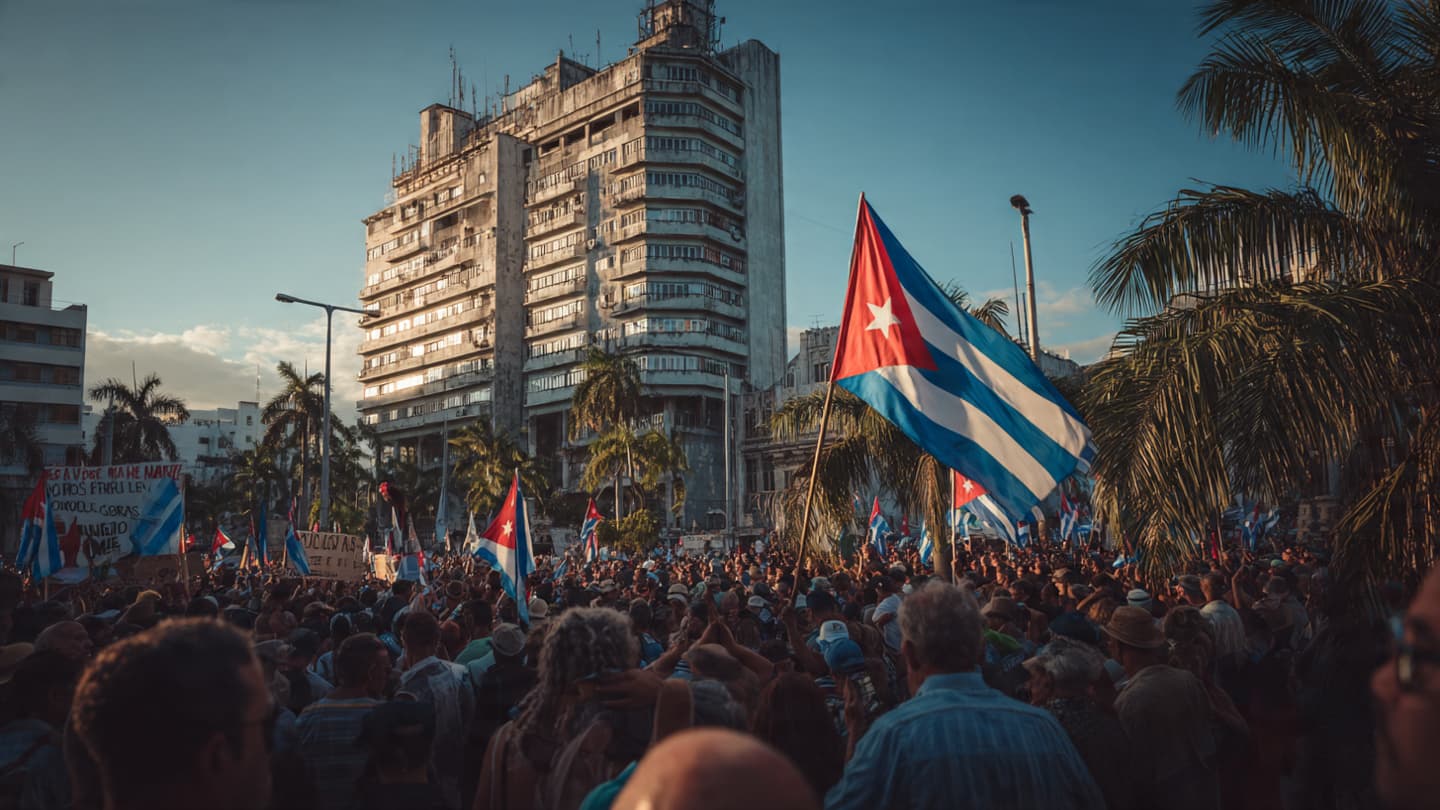
This week, those tensions returned visibly to the streets as thousands gathered outside the Embassy of the United States in Havana to protest the reported indictment of Raúl Castro in the United States. Demonstrators waved Cuban flags, carried portraits associated with the country’s revolutionary past, and chanted slogans condemning what officials described as foreign interference and political aggression.
The protests unfolded against the backdrop of a relationship shaped by decades of sanctions, ideological confrontation, diplomatic freezes, and occasional moments of cautious reconciliation. Even years after formally stepping away from Cuba’s presidency, Raúl Castro remains a deeply symbolic figure within the country’s political identity — tied inseparably to the revolutionary movement led alongside his brother, Fidel Castro.
Details surrounding the indictment have intensified already fragile relations between Cuba and the United States, with Cuban authorities framing the legal action as politically motivated. State media and government officials have portrayed the move as part of a longer historical pattern of pressure from Washington, while protesters gathering outside the embassy reflected both organized mobilization and genuine nationalist sentiment among segments of the population.
The demonstration itself carried the atmosphere of both political rally and historical ritual. Loudspeakers broadcast revolutionary songs familiar across generations. Elderly Cubans stood beside younger demonstrators born long after the Cold War’s most intense years, yet still shaped by its consequences. Banners moved through humid air beneath giant trees lining Havana’s diplomatic district while police maintained a visible but controlled presence nearby.
In Cuba, public demonstrations connected to sovereignty and foreign policy often draw deeply from collective historical memory. The island’s identity has long been intertwined with resistance narratives forged through revolution, economic isolation, and confrontation with the United States. Events such as this therefore resonate beyond immediate legal questions, becoming part of a broader emotional language surrounding independence and national dignity.
At the same time, the protests arrive during a period of economic hardship inside Cuba. Inflation, shortages of fuel and medicine, electricity outages, and migration pressures continue affecting daily life across the island. For many ordinary Cubans, geopolitics exists alongside immediate concerns about food supplies, employment, and the uncertain future facing younger generations increasingly drawn toward emigration.
Still, moments of diplomatic conflict can temporarily unify public attention around symbols larger than domestic frustrations. Outside the U.S. Embassy, the crowd’s energy reflected not only loyalty to historical leadership figures, but also a broader resistance to what many participants described as external attempts to shape Cuban political affairs through legal and economic pressure.
The indictment also revives memories of the long and uneasy history between Havana and Washington — from the Bay of Pigs invasion and Cold War espionage to decades of embargoes and shifting diplomatic openings. Even periods of rapprochement have often remained fragile, vulnerable to changes in leadership and ideology on either side of the Florida Straits.
For younger Cubans, however, the symbolism unfolds differently than for previous generations. Many have grown up in an era defined less by revolutionary triumph than by economic uncertainty and digital connectivity. Social media clips of the protests spread quickly online, blending official narratives with personal commentary, skepticism, and diaspora reactions from Cuban communities abroad.
Meanwhile, inside diplomatic compounds and government offices, officials continue navigating the practical consequences of another sharp deterioration in relations. Legal proceedings, sanctions discussions, and political statements move forward through formal channels while ordinary Cubans continue adapting quietly to the realities surrounding them.
As evening falls over Havana, protest crowds slowly thin beneath the glow of streetlights and the lingering sound of speeches echoing near the embassy walls. Along the Malecón, waves continue striking stone beneath the warm Caribbean wind, indifferent to borders and political systems alike.
Yet in Cuba, history rarely feels distant. It moves through public squares, through slogans painted decades earlier, through the memory of confrontation carried from one generation into the next. And now, with Raúl Castro once again placed at the center of international tension, the island finds itself revisiting familiar questions about sovereignty, resistance, and the long shadow cast by its relationship with the United States.
AI Image Disclaimer: The visuals accompanying this article were generated using AI tools and are intended as conceptual representations of the reported events.
Sources:
Reuters Associated Press BBC News Granma The New York Times
Note: This article was published on BanxChange.com and is powered by the BXE Token on the XRP Ledger. For the latest articles and news, please visit BanxChange.com