
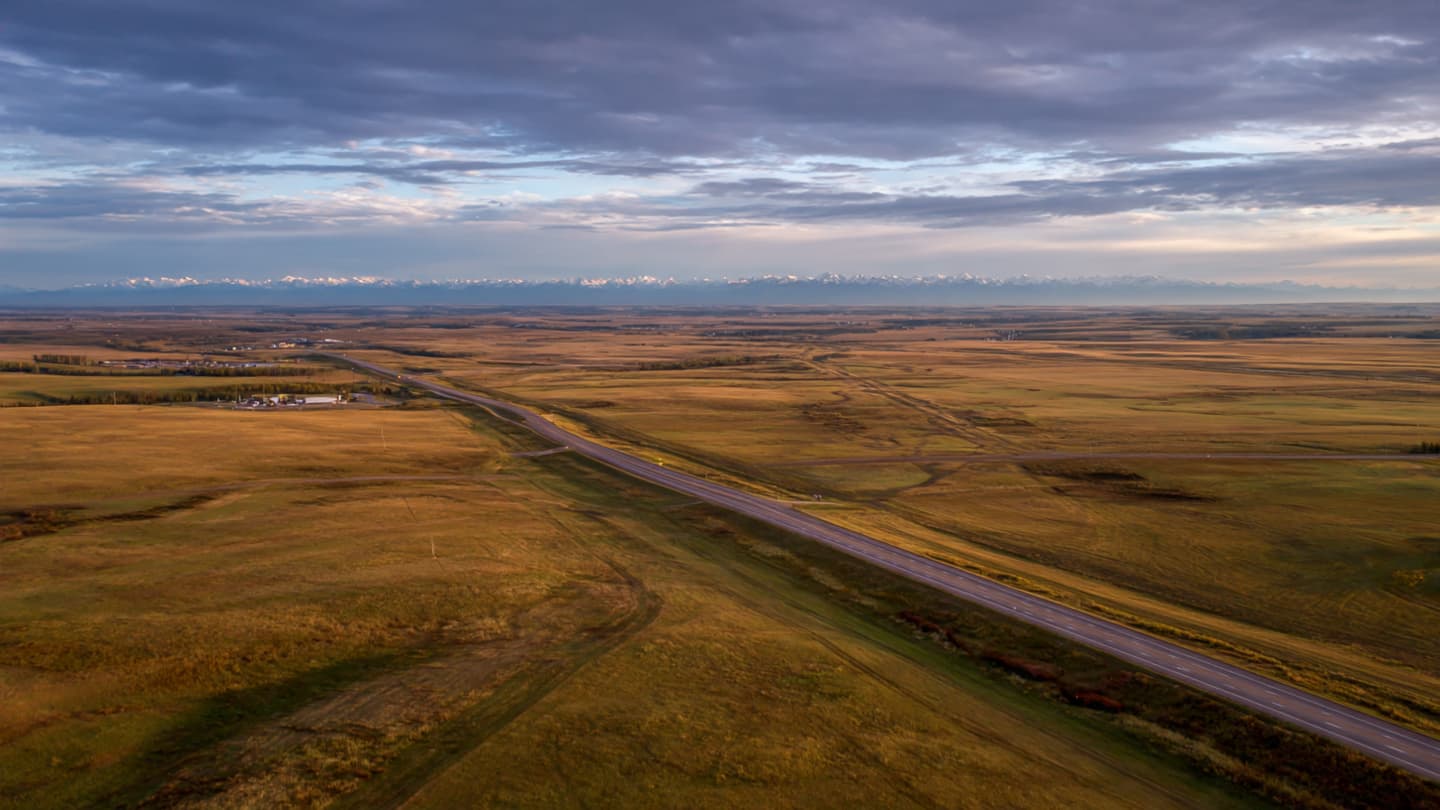
The late spring light over Alberta arrives slowly, stretching itself across ranchlands, highways, and oil towns where the horizon seems to widen with every mile. In the evenings, grain silos cast long shadows over quiet roads, while in Calgary and Edmonton the towers of glass catch the fading sun like mirrors turned toward the Rockies. It is a landscape built on distance and endurance, where conversations about identity often move as steadily as freight trains across the plains — low, persistent, impossible to ignore once they begin.
In recent days, those conversations have drifted again toward the old and difficult language of separation. Calls for Alberta independence, once lingering at the edges of political discourse, have returned with renewed visibility after Canada’s federal election and continuing tensions between Ottawa and western provincial leaders. Into this atmosphere stepped Canadian Prime Minister Mark Carney, who described Alberta as “essential” to the country, emphasizing the province’s economic and cultural importance as separatist advocates attempt to gather momentum.
The statement arrived not as a dramatic declaration, but as part of Canada’s familiar rhythm of negotiation between its vast regions. Confederation in Canada has always carried a quiet geographic tension — oceans separated by forests, prairie provinces linked to financial centers thousands of miles away, and resource economies often feeling distant from federal policymaking in Ottawa. Alberta, with its immense energy reserves and strong regional identity, has long occupied a particular place within that balance.
Across cafés, radio programs, and legislative halls in Edmonton and Calgary, frustration has simmered for years over environmental regulations, pipeline disputes, equalization payments, and what many residents perceive as eastern political dominance. Separatist organizers have attempted to channel those grievances into a broader movement for sovereignty, drawing comparisons — however imperfect — to earlier constitutional strains that once emerged in Quebec decades ago.
Yet Alberta’s relationship with Canada remains deeply interwoven. The province is one of the country’s strongest economic engines, driven largely by energy exports, agriculture, and finance. Its oil sands operations stretch across northern forests like industrial archipelagos, feeding pipelines that connect inland fields to distant coasts and global markets. The revenues generated there ripple across Canada’s broader economy, supporting jobs, trade, and public services far beyond provincial borders.
That interdependence was central to Carney’s remarks. Speaking amid growing public discussion about western alienation, he framed Alberta not as a peripheral region straining against the federation, but as a foundational part of Canada’s national fabric. His words appeared intended less as confrontation than reassurance — an attempt to steady the conversation before frustration hardens into something more permanent.
Still, separatist sentiment often grows not only from economics, but from emotion: the feeling of being unheard across large distances. In Alberta, where pickup trucks move beside pumpjacks and mountain foothills meet sprawling suburbs, political identity is tied closely to labor, land, and resource wealth. For some residents, federal climate policies and energy transition debates feel like signals that the rhythms of western life are being rewritten elsewhere.
The debate also arrives during a broader moment of uncertainty for many democracies, where regional identities have sharpened under economic pressure and cultural change. Across Europe and North America, questions once considered settled — borders, sovereignty, federation — have quietly re-emerged. Alberta’s separatist movement remains far from majority consensus, but its visibility reflects how quickly dissatisfaction can travel through modern political landscapes.
Outside government buildings, however, ordinary life continues with characteristic prairie steadiness. Freight trains still cross the plains at dusk. Oil workers rotate through long northern shifts. Farmers prepare fields beneath vast skies that seem to stretch beyond politics itself. Canada’s unity debate unfolds not only in legislatures and headlines, but in these quieter spaces where national identity is lived rather than argued.
For now, Alberta remains firmly within the Canadian federation, and polls continue to show broad support for remaining part of the country despite growing frustrations among some voters. Yet the conversation itself carries weight. It reveals a nation still negotiating the meaning of distance, prosperity, and representation across one of the world’s largest territories.
As summer approaches the western provinces, the roads between the Rockies and Ottawa remain long, both geographically and politically. And in the wide stillness of the prairie evening, Canada again finds itself listening carefully to voices rising from its western horizon — voices asking not only where power resides, but how a country as vast as this continues to hold itself together.
AI Image Disclaimer: Illustrations were generated using AI tools to visually interpret the subject matter and are not documentary photographs.
Sources:
Reuters CBC News The Globe and Mail CTV News The Canadian Press
Note: This article was published on BanxChange.com and is powered by the BXE Token on the XRP Ledger. For the latest articles and news, please visit BanxChange.com