The islands of Okinawa are accustomed to watching the Pacific closely. Weather can change rapidly across the surrounding waters, and storms often become part of the rhythm of life. But when a typhoon arrives with winds measured in the hundreds of kilometers per hour, that familiar relationship with the sea becomes something more immediate.
Typhoon Dolphin struck Japan's southern Okinawa prefecture on Saturday, bringing powerful winds and heavy weather to communities across the region. Reuters reported that six people were injured while power outages affected more than 50,000 buildings in Okinawa and Kagoshima.
The storm's winds reached up to 216 kph, creating dangerous conditions along roads, coastal areas, and exposed infrastructure. Such winds can quickly turn ordinary objects into hazards while placing additional pressure on electricity networks and transportation systems.
Air travel was among the first visible signs of disruption. ANA and Japan Airlines canceled flights as the storm moved across the region, leaving travelers waiting for conditions to improve. For island communities, interruptions to air and sea transportation can have a particularly strong effect because connections with the rest of the country are essential for people, supplies, and services.
The typhoon had already prompted extensive preparations before reaching Okinawa. Reuters reported that Japanese authorities had ordered evacuations for nearly 260,000 residents in Okinawa and Kagoshima as Dolphin approached. More than 500 flights were canceled, while Toyota temporarily suspended operations at nine factories.
Heavy rain posed another threat. The Japan Meteorological Agency warned of the possibility of structural damage and flooding, with a developing linear rain band capable of producing concentrated rainfall. In parts of Kyushu, those warnings arrived while communities were still recovering from a recent magnitude 7.1 earthquake, adding another layer of difficulty for residents and emergency services.
The weather also brought an unusual combination of hazards. Authorities issued heatstroke warnings as temperatures in some areas were expected to reach 36°C, even while the typhoon threatened heavy rainfall and violent winds. Such contrasts are increasingly familiar during complex summer weather events, where heat and storms can exist almost simultaneously.
As Dolphin moved onward, its effects extended beyond Japan. The storm was expected to continue toward China's eastern coast, where authorities prepared ports and transportation systems for its arrival. Taiwan also canceled dozens of flights and prepared for heavy rain in its northern areas.
For Okinawa and southern Japan, the immediate priority remained recovery and assessment. Power crews, emergency workers, transportation operators, and local authorities were left to deal with the practical aftermath of a storm that had crossed the islands with considerable force. The typhoon's passage will eventually become another entry in the region's long record of Pacific storms, but for the communities affected, its presence was measured in canceled journeys, darkened buildings, damaged infrastructure, and hours spent waiting for the wind to ease.
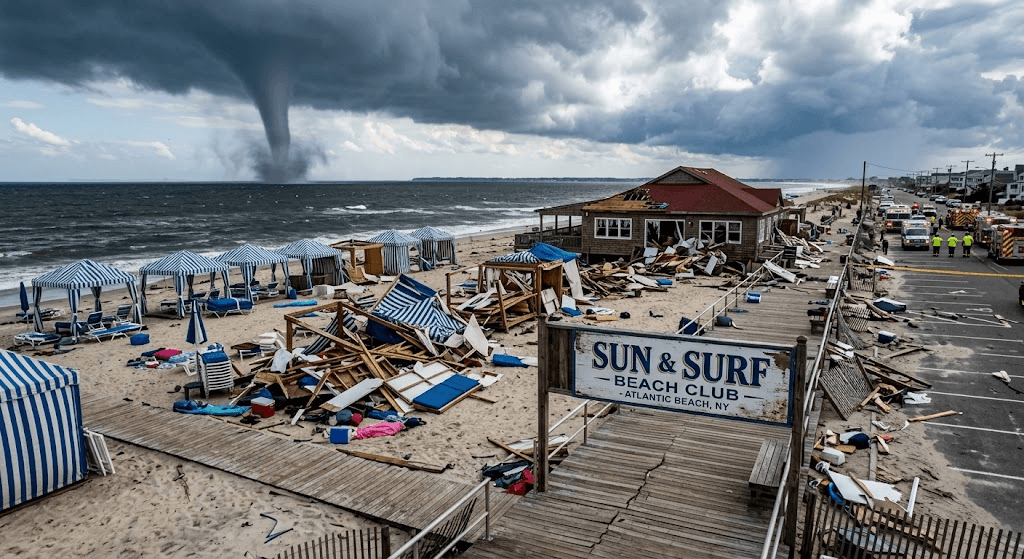
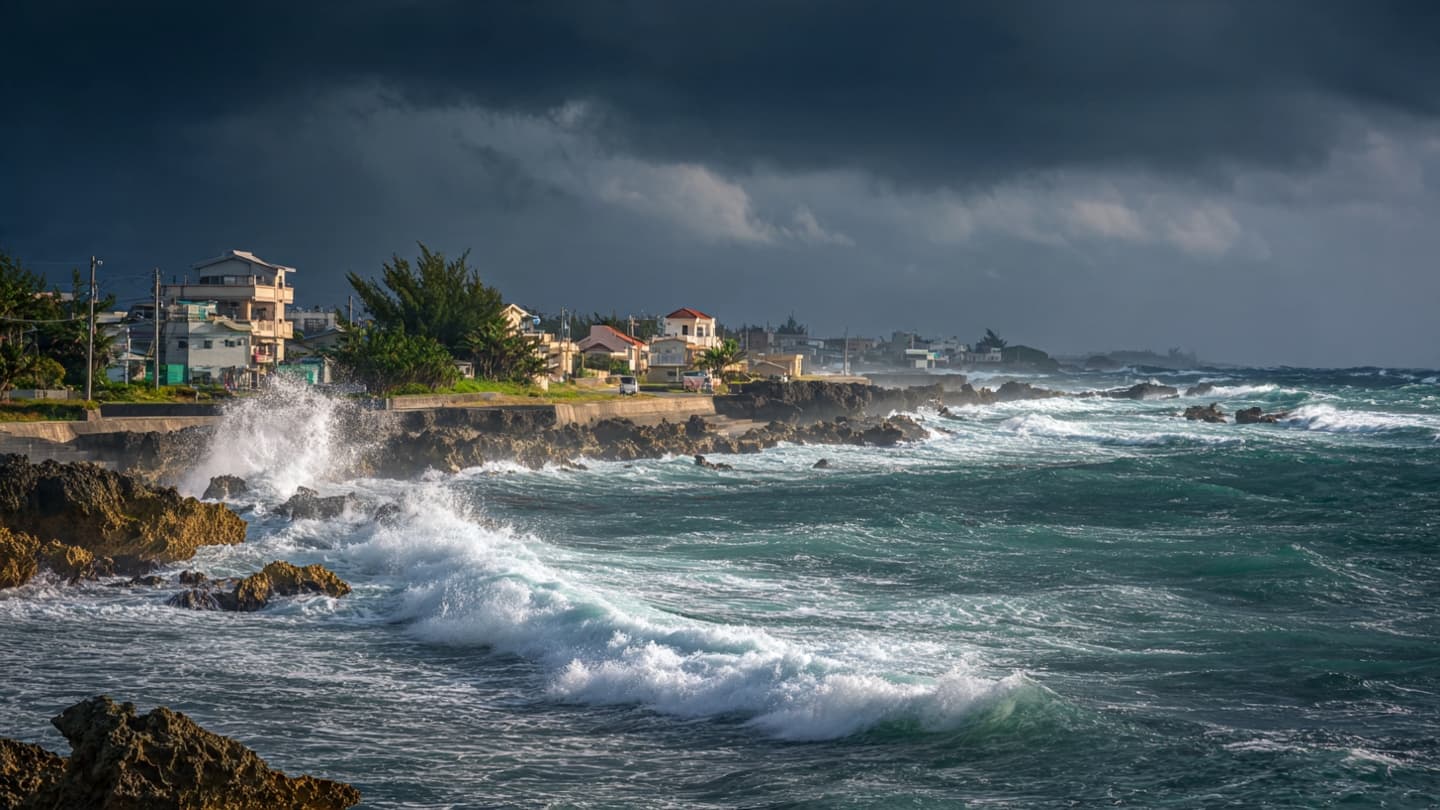
AI Image Disclaimer: The accompanying images are AI-generated interpretations intended to illustrate the weather conditions described in the report.
Sources:
Reuters Japan Meteorological Agency Japan Broadcasting Corporation (NHK) Kyodo News Okinawa Prefectural Government
Note: This article was published on BanxChange.com and is powered by the BXE Token on the XRP Ledger. For the latest articles and news, please visit BanxChange.com