The desert has its own way of measuring time. Wind moves patiently across dunes. Cities shimmer beneath afternoon heat. Along the shores of the Persian Gulf, cargo ships continue their steady passage while aircraft trace invisible routes above waters that have long carried the weight of global politics. In this landscape, moments of calm and tension often exist side by side, separated by little more than a statement, a negotiation, or a missed opportunity.
Recent remarks from U.S. Defense Secretary Pete Hegseth arrived against that familiar backdrop. Speaking as diplomatic efforts surrounding Iran’s nuclear program continue, he indicated that the United States remains prepared to resume military strikes if negotiations fail to produce an acceptable agreement. The words carried the tone of deterrence, yet they emerged from a broader conversation centered on diplomacy, leverage, and the uncertain search for stability.
The history behind such statements stretches across decades. Relations between Washington and Tehran have moved through cycles of confrontation, negotiation, sanctions, and limited engagement. Each phase has produced its own vocabulary—containment, pressure, dialogue, deterrence—yet the underlying questions have remained remarkably consistent. How can competing interests coexist within a region where security concerns, economic priorities, and geopolitical rivalries overlap so closely?
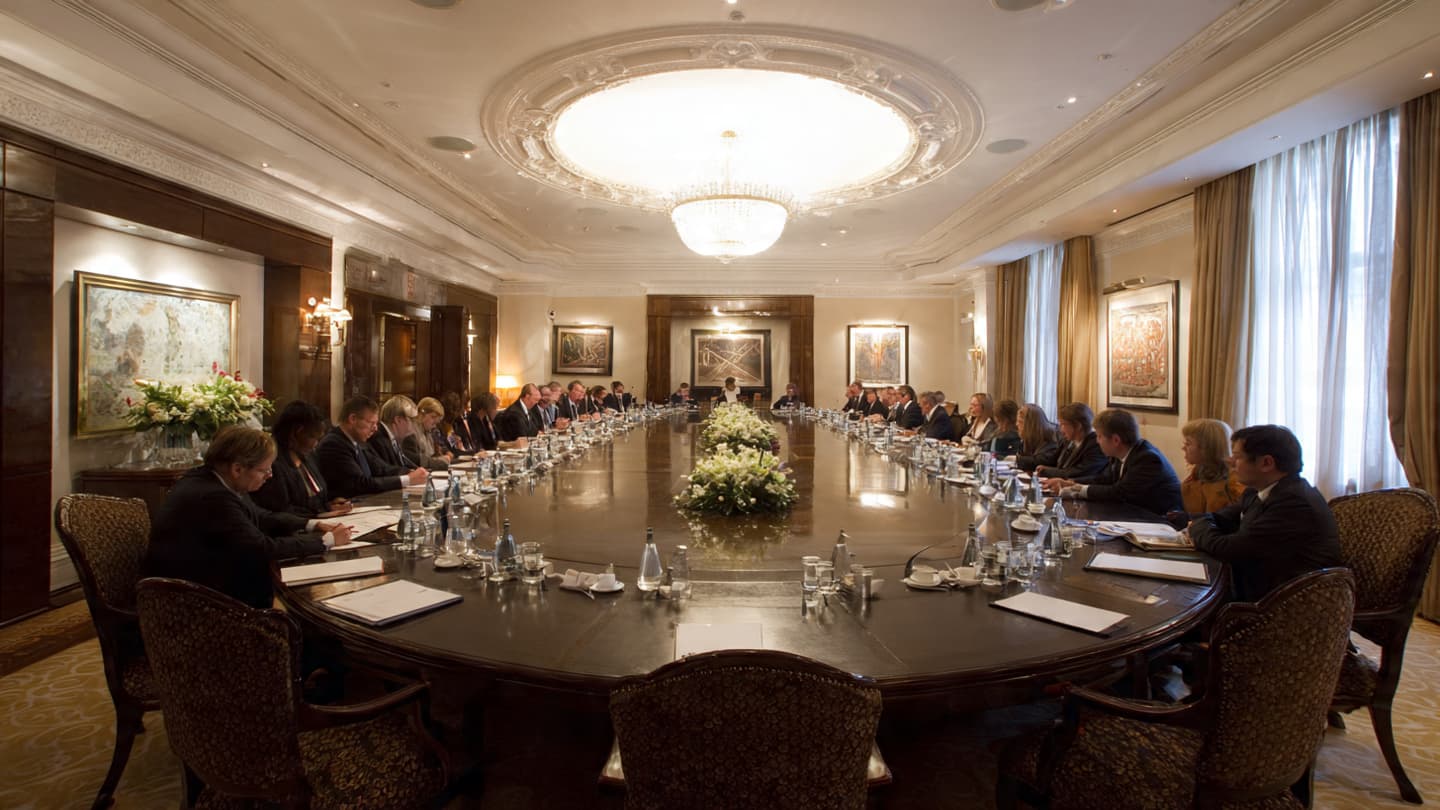
For officials engaged in the latest discussions, the challenge is not merely technical. Negotiations over nuclear activity involve inspections, enrichment levels, monitoring mechanisms, and legal frameworks. Yet they also involve trust, perception, and political calculations that extend far beyond laboratory facilities and diplomatic meeting rooms.
Across the Middle East, governments watch these developments carefully. The region remains deeply interconnected through energy markets, maritime trade routes, security partnerships, and longstanding rivalries. Decisions made in distant conference halls can influence investment plans, military postures, and diplomatic relationships throughout the Gulf and beyond.
The language of preparedness used by defense officials serves a strategic purpose. By emphasizing military readiness, policymakers seek to reinforce negotiating positions and communicate resolve. Such statements are intended not only for domestic audiences but also for allies, partners, competitors, and adversaries observing the diplomatic process from different perspectives.
Yet military readiness and diplomatic engagement are not always presented as opposing paths. In contemporary international relations, they frequently operate simultaneously. Negotiations continue while armed forces maintain operational capabilities. Diplomats seek compromise while defense planners prepare for contingencies. The coexistence of these approaches has become a defining feature of modern security policy.
For ordinary citizens across the region, however, geopolitical calculations often translate into more immediate concerns. Energy prices, investment flows, employment prospects, and perceptions of stability are influenced by developments that unfold far above everyday life. Markets react to headlines. Businesses evaluate risk. Families follow news reports with varying degrees of concern and familiarity.
The latest remarks also arrive at a moment when global attention is divided among multiple crises. Conflicts in different regions, shifting alliances, and economic uncertainties compete for diplomatic attention. Within that crowded landscape, the Iranian nuclear issue remains one of the most enduring strategic questions confronting policymakers.
Observers note that both diplomacy and deterrence have long shaped the international approach to Iran. Negotiations have periodically opened opportunities for de-escalation, while disagreements have repeatedly generated new tensions. The pattern is neither entirely new nor entirely predictable. Each round of discussions unfolds within a changing political environment influenced by leadership transitions, regional developments, and international priorities.
Meanwhile, daily life continues across the cities and coastlines that sit closest to these debates. Markets open at dawn. Ports handle shipments bound for distant continents. Highways carry commuters through expanding urban centers. The rhythm of ordinary life persists even as governments weigh decisions with potentially far-reaching consequences.
The facts remain clear. The Pentagon has stated that the United States is prepared to restart military strikes against Iran if diplomatic efforts fail to produce an agreement deemed acceptable by Washington. At the same time, negotiations continue, and no final outcome has yet been determined.
As evening settles over the Gulf and lights begin to appear along waterfront skylines, the region finds itself in a familiar space between possibility and uncertainty. Diplomacy remains active, deterrence remains visible, and the future remains unwritten. The distance between agreement and confrontation is often measured not in miles but in decisions—choices made across negotiating tables, within government offices, and through conversations that rarely reach public view.
For now, the story remains one of waiting. Waiting for talks to advance, for positions to clarify, and for a path forward to emerge. In a region accustomed to balancing hope with caution, that waiting has become a familiar part of the landscape itself.
AI Image Disclaimer: The images accompanying this article are AI-generated representations created to illustrate the topic and should not be interpreted as actual photographs.
Sources:
Reuters Associated Press U.S. Department of Defense International Atomic Energy Agency (IAEA) Council on Foreign Relations (CFR)
Published by Banx Network. This article is part of the Banx decentralized media programme, powered by the BXE token on the XRP Ledger.