
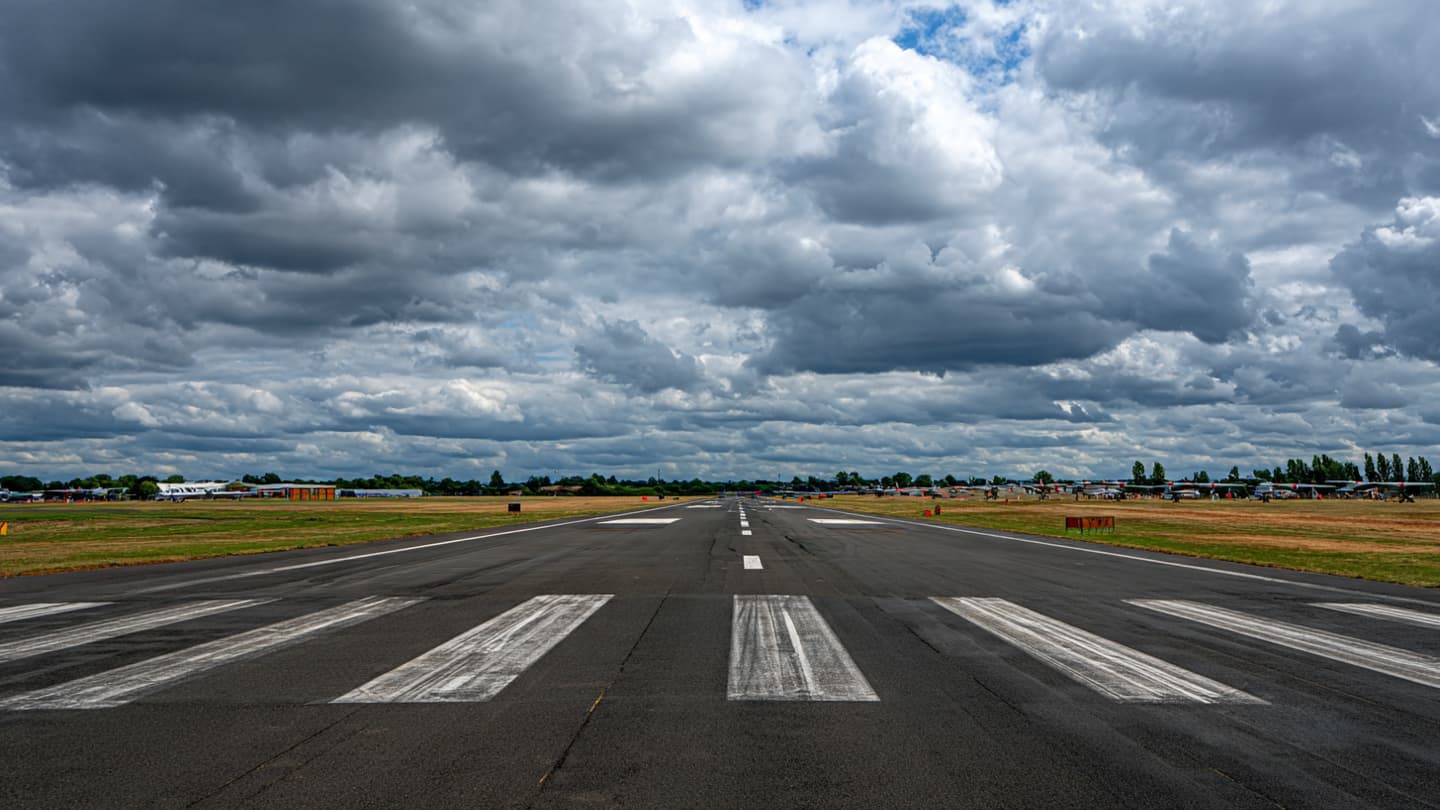
In the English countryside, summer air shows carry a particular atmosphere. Families gather beneath broad skies with folding chairs and cameras, children tilt their heads upward at the sound of approaching engines, and aircraft from distant nations arc across the clouds in carefully choreographed formations. At Royal International Air Tattoo — known widely as RIAT — the spectacle has long represented more than aviation itself. It is a gathering of militaries, technologies, alliances, and public fascination suspended briefly above quiet green fields in RAF Fairford.
This year, however, the skies will remain unusually still.
Organizers have confirmed the cancellation of RIAT 2026 amid escalating conflict and instability in the Middle East, where military deployments, operational demands, and shifting security priorities have increasingly affected international defense schedules. The decision reflects not only logistical strain, but also the widening reach of geopolitical tensions into events once associated primarily with ceremony and public display.
For decades, RIAT has served as one of the world’s largest military air shows, drawing aircraft and crews from across NATO, the Gulf states, Asia, and beyond. Fighter jets, transport planes, historic bombers, and experimental systems would normally arrive from dozens of countries, transforming RAF Fairford into a temporary crossroads of global aviation culture. Pilots exchanged technical expertise while spectators moved through static displays beneath the changing English weather.
Yet air forces are ultimately shaped by realities far beyond exhibition grounds.
As conflict intensifies across parts of the Middle East, military resources once allocated to training tours, international demonstrations, and public diplomacy are increasingly redirected toward operational readiness. Aircraft availability, deployment schedules, security assessments, and personnel commitments have all become more constrained. What disappears first in such moments are often the quieter rituals of international cooperation — ceremonies, exhibitions, and gatherings designed to symbolize stability rather than confront crisis directly.
The cancellation also reveals how interconnected modern defense systems have become. A conflict unfolding thousands of miles away can alter flight schedules in Europe, delay maintenance programs, reshape procurement priorities, and reduce participation in multinational events. RIAT’s absence is therefore not merely a canceled festival, but a small reflection of a larger strategic atmosphere spreading across military institutions worldwide.
Across United Kingdom, aviation enthusiasts and local businesses had anticipated another summer influx tied to the event. Hotels, restaurants, transport operators, and surrounding communities often rely heavily on the crowds drawn to Fairford each year. For many visitors, RIAT is also deeply personal — an annual tradition connecting generations through shared fascination with flight and engineering.
Now, the runways that would have hosted roaring flyovers may instead remain largely operational but subdued, their significance shifting back toward quieter military functions. In Gloucestershire villages surrounding the base, preparations that usually begin months in advance may give way to an unfamiliar stillness in July.
The cancellation arrives during a period when military symbolism itself feels increasingly complicated. Air shows once projected confidence, technological ambition, and alliance unity in a largely celebratory form. Today, many of the same aircraft displayed at such events are simultaneously involved in active deterrence operations, patrol missions, or conflict-related deployments. The line between spectacle and operational reality has grown thinner.
Meanwhile, geopolitical anxiety continues stretching across multiple regions at once. Conflicts in the Middle East, the ongoing war in Ukraine, maritime tensions in the Gulf, and heightened NATO readiness have collectively reshaped defense planning far beyond any single battlefield. Military calendars that once balanced diplomacy, training, and exhibition now increasingly revolve around preparedness and rapid response.
Still, aviation culture carries a persistent emotional pull. Aircraft embody movement, engineering, and the human desire to transcend distance itself. Even amid conflict, people continue gathering at smaller local airfields, watching contrails fade slowly into evening skies. There remains something enduring in the sound of engines overhead — a mixture of awe, nostalgia, and unease.
For now, RIAT organizers say the decision was necessary given current international conditions, though hopes remain that the event will return in future years once circumstances stabilize. The cancellation leaves behind not only logistical consequences, but also an unusual symbolic silence within Europe’s aviation calendar.
As summer approaches RAF Fairford, the grass beside the runways will continue bending beneath the wind, but without the familiar thunder of multinational flyovers above it. And somewhere beyond those quiet English fields, the conflicts reshaping military priorities will continue unfolding across deserts, coastlines, and crowded capitals far from the spectators who once gathered simply to watch aircraft cross the sky.
AI Image Disclaimer: The accompanying illustrations were generated using AI tools and are intended as visual interpretations rather than documentary imagery.
Sources:
Reuters BBC News Royal International Air Tattoo FlightGlobal Associated Press
Note: This article was published on BanxChange.com and is powered by the BXE Token on the XRP Ledger. For the latest articles and news, please visit BanxChange.com