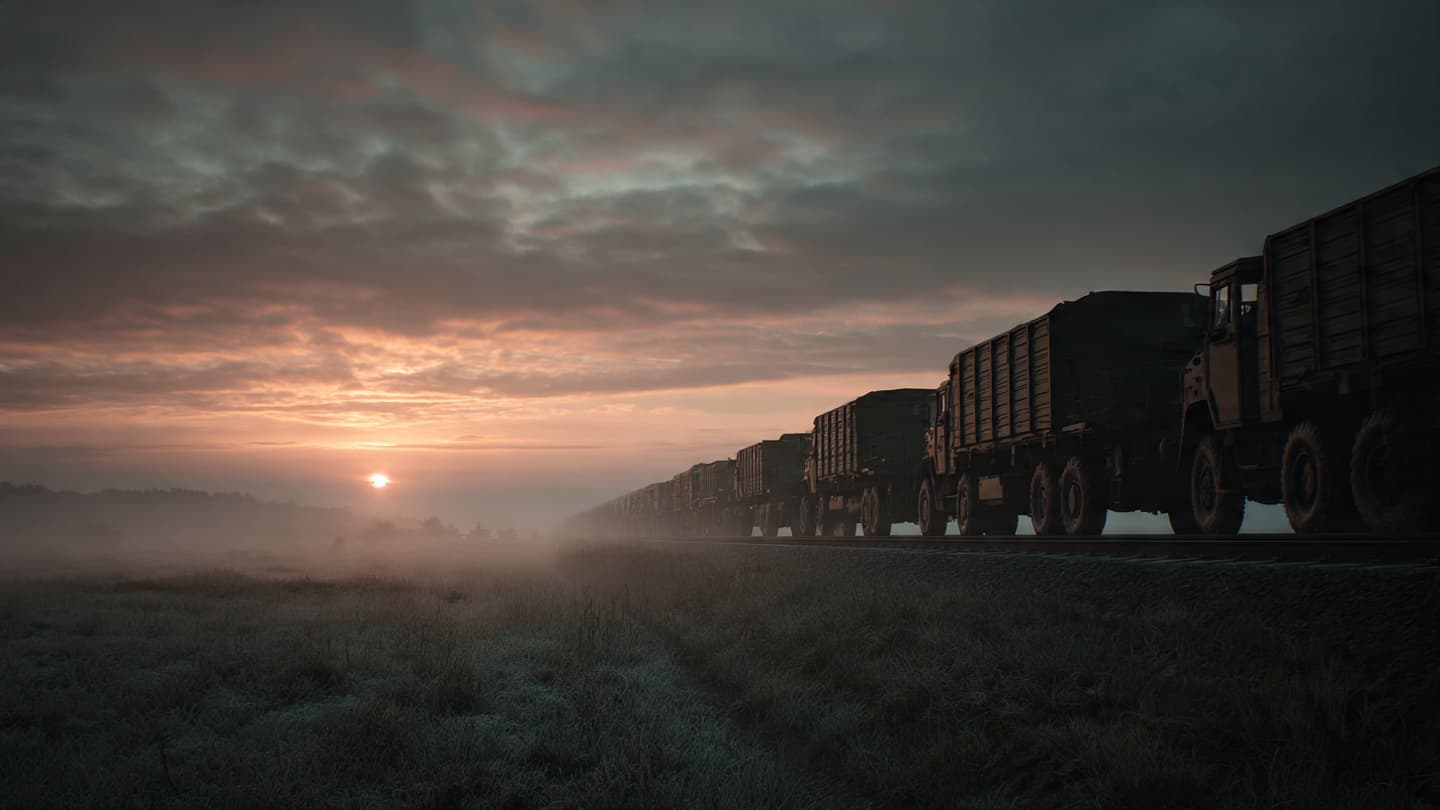
The roads leading east through Poland have long carried the steady rhythm of movement — trains threading through forests, armored vehicles rolling beneath pale skies, soldiers arriving in waves that mirrored the seasons of modern Europe. In recent years, these movements became part of the landscape itself, almost ordinary in their repetition, a quiet choreography shaped by war farther east and the uneasy geometry of alliances.
Then, almost without warning, the motion paused.
Inside the vast administrative corridors of the Pentagon, where decisions usually travel through layers of planning and rehearsal, news spread with an unfamiliar abruptness. A deployment of roughly 4,000 American troops intended for Poland was suddenly canceled, leaving officers, lawmakers, and European officials searching for explanations in the stillness that followed. Some units had already begun their journey. Equipment was already moving across oceans and rail lines. Soldiers had prepared for months beneath the assumption that the rotation would proceed as scheduled.
The canceled deployment involved the 2nd Armored Brigade Combat Team of the 1st Cavalry Division, a heavy combat formation based in Texas that had been expected to replace another armored unit already stationed in Poland. Rotational deployments like these have become one of the defining features of NATO’s eastern posture since Russia’s invasion of Ukraine reshaped Europe’s security map in 2022. Poland, in particular, emerged not merely as a geographic frontier, but as a symbolic hinge between older fears and newer realities.
What unsettled many officials was not only the decision itself, but the manner in which it arrived. Reports described Pentagon personnel and allied governments learning of the move with little advance notice, triggering hurried phone calls between European capitals and Washington. One official reportedly described the reaction plainly: “We had no idea this was coming.”
Beyond the military mechanics, the decision drifted into a wider atmosphere already heavy with tension between the United States and parts of Europe. Earlier this month, the Pentagon announced plans to withdraw approximately 5,000 troops from Germany, a move connected to a broader reassessment of America’s military posture on the continent. The Trump administration has repeatedly pressed European allies to carry more of NATO’s defense burden, while disagreements surrounding the Iran conflict have widened diplomatic strain across the Atlantic alliance.
In Poland, reactions unfolded with restraint. Some officials sought to minimize concern, describing the cancellation as part of a broader realignment rather than a direct reduction in support for Warsaw. Yet beneath official language lies a deeper awareness of geography. Poland sits close to the restless edge of Europe’s security anxieties, where the memory of history is rarely distant. American troop rotations there have carried not only strategic value, but emotional reassurance — a visible sign that alliances remain tangible, embodied in convoys, uniforms, and shared exercises beneath cold Baltic winds.
The decision also arrives at a moment when Europe has begun speaking more openly about strategic independence. Across defense ministries and parliamentary halls, conversations increasingly circle around whether the continent can rely indefinitely on American constancy. The sudden cancellation in Poland, particularly after troops had already started moving, deepened those quiet conversations.
For the soldiers involved, the reversal carried a more immediate texture — interrupted schedules, redirected equipment, uncertain timelines. Military deployments are often described in numbers and logistics, yet they are also built from ordinary human routines: farewell dinners, packed duffel bags, long training cycles, families preparing for months apart. When plans change suddenly, the disruption travels through households as much as through strategy papers.
And so the story settles into Europe’s late spring atmosphere with a feeling less explosive than uncertain. No dramatic speech marked the moment. No formal declaration redrew maps overnight. Instead, there was a cancellation order, unanswered questions, and the lingering sound of motion abruptly slowing.
Across NATO’s eastern flank, the roads remain. Rail lines still cut through fields bright with May light. Bases continue operating beneath gray clouds and rotating patrols. Yet for many officials watching this episode unfold, the deeper concern may not be about one canceled deployment alone, but about the growing unpredictability surrounding decisions that once appeared steady and procedural. In alliances built over decades, uncertainty itself can become its own kind of weather.
AI Image Disclaimer: Illustrations were created using AI tools and are intended as visual interpretations of current events.
Sources:
Reuters ABC News Defense News The Wall Street Journal Euronews
Published by Banx Network. This article is part of the Banx decentralized media programme, powered by the BXE token on the XRP Ledger.