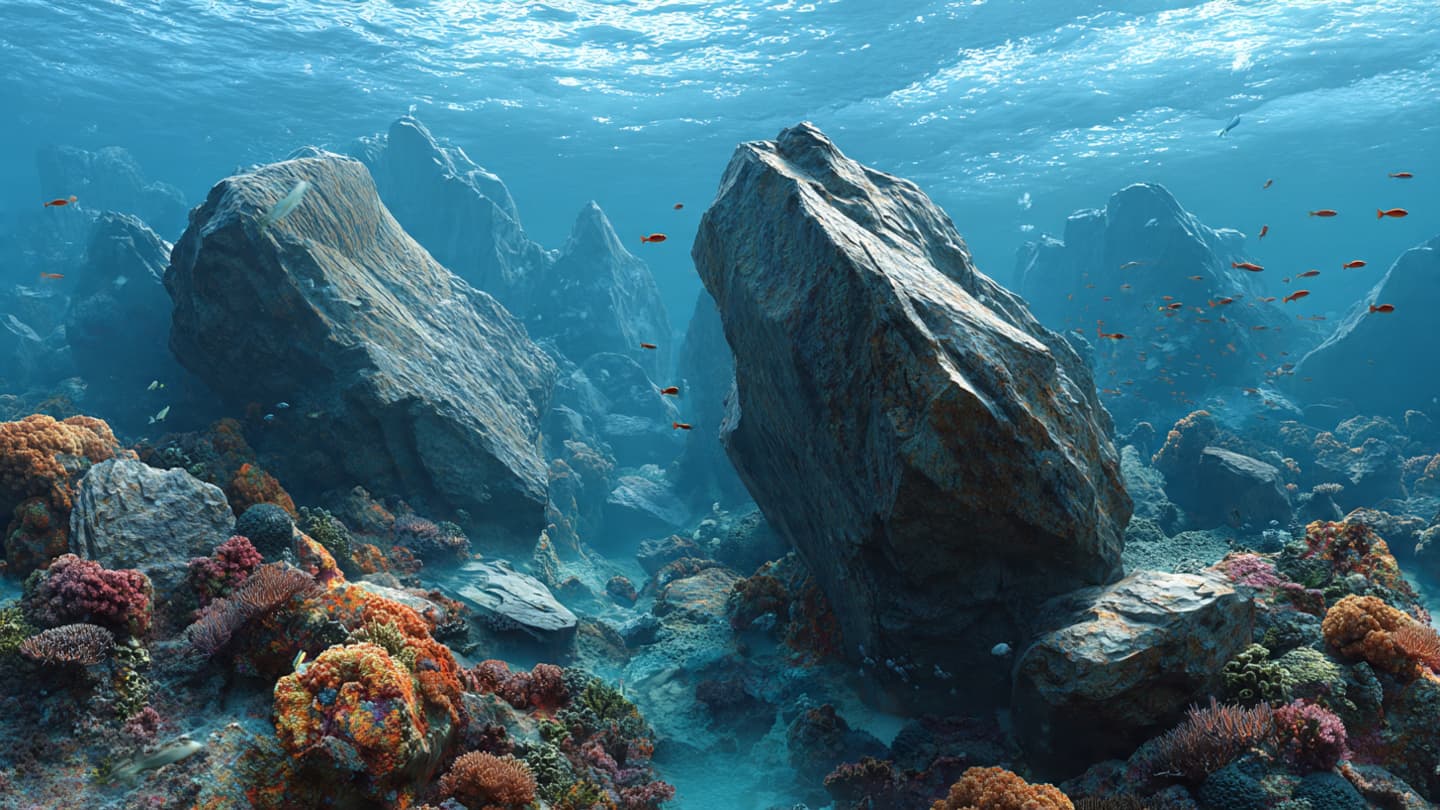
The natural world often reveals connections that seem unlikely at first glance. A rock carried for centuries within a drifting iceberg may appear insignificant, yet when it finally reaches the ocean floor, it can help create an entirely new environment for marine life.
Scientists studying deep-sea ecosystems have discovered that rocks released by melting icebergs can serve as valuable habitats for a variety of organisms. The finding sheds light on how life adapts to changing environmental conditions in remote parts of the planet.
Icebergs frequently transport sediment and rocks over great distances. As the ice melts, these materials eventually sink to the seabed, where they become part of the underwater landscape.
For many deep-sea species, hard surfaces are essential. Organisms such as corals, sponges, and other marine animals often require stable structures on which to attach and grow.
Researchers found that rocks deposited by icebergs can provide exactly such opportunities. Over time, they may become centers of biological activity within areas that otherwise contain relatively uniform seafloor conditions.
The discovery highlights the remarkable adaptability of marine ecosystems. Life in the deep ocean frequently responds to environmental changes by colonizing new habitats whenever suitable conditions arise.
Scientists are also interested in the broader ecological implications. Understanding how species establish themselves on newly available surfaces may help improve knowledge of biodiversity and ecosystem development.
The research forms part of a growing effort to study deep-sea environments, many of which remain less explored than parts of the Moon's surface. New technologies continue to reveal unexpected aspects of these hidden ecosystems.
As climate and environmental conditions evolve, scientists will continue monitoring these processes. The findings offer a reminder that even a falling rock from a melting iceberg can play a role in supporting life within Earth's vast and interconnected oceans.
AI Image Disclaimer: This article features an AI-generated illustration created to represent marine science and environmental research themes.
Source Verification Check: Nature, Science News, National Geographic, NOAA, Live Science
Published by Banx Network. This article is part of the Banx decentralized media programme, powered by the BXE token on the XRP Ledger.