In the vast, silent theater of the cosmos, where gravity weaves the fabric of spacetime, black holes dance in a slow, inevitable embrace. For decades, predicting the precise moment of their collision required complex simulations and immense computational power. Yet, researchers at Penn State have discovered that the key to understanding these cataclysmic events may lie in a surprisingly simple principle: thermodynamics. This elegant approach suggests that the laws governing heat and energy in everyday objects might also guide the most violent encounters in the universe.
Body: The study, led by physicists at Pennsylvania State University, draws a parallel between black hole mergers and the behavior of fluid droplets. Just as two drops of water merge to form a larger sphere with minimal surface area, black holes seem to follow a similar path toward equilibrium. By applying the second law of thermodynamics, which states that entropy or disorder always increases, the team found they could predict the final state of merged black holes with remarkable accuracy.
This insight simplifies a problem that has long puzzled astronomers. Traditionally, modeling black hole collisions involved solving Einstein’s field equations, a task that requires supercomputers and weeks of processing time. The new method, however, uses basic thermodynamic principles to estimate the outcome, offering a quicker and more intuitive way to understand these events. It is a reminder that nature often favors simplicity, even in its most extreme manifestations.
The implications for gravitational wave astronomy are significant. As detectors like LIGO and Virgo continue to pick up signals from distant mergers, having a faster predictive model allows scientists to analyze data more efficiently. It helps in distinguishing between different types of mergers and understanding the properties of the black holes involved, such as their mass and spin. This efficiency could accelerate the pace of discovery in the field.
Moreover, this approach bridges the gap between classical physics and general relativity. Thermodynamics, a cornerstone of classical science, is being used to describe phenomena that are inherently relativistic. This cross-pollination of ideas highlights the interconnectedness of physical laws, suggesting that fundamental principles apply across scales, from the microscopic to the cosmic.
The research team emphasizes that while the model is simplified, it captures the essential physics of the merger process. It does not replace detailed simulations but serves as a valuable tool for initial estimates and conceptual understanding. For students and educators, it offers a more accessible entry point into the complex world of black hole dynamics.
As the field of gravitational wave astronomy matures, such innovative approaches will be crucial. They allow scientists to make sense of the growing volume of data and to ask deeper questions about the nature of gravity and spacetime. The work at Penn State stands as a testament to the power of creative thinking in scientific inquiry.
Closing: By applying simple thermodynamic principles to black hole mergers, Penn State physicists have offered a new, streamlined way to predict cosmic collisions. This approach not only simplifies complex calculations but also deepens our understanding of the universal laws that govern both the smallest particles and the largest structures in space.
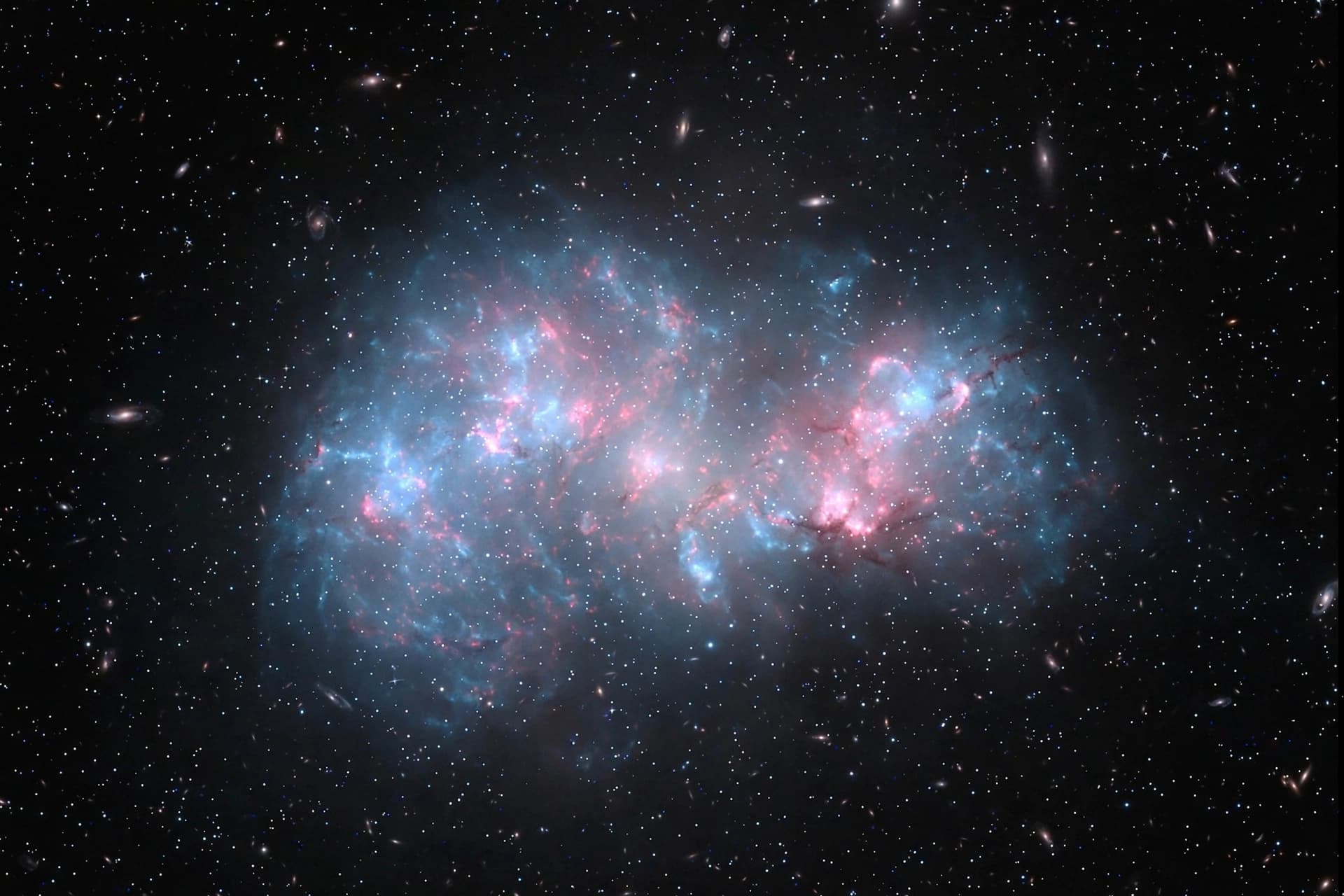
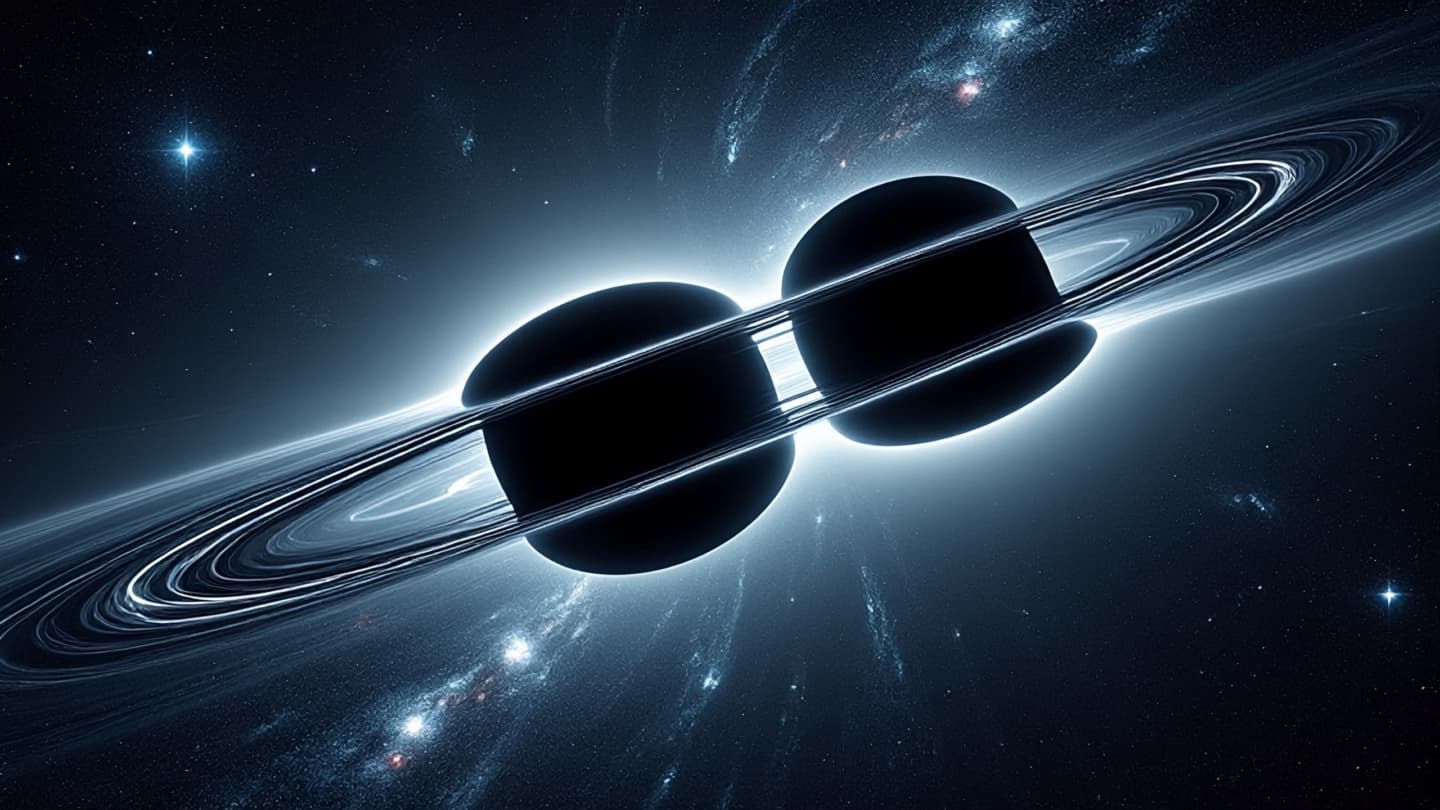
AI Image Disclaimer: Please note that the visuals accompanying this article are AI-generated illustrations designed to represent the abstract concepts of thermodynamics and cosmic events.
Sources: Penn State News Physical Review Letters ScienceDaily Nature Astronomy
Published by Banx Network. This article is part of the Banx decentralized media programme, powered by the BXE token on the XRP Ledger.