In moments of heightened tension, language itself seems to tighten. Sentences become shorter, more absolute, as if the weight of global stakes compresses expression into sharper edges. Words like “deal,” “warning,” and “war” begin to circulate not as abstractions, but as immediate markers of possible futures.
Within this charged atmosphere, live reporting on Iran-related developments carried a stark message attributed to U.S. officials: a warning to Tehran framed in binary terms—sign a deal, or face the consequences of escalation involving military structures referred to in reporting as the “war department.” The phrasing, striking in its directness, reflects a moment in which diplomatic language and military signaling appear closely intertwined.
Such statements emerge within a long-standing pattern of pressure-based diplomacy between the United States and Iran, where negotiations and deterrence often exist side by side. Over decades, this relationship has moved through cycles of agreement, withdrawal, sanctions, and intermittent talks, each phase adding another layer to an already complex strategic environment.
In this context, warnings are rarely isolated statements. They function as part of a broader communication system that includes public remarks, private channels, military positioning, and allied coordination. Each element contributes to shaping perception—both in Tehran and among regional actors watching for signals of escalation or restraint.
The use of ultimatum-style language reflects a particular diplomatic posture, one that emphasizes urgency and consequence. Yet in practice, international negotiations involving Iran have rarely resolved through singular deadlines. Instead, they tend to unfold through extended periods of negotiation, adjustment, and recalibration, often influenced by parallel developments in regional security dynamics.
The region surrounding Iran remains deeply interconnected, with the Gulf states, Israel, and global powers all playing roles in shaping the strategic environment. Energy routes, maritime corridors, and proxy conflicts contribute to a landscape where any shift in rhetoric can carry implications beyond the immediate exchange of statements.
Against this backdrop, the framing of diplomacy as a binary choice—agreement or confrontation—introduces a rhetorical clarity that contrasts with the complexity on the ground. Negotiations in such environments are rarely linear. They are shaped by domestic politics, alliance structures, and historical grievances that cannot easily be compressed into immediate decisions.
At the same time, public messaging of this kind serves a purpose within strategic communication. It signals resolve, establishes perceived thresholds, and seeks to influence decision-making by defining the consequences of inaction. Whether such messaging accelerates agreement or hardens positions often depends on how it is received by the other side.
Iran’s relationship with Western powers has long been shaped by cycles of negotiation and tension, particularly around issues of sanctions relief, nuclear oversight, and regional security behavior. Each cycle leaves behind frameworks of understanding that are later revisited, revised, or abandoned, contributing to a diplomatic history marked by both engagement and rupture.
In live reporting formats, where developments are updated in real time, the intensity of language often reflects the immediacy of events. This can create a sense of compression, where complex strategic realities appear distilled into urgent directives. Yet behind these statements, institutional processes continue to operate—military assessments, diplomatic consultations, and intelligence evaluations moving in parallel.
For observers of international affairs, such moments underscore the dual nature of modern geopolitics: the public narrative, shaped by statements and headlines, and the slower-moving structural reality that governs actual decision-making. The space between these two layers is where much of contemporary diplomacy takes place.
The facts, as reported, indicate that U.S. messaging toward Iran has included a stark warning urging agreement or warning of military consequences, framed within ongoing tensions and negotiations. Beyond that immediate framing, the situation remains part of a broader, evolving dynamic between deterrence and diplomacy.
In that dynamic, language does not merely describe reality—it participates in shaping it. And in the narrowing space between ultimatum and negotiation, the future remains suspended, waiting for decisions that have yet to be fully formed.
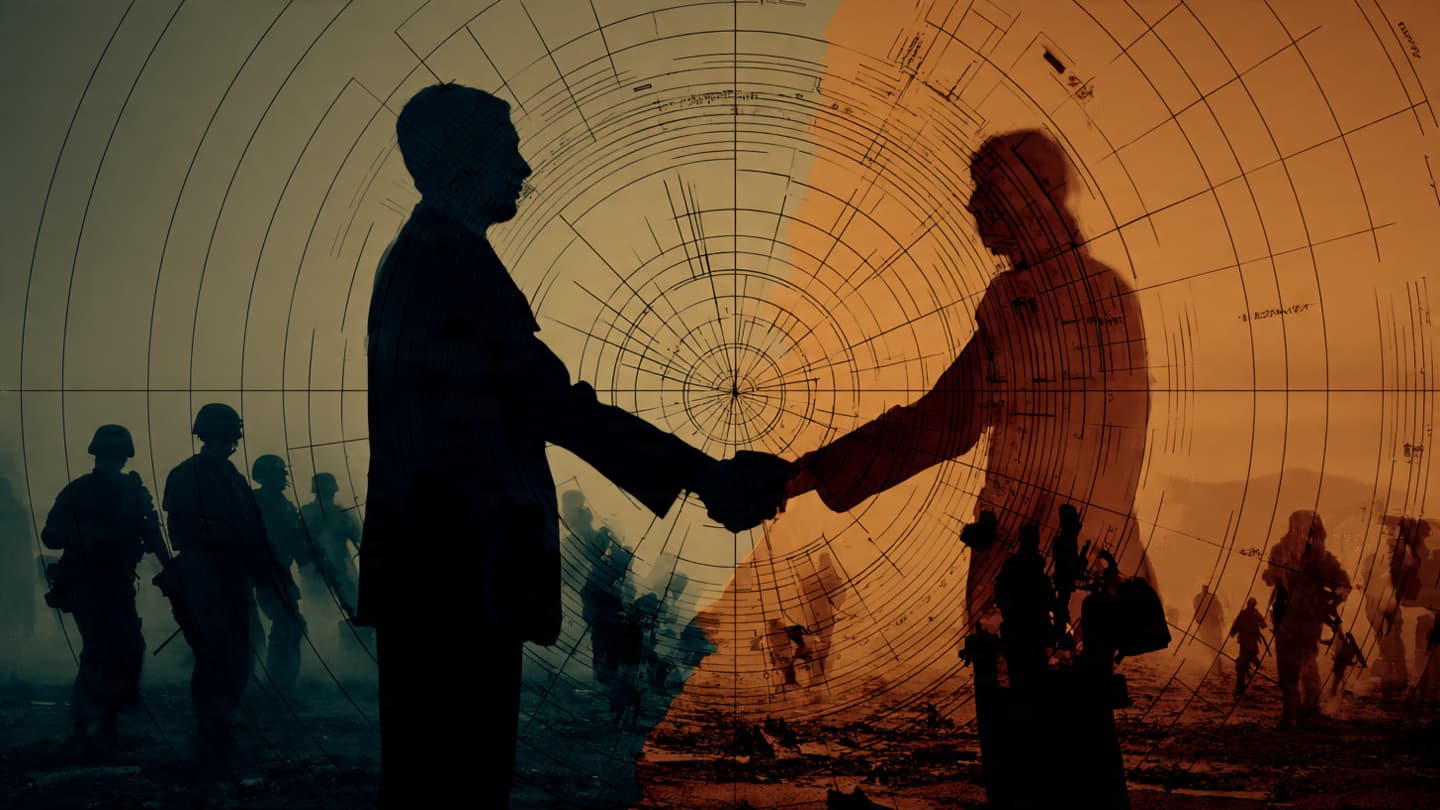
AI Image Disclaimer The visuals accompanying this article are AI-generated conceptual illustrations intended to represent geopolitical reporting and are not real depictions of actual events.
Sources Reuters Associated Press Al Jazeera English BBC News Council on Foreign Relations
Published by Banx Network. This article is part of the Banx decentralized media programme, powered by the BXE token on the XRP Ledger.

.jpg&w=3840&q=75 "Gunmen Kill 10 in Shootings at Jordan’s Karak Castle")