
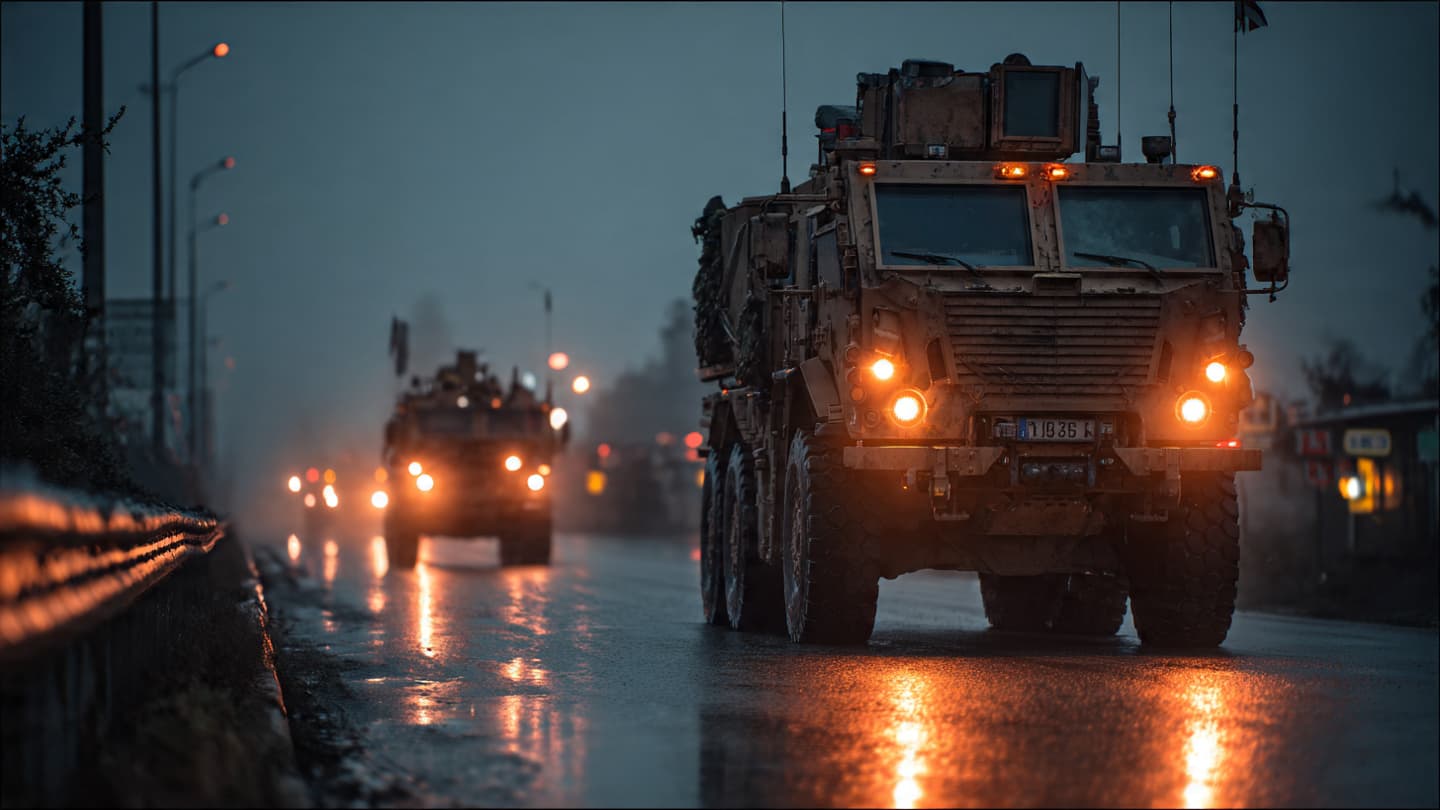
In many European towns, military presence has long blended into the texture of ordinary life. Convoys moving along narrow roads at dawn, the distant rhythm of helicopters crossing low clouds, cafés filling with soldiers in unfamiliar uniforms — these became quiet constants over decades shaped by alliances and memory. Near air bases and training grounds, generations grew accustomed to the idea that American forces were not simply visitors, but part of the continent’s enduring postwar landscape.
Now, that landscape appears ready to shift again.
The Pentagon has announced plans to reduce thousands of American troops stationed across Europe, a move that arrives at a delicate moment for transatlantic security. The decision reflects a broader recalibration inside Washington, where military planners increasingly speak about balancing commitments between Europe, the Middle East, and the Indo-Pacific as geopolitical pressures evolve simultaneously across several regions.
For European allies, the announcement carries both strategic and symbolic weight. Since the end of the Second World War — and later throughout the Cold War — American troops served not only as a military force but as a visible reassurance embedded into the architecture of NATO. Bases in Germany, Poland, Italy, and other countries became physical expressions of alliance, places where diplomacy and deterrence existed side by side.
The Pentagon has emphasized that the reductions are intended as part of a broader force restructuring rather than a retreat from NATO commitments. American officials continue to describe Europe as central to U.S. security strategy, particularly following Russia’s invasion of Ukraine, which prompted the deployment of additional rotational forces to Eastern Europe in recent years. Yet even within those reassurances lies an acknowledgment that the nature of American military presence is changing — becoming more flexible, rotational, and responsive rather than permanently anchored in the way it once was.
In cities near major installations, the news also touches quieter economic and social realities. Restaurants, landlords, schools, and local businesses around long-established military communities often adapt themselves over decades to the rhythms of foreign deployments. The departure of even a few thousand troops can alter employment patterns, housing markets, and the subtle cultural exchanges that form around shared daily life.
At the same time, Europe itself is undergoing a gradual transformation in defense policy. Several governments have increased military spending sharply since the war in Ukraine began, expanding defense industries and reconsidering long-standing assumptions about continental security. Discussions once confined to policy circles — strategic autonomy, regional deterrence, defense readiness — now move openly through parliamentary chambers and public debate.
The troop reductions therefore arrive within a larger transition: a continent attempting to define how much responsibility it can carry independently while still remaining tied closely to Washington. The United States, meanwhile, continues looking toward rising tensions with China and broader competition in the Pacific, where defense officials increasingly describe the coming decades as strategically decisive.
There is an irony in the timing. Just as Europe once again feels the nearness of war on its eastern edge, the shape of American military commitment is becoming less fixed and more fluid. The old permanence of barracks, armored divisions, and sprawling Cold War infrastructure is slowly giving way to faster deployments, temporary rotations, and adaptable positioning.
Still, the alliance itself remains intact. NATO officials have stressed continued cooperation and readiness, while American leaders insist the cuts will not weaken collective defense obligations. Yet military presence carries emotional resonance beyond numerical calculations. Troops stationed abroad become part of landscapes, routines, and historical memory. Their movement can therefore feel larger than logistics alone.
As evening settles over European training grounds and flags continue to move in the wind above familiar bases, the announcement leaves behind a quiet question about the future shape of Western security. The roads will still carry convoys, aircraft will still cross the skies, and alliances will continue through treaties and summits. But the atmosphere surrounding them is changing — gradually, almost imperceptibly — like a season turning before people fully recognize the shift in light.
AI Image Disclaimer These visuals were generated with AI technology to illustrate the themes and settings described in the article.
Sources
Pentagon NATO Reuters Associated Press BBC News
Note: This article was published on BanxChange.com and is powered by the BXE Token on the XRP Ledger. For the latest articles and news, please visit BanxChange.com