
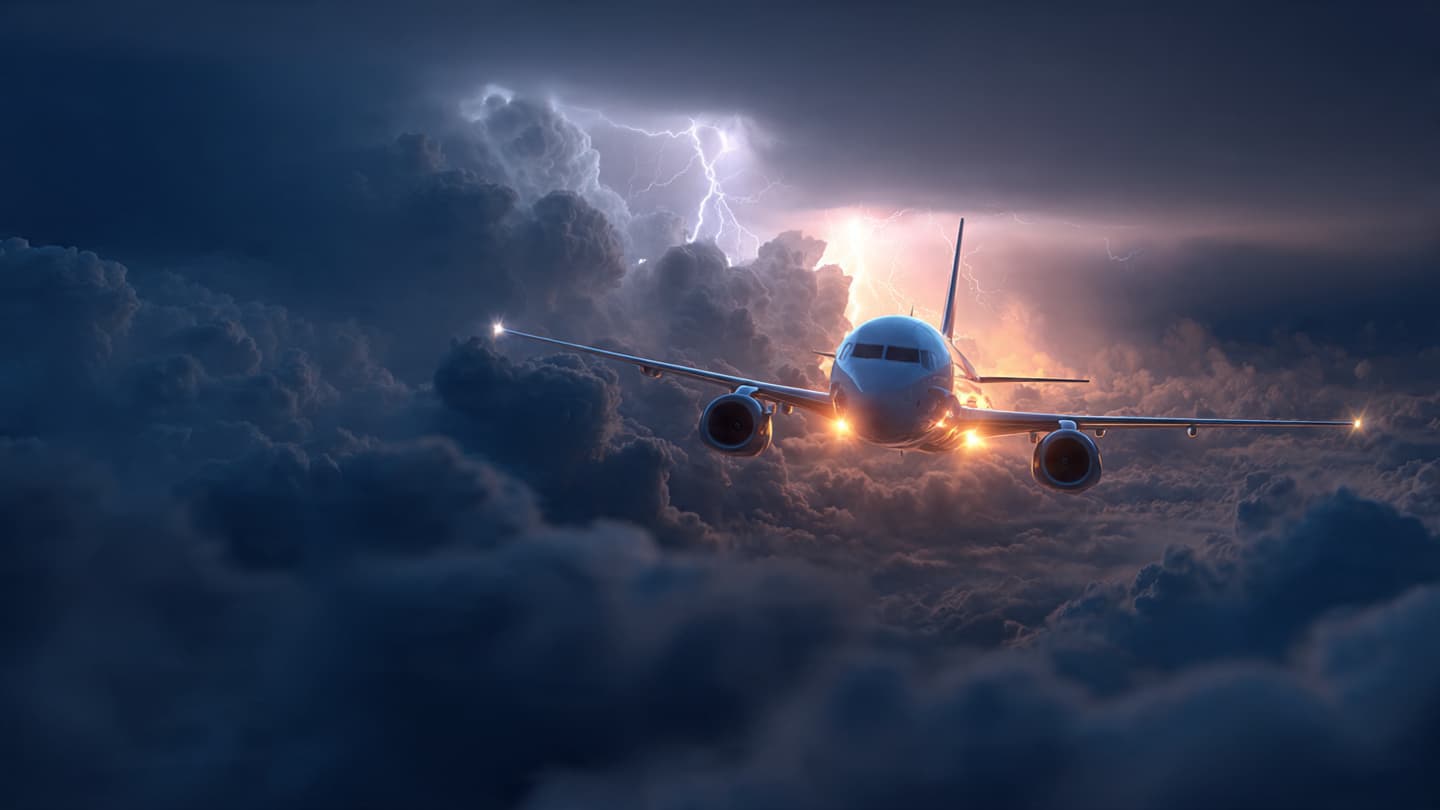
The Atlantic at night has a way of concealing distance. From high above the ocean, there is little to distinguish horizon from cloud, little to interrupt the immense darkness except scattered lightning and the glow of instruments inside a cockpit. Aircraft cross these routes quietly every evening, tracing invisible lines between continents while passengers sleep beneath dim cabin lights, suspended somewhere between departure and arrival.
It was into that darkness, nearly two decades ago, that Air France Flight 447 disappeared.
Now, after years of investigations, legal arguments, technical reviews, and the long persistence of grieving families, a French court has found Airbus and Air France guilty of manslaughter in connection with the 2009 crash that killed all 228 people aboard the flight traveling from Rio de Janeiro to Paris.
The ruling reopened one of aviation’s most haunting modern tragedies — an accident that unfolded over the Atlantic during turbulent weather and became emblematic of the fragile relationship between technology, human judgment, and the unforgiving environment through which modern aviation moves.
For years after the crash, much of the aircraft remained hidden beneath deep ocean waters. The search itself carried the atmosphere of a prolonged vigil. Ships crossed the Atlantic scanning vast stretches of sea while families waited for fragments of explanation to surface from immense depths. When the flight recorders were eventually recovered nearly two years later, investigators began piecing together the final moments of the Airbus A330.
The inquiry revealed a chain of failures both technical and human. Ice crystals temporarily obstructed pitot tubes — instruments used to measure airspeed — causing inconsistent speed readings that disconnected the autopilot system. Faced with confusing information during severe weather at high altitude, the pilots struggled to regain control of the aircraft, which entered an aerodynamic stall from which it never recovered.
The disaster prompted profound reflection within the aviation industry. Airlines revised pilot training programs focused on high-altitude stalls and manual aircraft handling. Manufacturers reviewed instrument reliability. Regulators examined procedures surrounding cockpit communication and automation dependency. Flight 447 became more than a single tragedy; it became a lesson studied in simulators and classrooms around the world.
Yet in Paris courtrooms this week, the technical language of aviation intersected once again with human grief. Relatives of passengers gathered quietly as judges delivered their decision, revisiting a catastrophe that has lingered across years not only as a matter of engineering, but as an emotional absence carried by hundreds of families across multiple countries.
The ruling marked a significant reversal after earlier acquittals had disappointed many relatives seeking accountability. Judges concluded that both Airbus and Air France bore responsibility connected to failures in training, equipment, and operational preparedness linked to the crash. The companies, however, have continued emphasizing the complexity of the accident and the extraordinary conditions faced by the crew.
For aviation observers, the verdict also reflects a broader question increasingly present in highly automated industries: how responsibility is understood when human operators rely upon complex technological systems that can fail suddenly under rare conditions. Modern aircraft are among the safest machines ever created, yet moments of breakdown often emerge precisely in the fragile transition between automated control and human intervention.
Inside commercial aviation, the memory of Flight 447 remains unusually vivid. Pilots still study transcripts from the cockpit voice recorder. Training exercises replicate the confusion created by contradictory instrument readings. Discussions continue about workload, fatigue, communication, and the psychological effects of sudden system failures at altitude.
Meanwhile, for families, the passage of time has altered little about the essential fact of loss. Court rulings may establish legal responsibility, but they cannot fully resolve the silence left by those who never arrived home. Some relatives described the verdict as an acknowledgment after years of waiting. Others said the process had reopened wounds that never entirely closed.
Outside the courthouse, Paris moved with its ordinary rhythms — cafés filling beneath cloudy skies, trains crossing bridges over the Seine, aircraft continuing their nightly departures from Charles de Gaulle Airport. Thousands of flights still travel safely across oceans every day, guided by layers of technology, training, and routine invisible to most passengers.
Yet somewhere over the Atlantic, along the route once followed by Flight 447, memory continues to drift quietly through aviation history. The court’s decision does not erase the storm that night, nor the confusion within the cockpit, nor the years families spent searching for answers across legal proceedings and ocean depths.
It does, however, mark another attempt to understand how modern tragedies occur in systems built so carefully to prevent them — and how responsibility, like wreckage beneath dark water, is sometimes recovered only slowly, piece by piece, across the passing years.
AI Image Disclaimer The accompanying visuals are AI-generated interpretations created to support the narrative context of the article.
Sources
Reuters Bureau of Enquiry and Analysis for Civil Aviation Safety (BEA) Air France Airbus Associated Press
Note: This article was published on BanxChange.com and is powered by the BXE Token on the XRP Ledger. For the latest articles and news, please visit BanxChange.com