
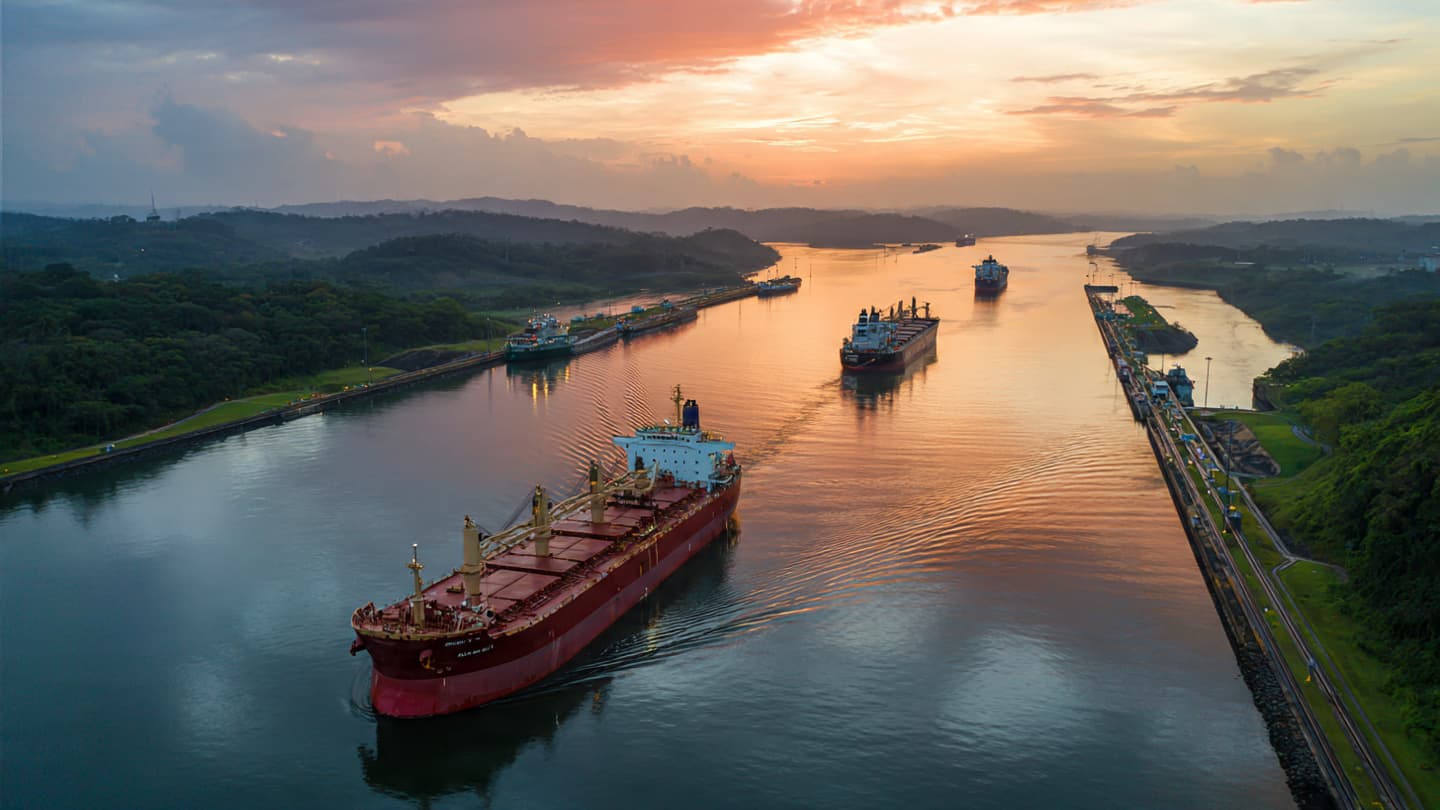
Morning arrives slowly over the Panama Canal. Before the tropical heat settles fully across the water, cargo ships already move through the narrow passage linking two oceans, guided carefully between concrete locks and green hills dense with rain-soaked trees. From above, the vessels appear almost silent, carrying containers, fuel, grain, machinery, and fragments of economies stitched together across continents. Yet beneath the routine rhythm of maritime traffic, larger currents now move quietly through diplomacy itself.
At the United Nations this week, Panama urged countries to prioritize dialogue and bridge-building as tensions surrounding the canal and broader competition with China continue drawing international attention. The appeal came during a period of growing geopolitical unease, as strategic waterways and trade infrastructure increasingly become focal points in the wider rivalry between global powers.
Panamanian officials emphasized cooperation, multilateralism, and respect for international stability, presenting the canal not merely as an economic corridor but as a symbol of global interdependence. In a world shaped by competing alliances and expanding economic influence, the canal remains one of the few places where ships from nearly every nation pass through the same narrow route beneath the same humid sky.
The remarks arrive amid simmering concerns in Washington over China’s growing presence across Latin America and its expanding investments tied to ports, logistics networks, and infrastructure projects near strategic maritime locations. American officials have repeatedly expressed caution about Beijing’s long-term influence around the canal, particularly given the waterway’s central role in global trade and military mobility.
China, meanwhile, has continued strengthening commercial and diplomatic ties throughout the region, presenting its investments as part of broader economic cooperation initiatives. Chinese companies have participated in infrastructure and port-related projects in Panama and neighboring countries, reflecting Beijing’s wider effort to deepen trade relationships across Latin America.
For Panama, positioned physically and politically between larger powers, balance has become a delicate craft. Since gaining full control of the canal at the end of the twentieth century, the country has sought to preserve the waterway’s image as neutral, open, and globally shared. The canal itself functions almost like an artery of modern commerce, carrying roughly six percent of world maritime trade while linking supply chains stretching from Asia to the Americas and Europe.
In Panama City, glass towers rise above the bay while container cranes line the horizon beside neighborhoods shaped by colonial architecture and tropical rainfall. The city has long existed at a crossroads of movement — financial, cultural, and maritime. That identity now places it increasingly within conversations about influence, sovereignty, and economic dependency in an era marked by strategic competition.
At the United Nations, Panamanian representatives reportedly framed their message carefully, avoiding direct confrontation while encouraging nations to resist division and preserve channels for cooperation. Diplomacy in such moments often depends less on dramatic declarations than on tone itself: measured language intended to reduce friction without ignoring its presence.
The canal, though engineered through concrete and steel, also carries symbolic weight. For more than a century, it has reflected changing patterns of global power — from the era of American construction and control to today’s multipolar landscape where economic influence moves through investment, shipping routes, and infrastructure financing. Each passing vessel now seems to travel not only between oceans, but through overlapping political narratives about trade, security, and influence.
Recent years have also brought additional pressure from climate-related challenges. Drought conditions affecting water levels in the canal have disrupted shipping schedules and intensified concerns about global supply chains already strained by conflict and economic uncertainty. In this context, the canal becomes more than a strategic asset; it becomes part of a wider conversation about vulnerability in an interconnected world.
Still, daily life around the canal continues with remarkable steadiness. Tugboats guide ships through narrow chambers. Workers monitor control systems from shaded towers. Rain falls suddenly, then clears again over the surrounding hills. Beneath the machinery of global commerce, ordinary rhythms persist.
As discussions continue at the United Nations, Panama appears determined to preserve an image of neutrality and mediation rather than alignment within escalating geopolitical rivalry. Officials reiterated support for peaceful engagement and international cooperation, even as tensions between the United States and China continue shaping conversations far beyond the canal itself.
For now, the ships keep moving — slowly, methodically, across the narrow ribbon of water connecting oceans and economies alike. And in Panama, where geography has always carried the weight of history, diplomacy continues much like the canal itself: measured carefully between opposing currents.
AI Image Disclaimer: Visual representations in this article were generated using AI and are intended for illustrative purposes only.
Sources:
Reuters Associated Press BBC News Financial Times The New York Times
Note: This article was published on BanxChange.com and is powered by the BXE Token on the XRP Ledger. For the latest articles and news, please visit BanxChange.com