
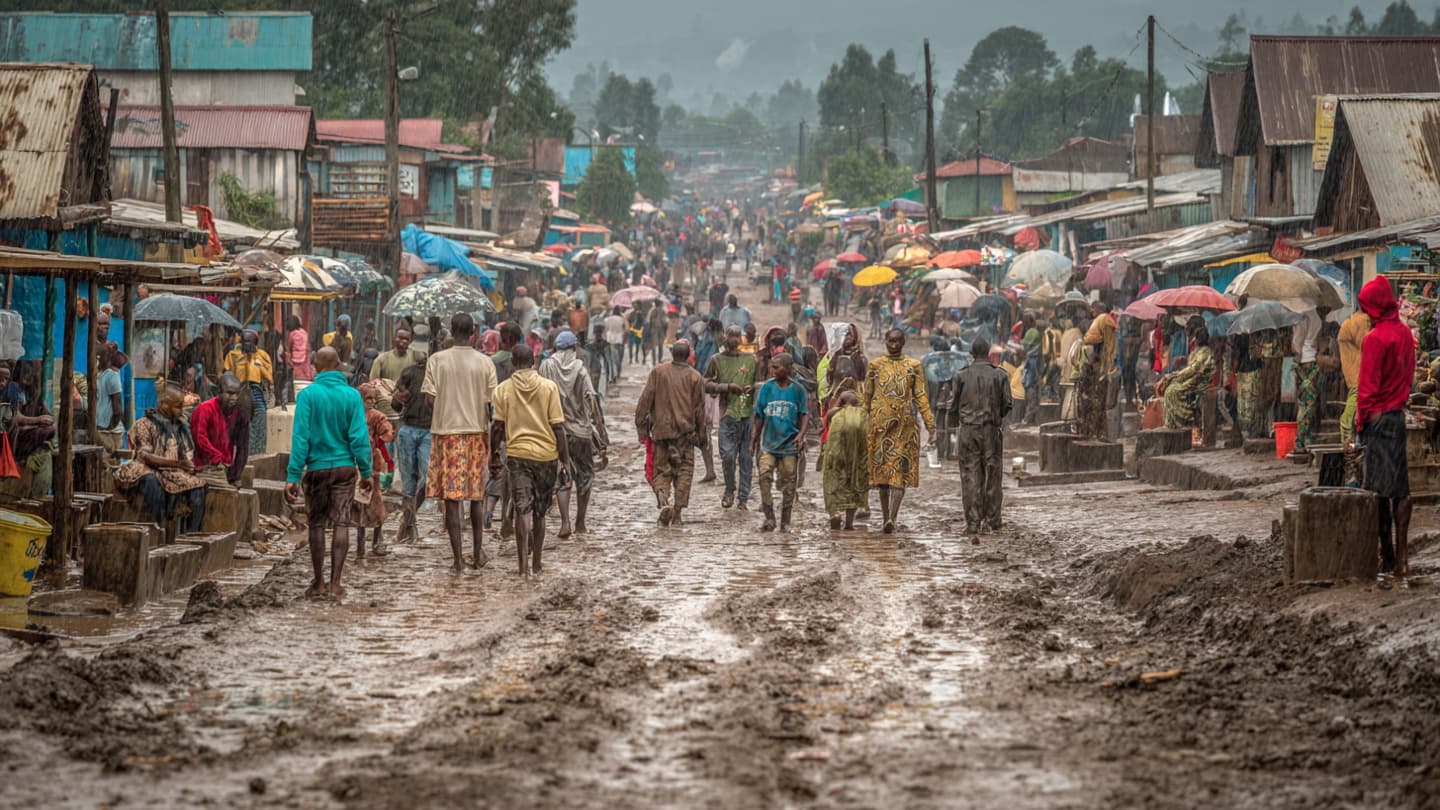
Rain fell heavily over the red-earth roads of eastern Democratic Republic of the Congo, turning pathways into rivers of mud beneath dark equatorial clouds. In towns surrounded by dense forest and distant hills, people moved carefully between market stalls, churches, and crowded clinics while rumors spread faster than official statements. By evening, smoke rose above one community after residents set fire to an Ebola treatment center, an act that revealed not only fear of disease, but also deepening frustration and mistrust surrounding the outbreak response.
The attack on the treatment facility came as health authorities struggle to contain another resurgence of Ebola in a region already burdened by insecurity, displacement, and limited healthcare infrastructure. According to local officials and aid organizations, anger among some residents has intensified amid concerns over quarantines, medical procedures, and the broader handling of the outbreak. The destruction of the center disrupted treatment efforts and highlighted the fragile relationship between public health workers and communities exhausted by years of crisis.
In eastern Congo, epidemics rarely unfold in isolation. Conflict, poverty, and political instability shape nearly every aspect of healthcare delivery. Armed groups continue operating across parts of the region, roads remain difficult to access during rainy seasons, and medical services are often stretched thin even before outbreaks emerge. Against this backdrop, Ebola response teams must navigate not only the virus itself, but also fear, misinformation, and historical distrust toward outside authorities.
The treatment center that burned had stood as part hospital, part containment barrier — a place where protective suits, disinfectant sprays, and isolation tents became symbols interpreted differently by different people. For health workers, such facilities represent urgency and survival. For some residents, however, they can also appear unfamiliar, intimidating, or associated with painful memories of previous outbreaks in which families were separated from loved ones under emergency conditions.
The Democratic Republic of the Congo has faced repeated Ebola outbreaks over the past decade, including major epidemics that drew international concern and large-scale intervention from organizations such as the World Health Organization. Vaccination campaigns and rapid-response systems have improved significantly compared to earlier years, yet each outbreak continues testing the limits of fragile public trust.
Across affected communities, daily life moves beneath a quiet atmosphere of caution. Market vendors wash hands repeatedly at improvised sanitation stations. Motorbike taxis slow at checkpoints where temperatures are taken. Families gather around radios listening for updates while balancing fear of infection with the immediate pressures of earning food and income. In places where survival already depends on close communal networks, public health restrictions can feel emotionally and economically overwhelming.
The burning of the treatment center reflects a pattern seen in several previous Ebola outbreaks across the region, where medical facilities and aid workers have occasionally become targets of local anger. Experts say mistrust often grows when communities feel excluded from decision-making or when emergency measures collide with cultural traditions surrounding caregiving, burial practices, and family contact.
At the same time, healthcare workers continue operating under immense pressure. Doctors, nurses, and aid staff move between villages carrying vaccines, testing equipment, and protective gear through difficult terrain and uncertain security conditions. Many face exhaustion as they attempt to contain infections while also persuading skeptical communities that treatment centers exist to save lives rather than isolate or punish.
The broader humanitarian context deepens those tensions further. Eastern Congo has endured years of violence involving militias, displacement crises, and strained governance structures. For many residents, international attention arrives most visibly during emergencies — epidemics, conflict escalations, or natural disasters — creating a cycle in which outside intervention can feel temporary and transactional rather than enduring.
Still, Ebola itself remains a disease capable of spreading rapidly without coordinated containment. Health officials warn that attacks on medical infrastructure risk delaying treatment, discouraging reporting of symptoms, and increasing transmission. Vaccination campaigns and contact tracing efforts depend heavily on cooperation between authorities and local communities, making trust as essential as medicine itself.
As night settles over the region, the remains of the burned treatment center sit beneath humid skies while aid workers reorganize response efforts nearby. In surrounding villages, conversations continue quietly in homes lit by lanterns and generators — discussions shaped by grief, uncertainty, and fatigue accumulated over many difficult years.
And beyond the smoke and rain, the outbreak continues moving through a landscape where disease is never only biological, but also social and emotional, carried through networks of fear, memory, and fragile belief in institutions struggling to hold against another season of crisis.
AI Image Disclaimer: The accompanying images were generated using AI visualization tools and are intended as illustrative representations of the events described.
Sources:
Reuters World Health Organization Associated Press BBC News Médecins Sans Frontières
Note: This article was published on BanxChange.com and is powered by the BXE Token on the XRP Ledger. For the latest articles and news, please visit BanxChange.com