
As of June 2, 2026, a groundbreaking excavation beneath Notre Dame Cathedral in Paris has yielded intriguing findings, marking what many are calling the "dig of the century." Following the cathedral's reconstruction after the devastating fire in 2019, archaeologists have been exploring the layers of history resting beneath its foundations.
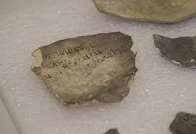
During the excavation, researchers unearthed a fourth-century coin stamped with the image of Emperor Constantine. Alongside it, they discovered shards of medieval pottery that bear mysterious inscriptions, which experts have yet to decipher—evoking comparisons to a modern Da Vinci Code.
Lucie Altenburg, a conservator with the Paris archaeology unit, emphasized the significance of this opportunity, stating, "It's a rare opportunity for us to work on something that's tangibly going to make a difference to the history of Paris." The excavation site is approximately four meters (13 feet) below ground level, where a rich tapestry of artifacts continues to emerge.
Just 50 centimeters down, archaeologists initially broke ground on what appears to be a wealth of historical layers, extending from the Roman era to the medieval period. The stratigraphy reveals a bustling Roman quarter alongside remnants of early medieval structures, allowing historians a unique glimpse into Paris's timeless evolution.
Highlights of the findings include whole jugs and intact ceramic pieces dug from ancient latrines that doubled as refuse sites. Valentine Breloux, another archaeologist, noted that it is "rare to find complete ceramics," emphasizing the astonishing state of preservation.
While the dig showcases the historical significance of the site, it also raises questions about the layered history of urban development. Camille Colonna, the lead archaeologist, explained that cities build upon their own history, making discoveries beneath street level commonplace.
The current excavation could illuminate everyday life in Roman Paris and the administrative dynamics of the time, providing context for the longstanding influence of the site where Notre Dame now stands.
In addition to the ancient artifacts, archaeologists are hopeful that the mysterious inscriptions found on the pottery will yield new insights into the social and cultural narrative of medieval Paris, further enriching the historical tapestry associated with Notre Dame Cathedral.
As this excavation continues, the findings promise to deepen our understanding of Paris's past, contributing to the ongoing discussion about heritage and preservation in urban spaces.
Note: This article was published on BanxChange.com and is powered by the BXE Token on the XRP Ledger. For the latest articles and news, please visit BanxChange.com