
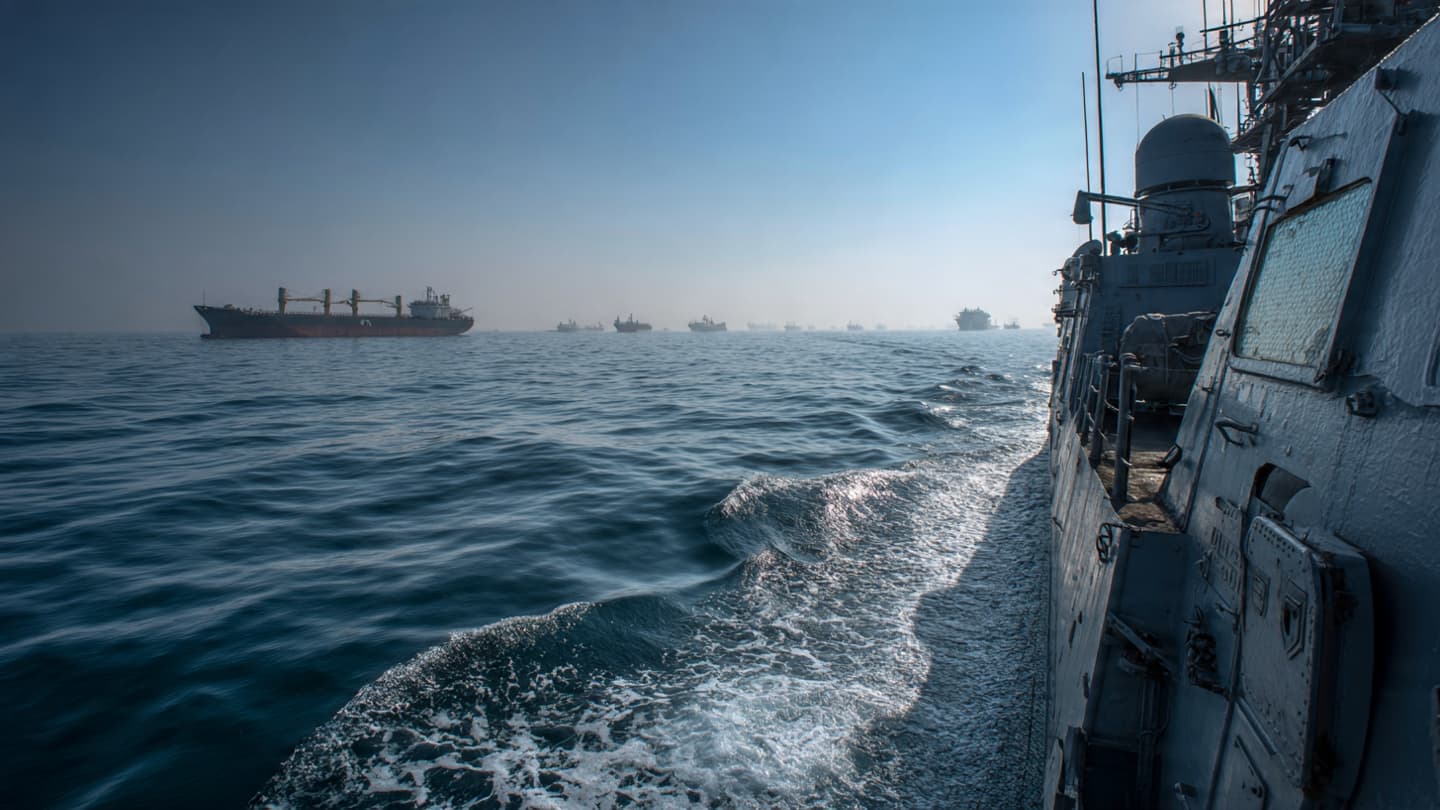
Some waterways shape geography. Others shape history. The Strait of Hormuz has long done both. Connecting the Gulf to international markets, the narrow passage serves as one of the world's most significant maritime corridors. Every movement through its waters carries economic importance, while every military incident attracts global attention.
The latest chapter began after reports that Iranian drones were launched near strategic maritime areas. U.S. military officials stated that the activity posed a potential threat to navigation and regional security. Shortly afterward, American forces conducted strikes against Iranian sites that Washington said were linked to military operations.
American officials characterized the strikes as defensive and limited in scope. Their stated objective was to reduce risks to shipping routes and discourage further military activity near critical waterways. The operation reflected Washington's broader commitment to maintaining maritime security in the region.
Iran strongly criticized the strikes and accused the United States of escalating tensions. Iranian authorities argued that external military pressure contributes to instability rather than reducing it. The exchange of accusations highlighted the continuing distrust that has defined relations between the two countries for many years.
The incident immediately drew international attention because of its location. The Strait of Hormuz remains essential to global energy transportation, with millions of barrels of oil passing through the corridor every day. As a result, even limited confrontations can influence perceptions of market stability.
Security analysts observed that the Gulf's dense military presence increases the possibility of misunderstandings. Naval forces, surveillance systems, commercial shipping, and regional rivalries operate in close proximity, creating an environment where small incidents can rapidly gain broader significance.
Governments throughout the region responded carefully. Public statements generally emphasized restraint and the need to avoid actions that could trigger further escalation. Many leaders continue to view stability as essential for economic growth and regional development.
Diplomatic efforts remain ongoing despite repeated setbacks. International mediators have encouraged dialogue between Washington and Tehran, arguing that sustainable solutions require political engagement rather than continued military exchanges. Those efforts face challenges, but they remain an important part of the broader regional picture.
Meanwhile, commercial activity in the Strait continues. Ships maintain their schedules, ports remain operational, and energy exports flow toward international markets. Nevertheless, the latest confrontation serves as a reminder that strategic waterways are often influenced by forces extending far beyond commerce.
As attention remains fixed on developments in the Gulf, policymakers around the world are watching closely. The coming days may determine whether the latest flare-up remains a temporary episode or becomes part of a larger cycle of regional tension.
Note: This article was published on BanxChange.com and is powered by the BXE Token on the XRP Ledger. For the latest articles and news, please visit BanxChange.com