
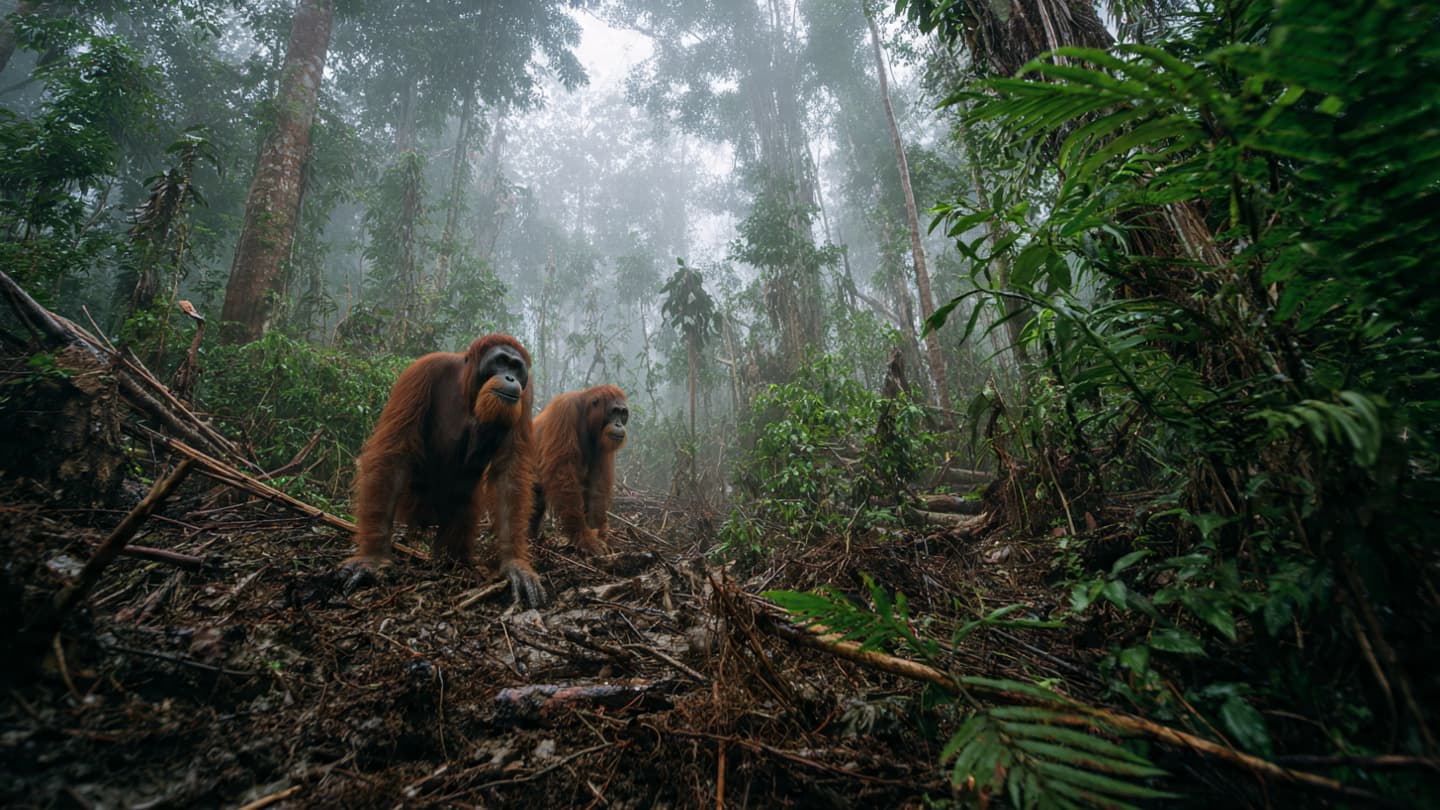
Nature often unfolds in rhythms that have guided life for centuries. Rain nourishes forests, rivers shape landscapes, and wildlife adapts to seasonal change. Yet when those rhythms intensify beyond familiar patterns, even the most resilient ecosystems can face profound challenges. A recent study from Indonesia offers a striking example, linking a brief period of extreme rainfall to significant losses among one of the world's rarest great ape populations.
Body
Researchers reported that four days of exceptionally heavy rain in Indonesia resulted in the deaths of approximately 7% of the global population of the critically endangered Tapanuli orangutan. The findings highlight the vulnerability of species whose numbers are already extremely limited and whose habitats are confined to relatively small areas.
The Tapanuli orangutan, found only in parts of North Sumatra, is considered the rarest great ape species on Earth. Scientists estimate that fewer than a thousand individuals remain in the wild, making every loss particularly significant for the long-term survival of the population.
According to the study, the intense rainfall triggered landslides and environmental disturbances that affected habitat conditions. Researchers noted that extreme weather events can have disproportionate consequences for species living in isolated and fragmented ecosystems.
Conservation experts have long warned that climate-related changes may create new risks for endangered wildlife. While many species have evolved to cope with seasonal variation, sudden and severe weather events can exceed natural adaptive capacities.
The findings also underscore the interconnected relationship between climate patterns and biodiversity. Forest ecosystems support wildlife, regulate water systems, and provide ecological stability, yet they can become increasingly vulnerable when subjected to repeated environmental pressures.
Scientists emphasized that conservation efforts remain essential for protecting remaining orangutan populations. Habitat preservation, forest restoration, and long-term environmental monitoring are frequently cited as key components of species recovery strategies.
Beyond the immediate impact on orangutans, the study contributes to a broader scientific discussion regarding how extreme weather may influence biodiversity worldwide. Similar concerns are being examined in regions where vulnerable species already face habitat loss and environmental change.
Closing
Researchers hope the findings will encourage continued investment in conservation and climate resilience measures. For one of the world's rarest great apes, the study serves as a reminder that even a few days of extraordinary weather can leave lasting ecological consequences.
AI Image Disclaimer: The visual accompanying this article is AI-generated and intended solely to illustrate the reported topic.
Source Verification Check: Reuters, Nature Ecology & Evolution, Mongabay, Associated Press, Conservation International
Note: This article was published on BanxChange.com and is powered by the BXE Token on the XRP Ledger. For the latest articles and news, please visit BanxChange.com