The universe is a vast puzzle, with pieces scattered across billions of light-years. For decades, astronomers have known that a significant portion of the ordinary matter—the stuff stars, planets, and people are made of—was unaccounted for. This "missing matter" problem has been a lingering mystery in cosmology. Now, recent observations suggest that scientists may have finally located this elusive substance in the form of warm-hot intergalactic gas. This discovery is not just a resolution to a mathematical discrepancy; it is a completion of our cosmic inventory. It invites reflection on the limits of human perception, the power of indirect detection, and the humble realization that even the visible universe holds secrets in its faintest whispers.
Body: The missing matter was predicted by models of the Big Bang, which calculated the total amount of baryonic matter created in the early universe. However, observations of galaxies and stars only accounted for about half of this expected amount. The rest seemed to vanish, leading to various theories about its location. Some suggested it was hidden in black holes, while others proposed it existed in diffuse clouds too faint to see. The search for this matter became one of the great quests of modern astronomy.
Recent studies have focused on the space between galaxies, known as the intergalactic medium. Here, gas is heated to millions of degrees by shockwaves from supernovae and galaxy collisions. This warm-hot intergalactic medium (WHIM) is difficult to detect because it does not emit visible light. Instead, it absorbs specific wavelengths of X-rays from distant quasars. By analyzing these absorption lines, scientists can infer the presence and quantity of the gas. It is a method of seeing by looking at what is blocked.
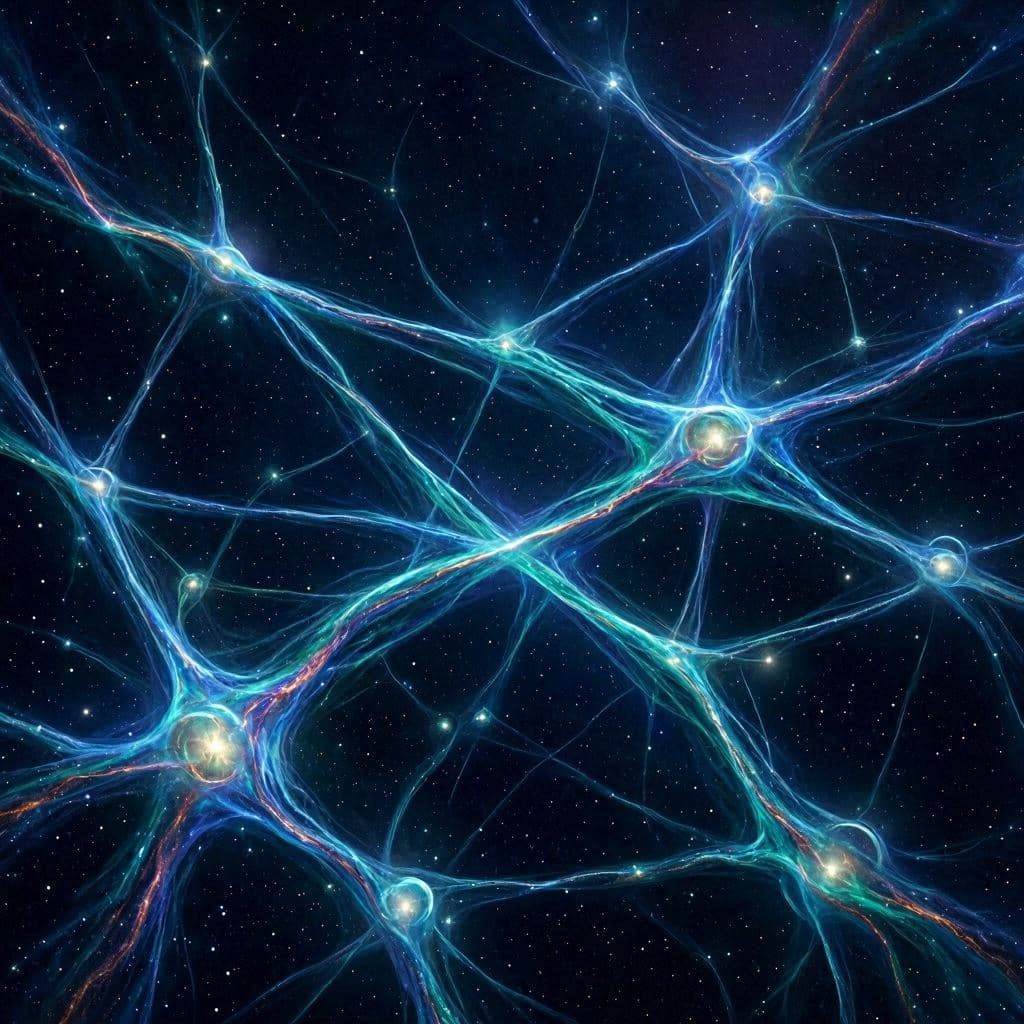
The confirmation of this gas fills a critical gap in our understanding of cosmic structure. It suggests that matter is not just concentrated in galaxies but is spread throughout the cosmic web. This web acts as a scaffold for the universe, guiding the formation of clusters and voids. Finding the missing matter helps validate these structural models, reinforcing our confidence in current cosmological theories. It is a victory for theoretical physics.
For the scientific community, this discovery is a relief. It resolves a long-standing tension between observation and theory. However, it also raises new questions about the properties of this gas and its role in galaxy evolution. How does it cool and fall into galaxies to form new stars? Understanding these processes is key to unraveling the history of cosmic growth. The answer to one question often leads to many more.
Technological advancements have made this detection possible. Space-based X-ray telescopes, such as Chandra and XMM-Newton, provide the sensitivity needed to observe faint signals. Future missions will offer even greater precision, allowing for more detailed mapping of the cosmic web. Technology extends our senses, enabling us to perceive the invisible. It is a testament to human ingenuity.
The philosophical implications are profound. Knowing that we have accounted for the ordinary matter of the universe gives a sense of completeness. Yet, we still know little about dark matter and dark energy, which make up the majority of the cosmos. This discovery reminds us that while we have solved one mystery, the universe remains largely unknown. Humility is the appropriate response to such vastness.
Public engagement with astronomy often focuses on the spectacular, such as black holes or exoplanets. However, finding missing matter is a quiet triumph of persistence and logic. It shows that science progresses through careful accumulation of evidence. Sharing these stories helps appreciate the rigor and beauty of scientific inquiry. It inspires the next generation of thinkers.
Closing: In the end, finding the missing matter is a milestone in our journey to understand the cosmos. It completes a chapter in the story of the universe’s composition. As we continue to explore, the hope is that we will uncover more of the hidden structures that bind the cosmos together, deepening our connection to the stars.
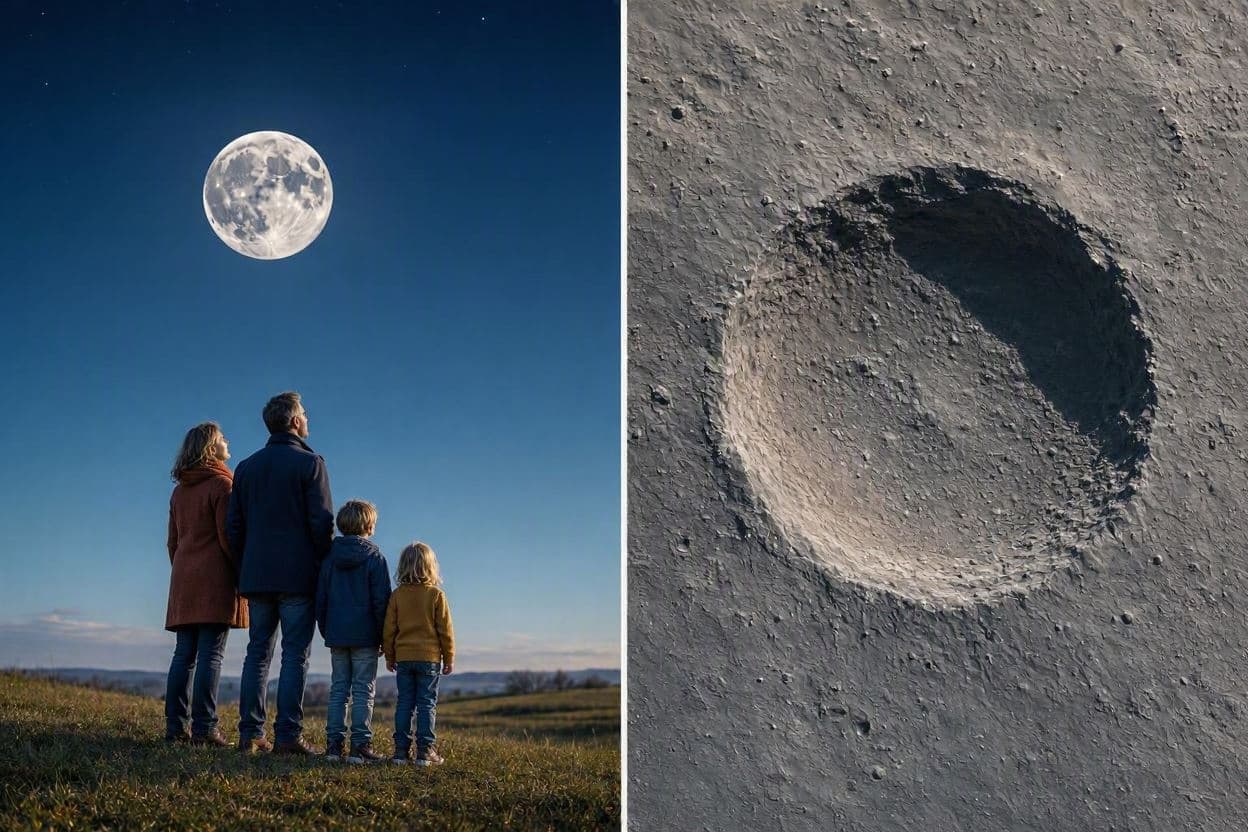
AI Image Disclaimer: Visuals accompanying this text are AI-generated conceptualizations intended to depict the themes of cosmology and astronomical discovery.
Sources: Nature Astronomy ESA (European Space Agency) Smithsonian Magazine
Published by Banx Network. This article is part of the Banx decentralized media programme, powered by the BXE token on the XRP Ledger.