
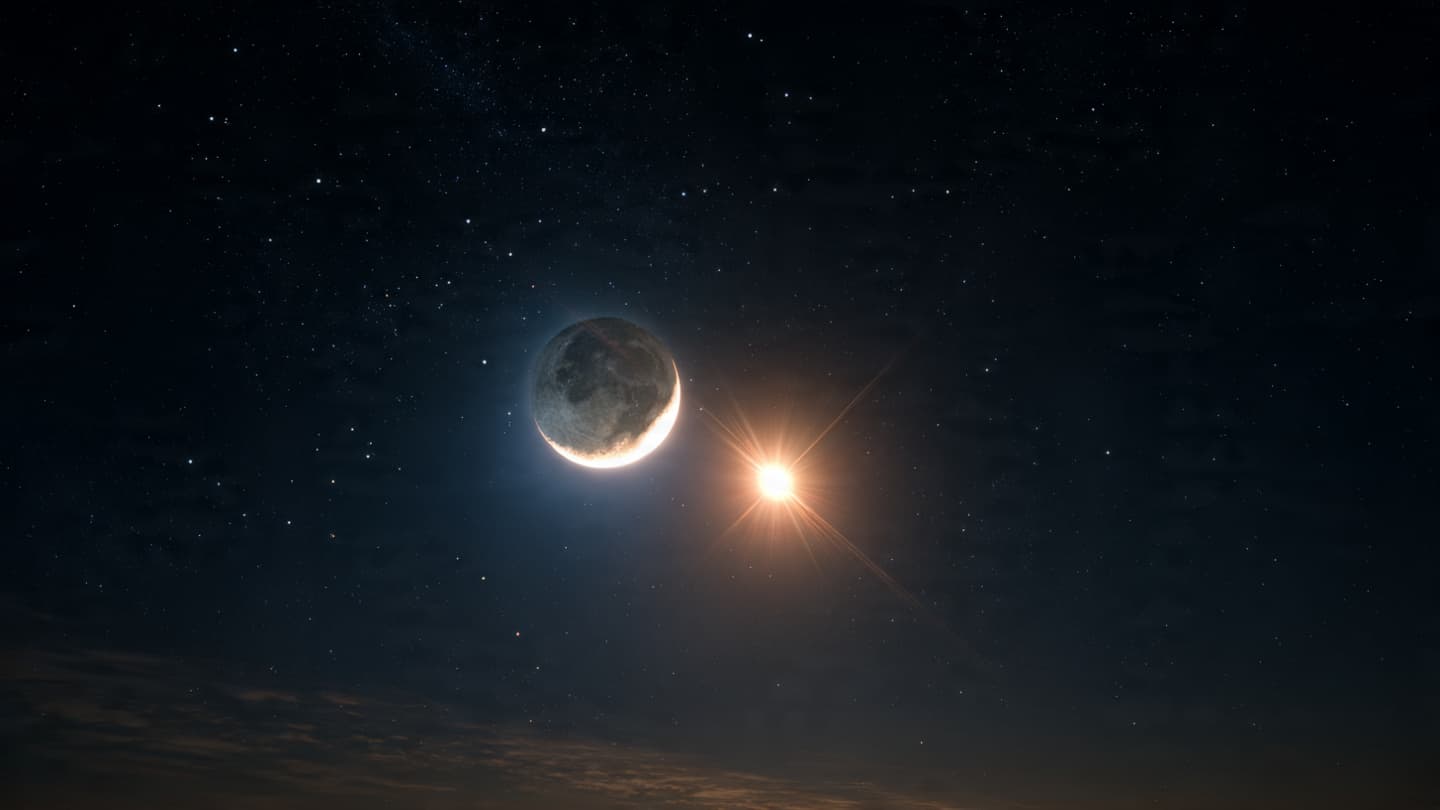
The night sky has long inspired wonder, offering moments when familiar celestial objects align in ways that capture both scientific attention and public imagination. Among these events are occultations, rare occurrences in which one astronomical body appears to pass directly in front of another. This June, observers in selected regions will have an opportunity to witness such a phenomenon as the Moon temporarily obscures Venus from view.
Astronomers describe the event as a lunar occultation of Venus. From specific locations on Earth, the bright planet will appear to disappear behind the Moon before reemerging sometime later. Although the alignment is a natural consequence of orbital motion, opportunities to observe it are relatively uncommon.
Venus is often one of the brightest objects visible in the sky after the Sun and Moon. Its visibility makes the event particularly appealing to both experienced astronomers and casual skywatchers.
The phenomenon occurs because the Moon's orbit occasionally places it directly between Earth and another visible object. When viewed from certain regions, the alignment appears precise enough for one object to conceal the other.
Scientists emphasize that events like this provide more than visual spectacle. Historically, occultations have contributed to astronomical measurements, helping researchers refine calculations involving orbital motion and celestial positioning.
Modern astronomy now relies on far more sophisticated tools, yet these alignments continue to hold educational and scientific value. They offer opportunities to engage the public with observational astronomy and encourage interest in space science.
Astronomy clubs, observatories, and educational institutions often organize viewing activities around such events. Advances in photography and telescope technology have also made it easier for enthusiasts to document celestial alignments.
Weather conditions will play a significant role in visibility. Clear skies are essential for observation, and viewing opportunities will vary depending on geographic location.
As June approaches, astronomers are encouraging interested observers to check local visibility forecasts and event schedules. The occultation serves as another reminder that even familiar skies continue to offer moments of discovery and wonder.
AI Image Disclaimer: The accompanying illustration is AI-generated and intended to represent the astronomical event in an educational manner.
Source Verification Check: NASA, Sky & Telescope, Timeanddate, Astronomy Magazine, Times of India Science
Published by Banx Network. This article is part of the Banx decentralized media programme, powered by the BXE token on the XRP Ledger.



