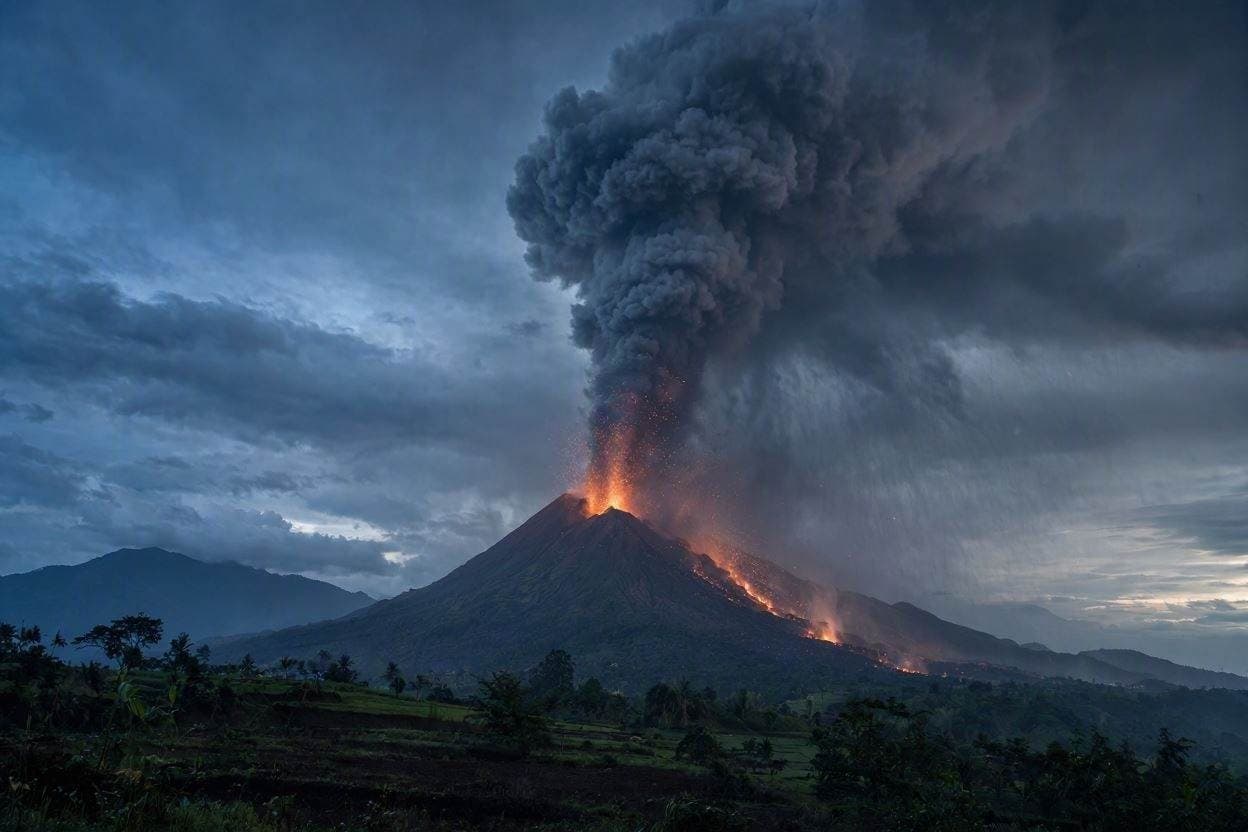
The earth beneath our feet is rarely still, though we often forget its restless nature until it reminds us with force. In Guatemala, the Fuego volcano, one of the most active in Central America, has once again awakened, spewing ash, lava, and gas into the sky. The eruption has triggered a red alert and forced the evacuation of hundreds of residents from nearby villages. Images from the scene capture the dramatic power of nature, with plumes of smoke rising against the backdrop of daily life disrupted by geological inevitability.
The eruption began intensifying in early August 2026, prompting authorities to order preventive evacuations in communities such as El Porvenir and Las Lajitas. More than 1,700 people were moved to shelters, where they await further instructions from disaster response agencies. The swift action of local officials aims to prevent casualties, recalling the tragic 2018 eruption that killed more than 200 people. Memory of that disaster drives the current urgency, making caution the priority.
Photographs from the area show streets covered in gray ash, cars blanketed in dust, and families carrying their belongings as they flee. The visual impact is striking, highlighting the vulnerability of communities living in the shadow of an active volcano. For residents, the evacuation is a familiar but stressful routine, a testament to their resilience in the face of recurring natural threats.
Fuego’s eruptions are characterized by explosive activity and pyroclastic flows, which can travel rapidly down its slopes. These flows, composed of hot gas, ash, and rock, are particularly dangerous and difficult to predict. Monitoring systems are in place to detect changes in seismic activity and gas emissions, providing early warnings that allow for timely evacuations. Technology plays a crucial role in mitigating risk, though it cannot eliminate it entirely.
The economic impact of the evacuation is significant for local farmers and businesses. Fields are left untended, and shops remain closed as people seek safety. The ash fall can damage crops and contaminate water sources, adding to the long-term challenges faced by these communities. Recovery often takes months, requiring sustained support from government and non-governmental organizations.
International aid agencies are monitoring the situation, ready to assist if needed. The global community recognizes the disproportionate impact of natural disasters on vulnerable populations. Solidarity and cooperation are essential in managing such crises, ensuring that those affected receive the care and resources they need. The images of evacuation serve as a call to action for continued preparedness and support.
The eruption of Fuego volcano is a powerful reminder of nature’s force. As Guatemalan communities navigate the immediate dangers, the focus remains on safety and resilience. The evacuations, though disruptive, are a necessary measure to protect lives. May the skies clear soon, allowing residents to return to their homes with peace of mind.
AI Image Disclaimer: Visuals associated with this article are AI-generated to illustrate the themes of natural disaster and community response.
Sources: Reuters The Guardian AP News
Note: This article was published on BanxChange.com and is powered by the BXE Token on the XRP Ledger. For the latest articles and news, please visit BanxChange.com