Sana'a, Yemen—The wall of brown water roared down the rocky ravine without warning, smashing through stone-built homes before families could reach higher ground. Torrential seasonal downpours funneled massive volumes of rain off the high plateaus, turning dry wadis into raging torrents. Local residents in the isolated mountain district scrambled up steep slopes as rushing water swallowed vehicles and livestock. Civil defense units received garbled radio reports from district managers reporting entire housing blocks submerged.
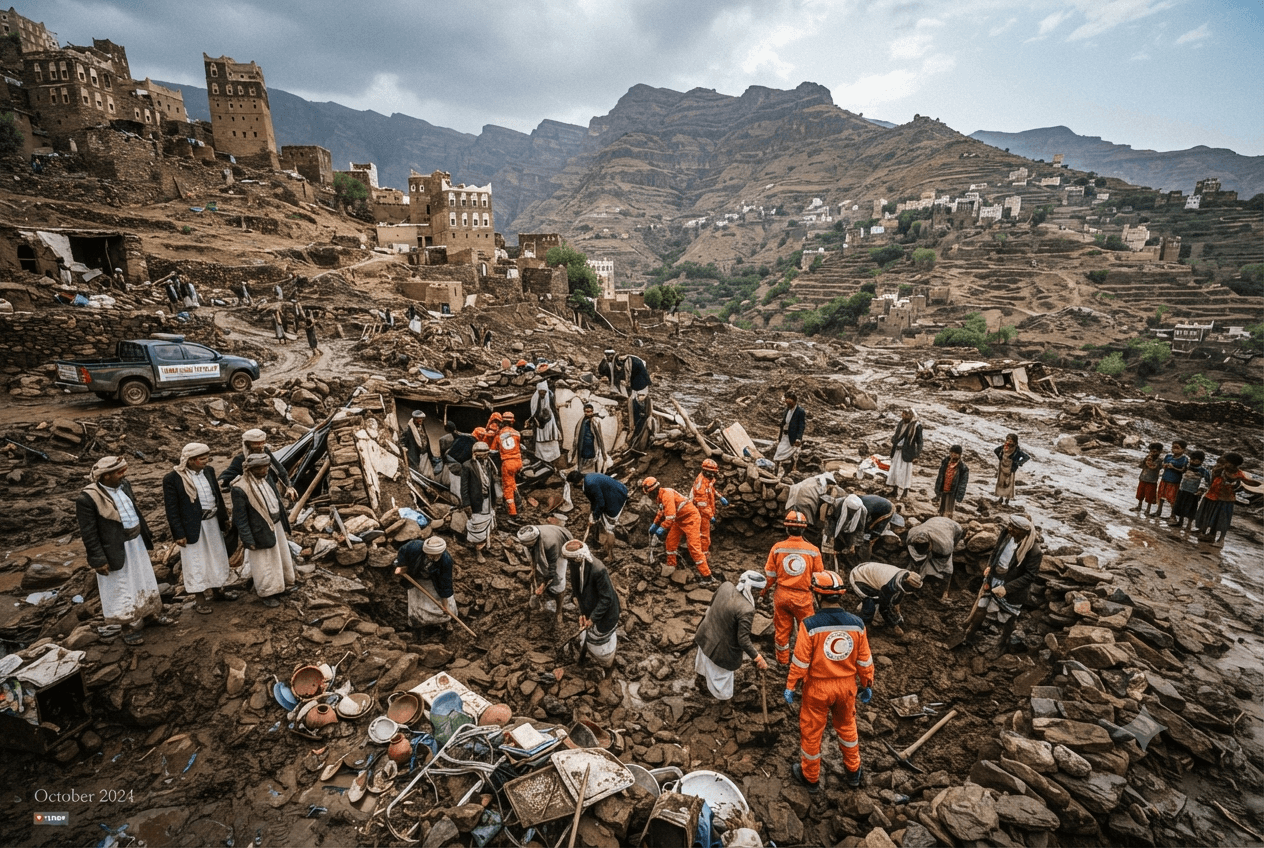
Rescue teams from neighboring administrative zones attempted to navigate washed-out mountain tracks blocked by massive boulders and deep mud. Local villagers used basic hand tools to dig through collapsed masonry in the fading afternoon light, searching for survivors trapped underneath. Confirmed reports from local health clinics verified that seven residents perished during the sudden inundation. Dozens of others sustained severe injuries from flying debris and crushing structural failures.
Agricultural terraces carved into the hillsides washed away entirely, destroying seasonal grain crops that families relied upon for subsistence. Irrigation channels overflowed and eroded access paths, cutting off the affected valley from external vehicular traffic. Humanitarian workers rushed emergency medical kits and clean water bladders toward the disaster zone using pack animals. Aid coordinators warned that compromised sanitation systems threatened to spark waterborne illness outbreaks among the displaced population.
Regional administrative councils held an emergency meeting to allocate fuel for heavy excavation machinery stationed near the foothills. Communications towers powered by solar arrays went dark as secondary mudslides damaged secondary transmission lines. Survivors huddled together under makeshift canvas shelters pitched on high ground above the flooded riverbed. Community elders coordinated night watches to monitor rising water levels as intermittent rain showers continued overhead.
International relief agencies pledged financial support and logistics coordination to assist local municipal rescue efforts. Cargo trucks carrying blankets and high-energy food rations departed from regional distribution depots toward the mountain pass. Independent meteorological observers noted that unseasonal atmospheric moisture patterns intensified the precipitation over the western highlands. Insurance adjusters and government assessors prepared to survey property losses once access roads reopened.
Medical outposts reported treating numerous patients for deep lacerations, fractures, and acute shock following the sudden deluge. Doctors worked through the night under battery-powered lanterns, rationing scarce surgical supplies to handle the influx of trauma cases. Public health inspectors distributed water purification tablets to families sheltering in damaged school buildings. Relief logistics remained constrained by damaged infrastructure and treacherous mountain paths.
Engineers assessed the structural integrity of a stone arch bridge that miraculously withstood the peak pressure of the flash flood. Repair crews began clearing mud and debris from the bridge approaches to allow heavy relief transport vehicles across the span. Local authorities urged residents living along other vulnerable river channels to evacuate toward higher ground immediately. The persistent threat of secondary downpours kept emergency rescue units on high alert through the night.
Community members gathered at dawn to conduct brief funeral rites for the victims recovered from the mud-choked ruins. Grief-stricken families shared what little food and dry clothing remained intact after the flash flood swept through their homesteads. Government disaster response coordinators promised additional tent settlements and food rations for the coming days. The recovery operation faced long delays as persistent rain continued to hamper heavy equipment deployment.
Note: This article was published on BanxChange.com and is powered by the BXE Token on the XRP Ledger. For the latest articles and news, please visit BanxChange.com