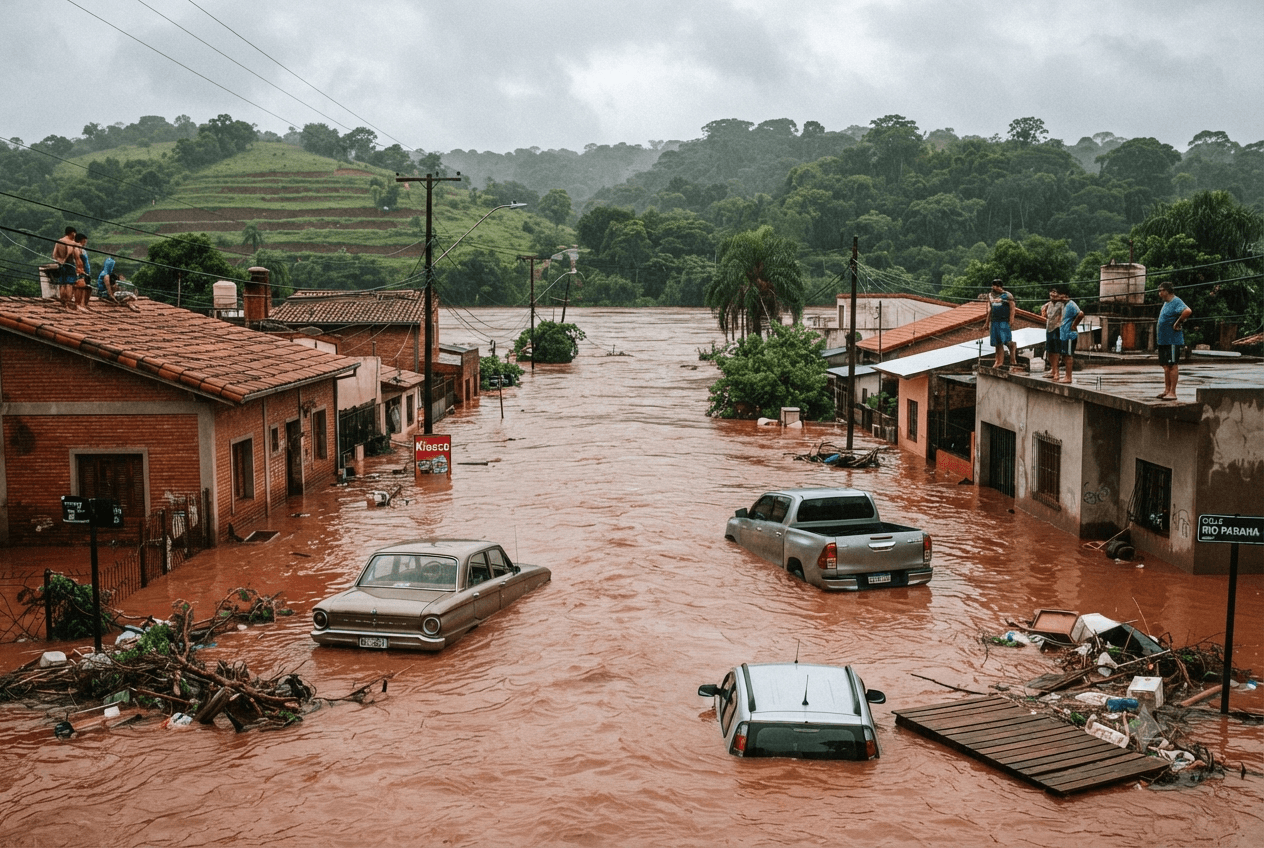
Posadas, Argentina—The rain did not fall in drops; it descended in a relentless sheet of gray water. Within twenty minutes, dry stream beds transformed into raging torrents crashing through residential streets. Flash floods swept parked cars down sloping asphalt like floating toys. Residents scrambled onto corrugated tin roofs as muddy water poured through front doorways. Municipal emergency sirens wailed across the soaked provincial town as panic spread. First responders fought against surging currents to reach families trapped inside flooded homes.
Civil defense teams deployed rubber rescue boats to navigate streets converted into treacherous rivers. Swift-water rescue specialists pulled stranded motorists from vehicle windows just before their cars submerged completely. Two victims were recovered downstream after being swept away by the overpowering current. Paramedics performed chest compressions on the riverbank, but resuscitation efforts failed to revive them. Local hospitals activated emergency response teams to treat patients suffering from hypothermia and shock.
Provincial weather bureaus recorded over one hundred millimeters of rainfall in under two hours. Drainage culverts clogged with debris, forcing water to spill over curbs and inundate commercial districts. Shop owners watched helplessly as inventory floated out through broken front display windows. Power substations flooded, plunging several neighborhoods into total darkness during the height of the storm. Utility workers stood by helplessly waiting for water levels to drop before inspecting transformers.
Governor office representatives convened an emergency crisis cabinet to coordinate disaster relief operations. Federal civil protection units were dispatched from Buenos Aires with heavy extraction equipment. National highway police closed multiple provincial secondary roads due to washed-out culverts and bridge collapses. Temporary evacuation centers opened inside municipal gymnasiums to house hundreds of displaced families. Volunteers rushed bottled water and blankets to shelters as victims processed the sudden devastation.
Engineers inspected nearby bridge supports for structural damage caused by heavy debris battering the concrete piers. Provincial authorities warned residents to stay clear of swollen riverbanks while rain warnings remained active. Local weather forecasters predicted additional precipitation moving in from neighboring Paraguay overnight. Municipal sanitation crews staged front-end loaders along main avenues to clear mud and fallen tree branches. The cleanup operation faced immense hurdles as thick silt caked every street surface.
Insurance adjusters established makeshift desks inside municipal buildings to document property loss claims. Families returned to water-damaged homes to salvage what little personal belongings remained untouched by silt. Community kitchens were set up in neighborhood plazas to feed residents lacking functional cooking facilities. Police patrols maintained round-the-clock security around evacuated zones to prevent opportunistic looting. The river level slowly receded below flood stage as afternoon light broke through the clouds.
Provincial ministers promised financial aid packages for small businesses destroyed by the sudden inundation. Geologists surveyed hillside communities for potential mudslide hazards triggered by soil saturation. Public health teams distributed water purification tablets and vaccinations to prevent waterborne disease outbreaks. Electrical workers labored under portable floodlights to restore power to critical municipal sectors. The scarred landscape bore silent witness to the destructive power of the flash flood.
Note: This article was published on BanxChange.com and is powered by the BXE Token on the XRP Ledger. For the latest articles and news, please visit BanxChange.com