
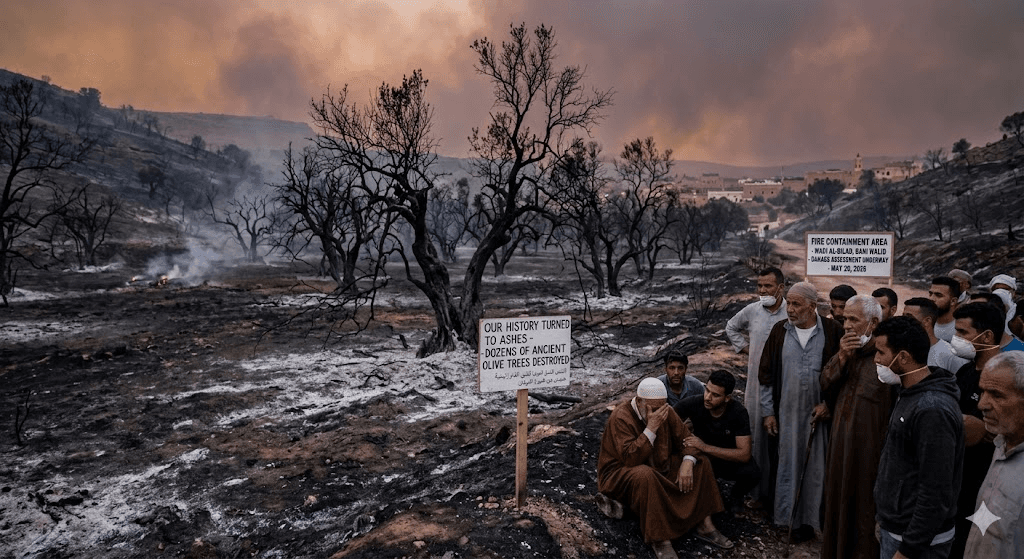
BANI WALID, Libya — A fast-moving, devastating wildfire swept through the Wadi al-Bilad area of Bani Walid, leaving behind a trail of environmental and cultural destruction.
The catastrophic blaze quickly spun out of control, incinerating a vast expanse of agricultural land and destroying dozens of the region’s historic olive trees, which have stood as a symbol of the community's heritage for centuries.
The fire broke out in the dense groves of Wadi al-Bilad, an area celebrated for its fertile soil and centuries-old olive trees. Fueled by dry conditions and shifting winds, the flames raced through the valley, jumping from grove to grove.
Local farmers and residents watched in heartbreak as ancient trees—many passed down through generations—were engulfed in minutes.
Local civil defense units and volunteer teams rushed to the valley to combat the inferno. Firefighters faced significant hurdles, including rugged valley terrain that limited the accessibility of heavy fire trucks, forcing teams to rely on manual tools and localized water tankers to create firebreaks.
While crews managed to prevent the flames from encroaching directly into nearby residential neighborhoods, the economic and emotional toll on the town's agricultural sector is profound. For many families in Bani Walid, these ancient olive groves are not just a primary source of livelihood through olive oil production, but a living tie to their ancestral history.
As the smoke begins to clear over Wadi al-Bilad, local authorities and environmental advocates are calling for an immediate investigation into the cause of the fire.
Community leaders are already urging agricultural ministries and humanitarian organizations to step in with emergency support for affected farmers, alongside long-term initiatives to restore the scorched landscape and protect the remaining historic trees of the region.
Note: This article was published on BanxChange.com and is powered by the BXE Token on the XRP Ledger. For the latest articles and news, please visit BanxChange.com