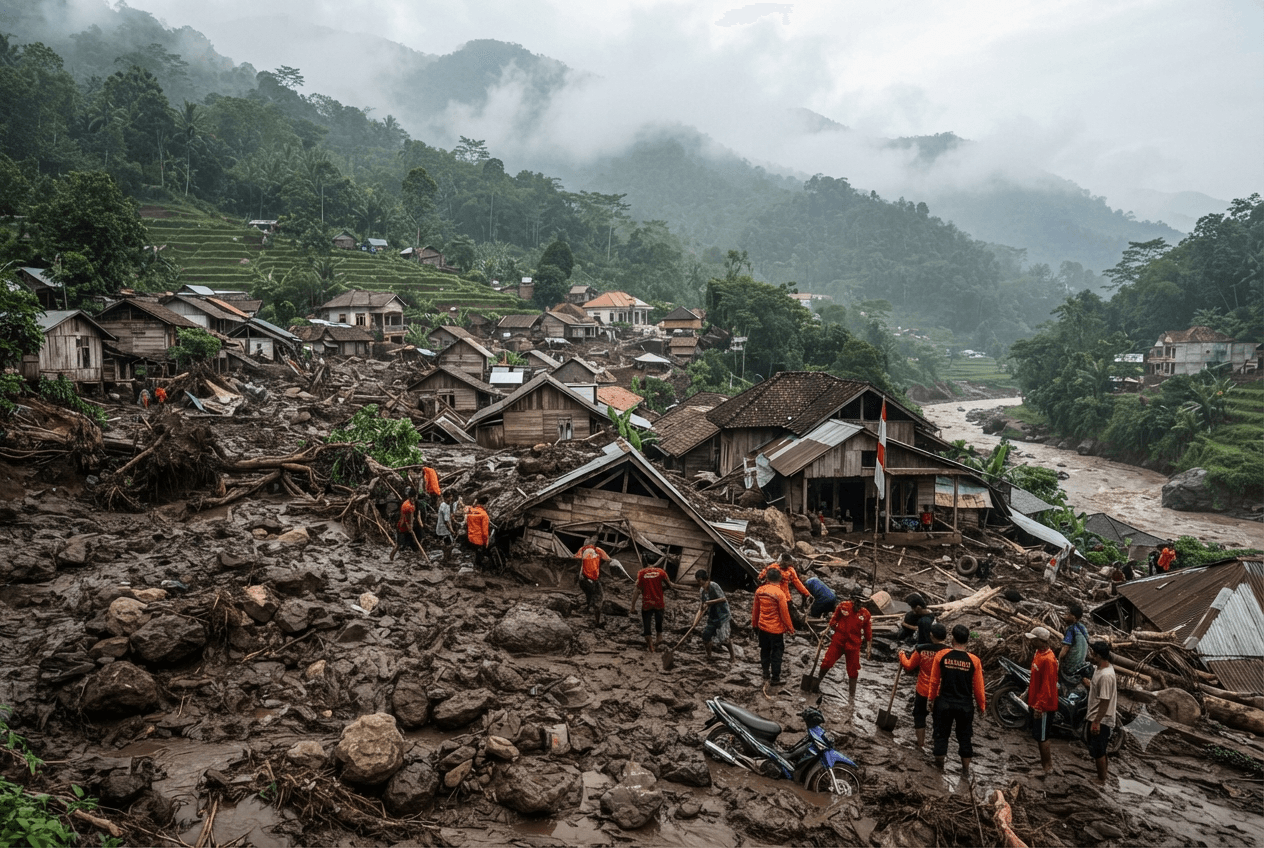
Jakarta, Indonesia—Torrential overnight rains unleashed violent mudslides and flash floods across isolated mountain settlements. Raging walls of mud and rock buried dozens of traditional wooden houses without warning. Villagers caught in the path of the torrent had no time to escape. Local disaster authorities launched frantic search operations across the steep terrain at dawn.
Rescue teams confirmed that fourteen residents lost their lives in the sudden deluge. Workers pulled bodies from thick layers of grey silt and collapsed building debris. Medics treated numerous survivors for severe fractures and exhaustion at makeshift field posts. Several families remained missing as rescue dogs searched the unstable wreckage.
Swollen rivers overflowed their banks, washing away critical wooden footbridges and roadways. The destruction cut off all land access to the hardest-hit mountain valleys. Helicopters attempted aerial reconnaissance drops to deliver emergency rations to stranded survivors. Low-hanging cloud cover and heavy fog hampered initial aviation support efforts.
Local officials blamed excessive illegal logging for destabilizing the steep mountain slopes. Stripped hillsides failed to absorb the massive volume of water dropped by the storm. Environmental advocates pointed to chronic enforcement failures regarding regional forestry protections. Government ministers promised an immediate review of land-use policies across the highland districts.
Survivors gathered at a hillside community center transformed into a temporary shelter. Supplies of clean drinking water and medical supplies dwindled rapidly during the afternoon. Public health workers distributed disinfectants to prevent the outbreak of waterborne illnesses. Families mourned their relatives while waiting for news regarding missing household members.
Heavy machinery struggled to reach the disaster zone due to blocked mountain passes. Engineering units deployed manual clearing tools to cut through massive earthen blockages. Weather radars detected additional storm cells moving toward the vulnerable highland region. Meteorological agencies maintained severe weather warnings for the entire provincial sector.
Relief coordinators established communication links via satellite radio with the capital. International humanitarian organizations offered financial and logistical support for recovery efforts. Local volunteers arrived on foot carrying basic medical supplies through muddy trails. Authorities prepared for an extended recovery operation as search grids expanded outward.
The immediate crisis exposed deep vulnerabilities in rural infrastructure resilience planning. Regional councils face mounting criticism over inadequate early warning systems in remote areas. Engineers began surveying adjacent slopes to assess risks of secondary land slips. Rescue coordinators confirmed operations would continue through the night under floodlights.
Note: This article was published on BanxChange.com and is powered by the BXE Token on the XRP Ledger. For the latest articles and news, please visit BanxChange.com