
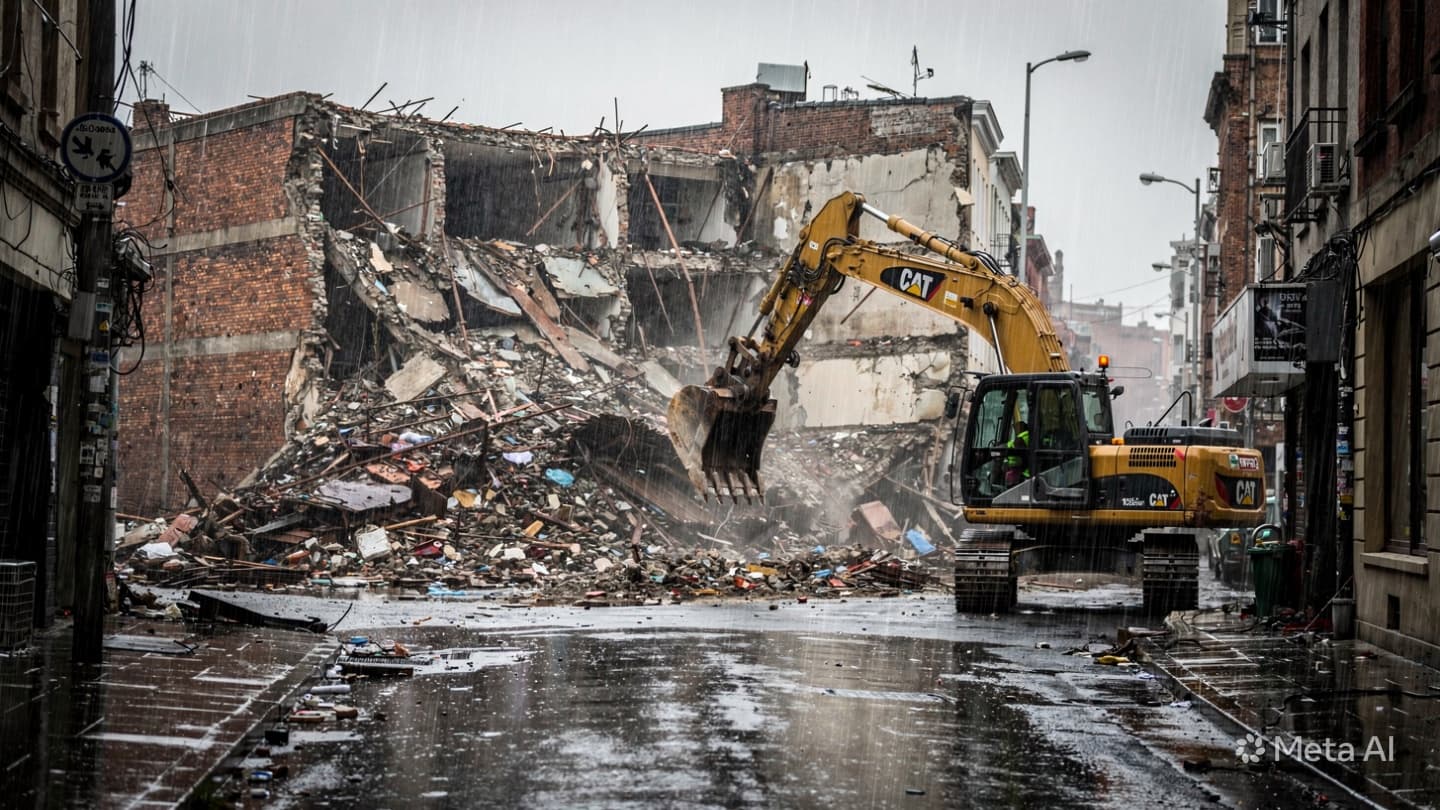
Biratnagar, Nepal—A structural failure reduced a three-story residential building to rubble early Tuesday morning, burying the occupants beneath tons of brick and concrete. The collapse occurred just after 04:00 local time in a densely packed neighborhood on the outskirts of the city. Emergency crews arrived to find the property entirely flattened, with neighboring structures sustaining heavy collateral damage. First responders worked under floodlights to clear the debris, confirming one fatality at the scene.
Rainfall had battered the district for three consecutive days prior to the collapse. The saturated ground compromised the foundation of the decades-old building. Municipal records show the property had never been retrofitted to meet modern building codes. Neighbors reported hearing deep structural groans throughout the night before a sudden, concussive crash shook the entire street.
The deceased, identified by police as a 45-year-old tenant, was trapped on the ground floor when the upper levels pancaked downward. Two other residents sustained severe injuries. They were pulled from the wreckage by local volunteers before official rescue units fully mobilized. Paramedics stabilized the survivors on the pavement before transporting them to the Koshi Hospital for emergency trauma care.
Local engineers have repeatedly warned the municipal government about the precarious state of unregulated housing in this sector. Landlords frequently add unauthorized floors to old, load-bearing brick walls to maximize rental income. Building inspectors rarely enforce demolition orders. A mix of bureaucratic inertia and political pressure from property owners keeps these dangerous structures occupied.
Heavy excavators struggle to access the narrow alleyways leading to the site. Rescue workers resort to using sledgehammers and bare hands to shift the fractured concrete slabs. The risk of a secondary collapse remains high. The adjoining buildings lean dangerously over the impact zone, forcing authorities to evacuate dozens of adjacent households with no notice.
The mayor’s office issued a terse statement deflecting blame. Officials claimed the property owner evaded mandatory safety audits for over five years. The chief district officer announced the formation of a rapid response committee to evaluate all buildings within a two-kilometer radius. Local advocates dismissed the move as a standard public relations exercise designed to absorb the immediate public backlash.
Police have issued an arrest warrant for the landlord, who has not been seen since the incident. Investigators discovered that the owner added a heavy concrete water tank to the roof just weeks ago. This unapproved addition likely provided the final strain on the weakened masonry. Officers are currently searching known local addresses and monitoring transit hubs.
Displaced families now wait on the flooded street corner, guarding whatever possessions they managed to carry out. Rain continues to fall across the district, turning the rubble pile into a thick sludge of mud and plaster. Municipal engineers are stalling on a decision to tear down the leaning adjacent structures. The heavy machinery sits idle at the end of the block as crews debate how to proceed without triggering another collapse.
Note: This article was published on BanxChange.com and is powered by the BXE Token on the XRP Ledger. For the latest articles and news, please visit BanxChange.com