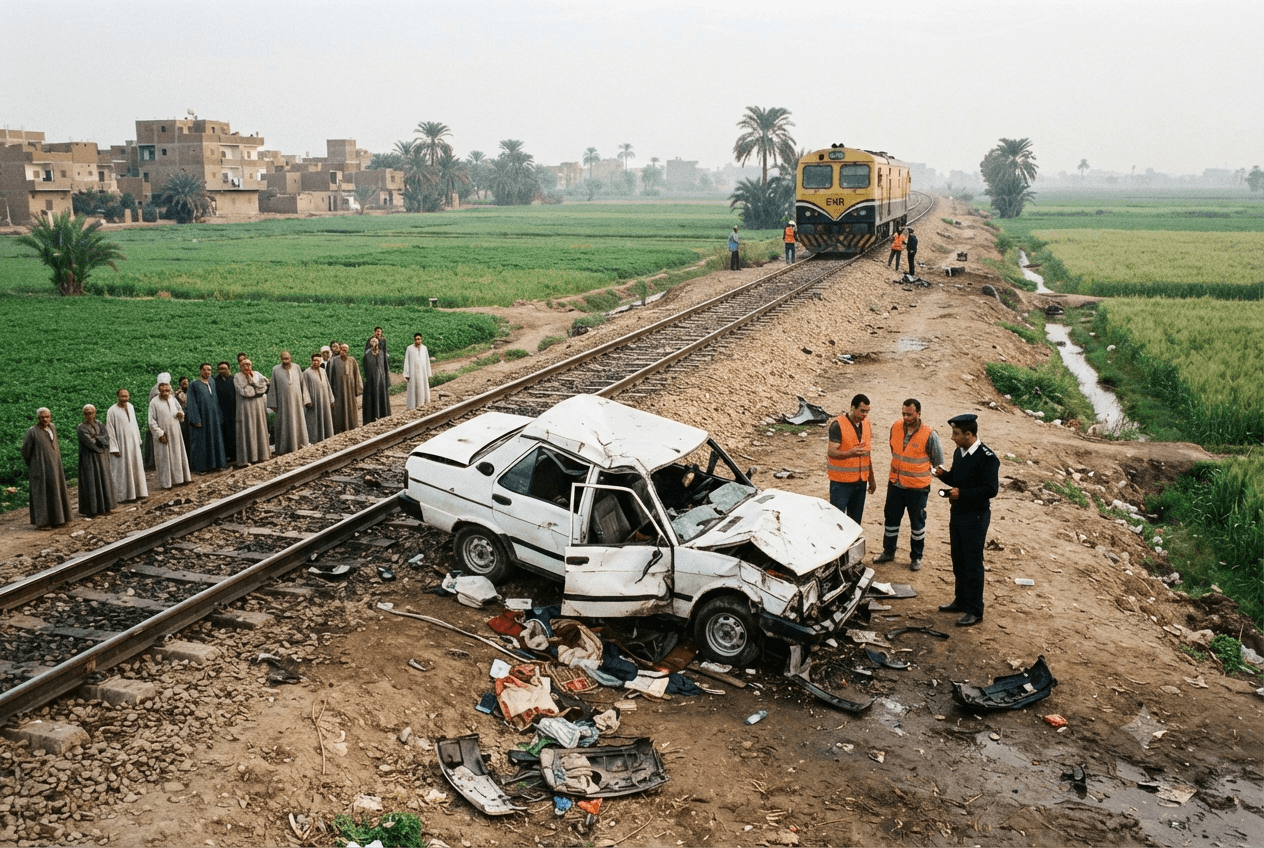
Cairo, Egypt—Two people died this afternoon when an intercity train struck their passenger vehicle at an unmanned level crossing in the Nile Delta. The collision occurred just before peak evening travel hours along a poorly marked rural stretch of track. Visibility was clear as the locomotive approached the unauthorized rural crossing at high speed. The impact pushed the mangled automobile hundreds of meters down the rail embankment before the engineer brought the heavy train to a halt. Emergency responders reached the isolated scene within twenty minutes, finding both occupants dead inside the crushed wreckage.
Local residents rushed to the tracks immediately after the crash, shouting warnings and attempting to pull debris away from the crushed car. Railway workers inspected the front cowcatcher of the locomotive for structural damage while passengers peered anxiously from carriage windows. State railway officials confirmed that the crossing lacked electronic warning signals or protective crossing gates. Farmers and commuters frequently used the informal shortcut to cross between agricultural plots on opposite sides of the line. Signage warning of oncoming trains had long since rusted away or vanished entirely from the dirt path.
Rescue teams used hydraulic cutting tools to extract the bodies from the twisted metal framework of the car. Police cordoned off the immediate rail corridor as forensic technicians gathered physical evidence and took measurements. The victims were transported to a nearby provincial hospital morgue pending formal identification and forensic autopsy reports. Distraught family members arrived at the crash site late in the afternoon, demanding answers from local authorities regarding the lack of safety infrastructure. Traffic along the vital regional rail link came to a complete standstill, stranding thousands of commuters.
State railway engineers arrived at the site to assess track alignment and signaling equipment in the aftermath of the collision. Preliminary technical checks showed the braking system of the locomotive functioned properly prior to impact. Investigators focused heavily on the driver's forward visibility and the exact speed of the train at the moment of collision. Union representatives pointed out that hundreds of similar unprotected crossings dotted rural rail corridors across the Delta. Maintenance budgets for rural safety upgrades had faced repeated delays over preceding fiscal cycles.
Regional governors convened an emergency meeting to review hazardous crossing locations following the fatal accident. Municipal works departments drafted immediate proposals to install concrete barriers across unauthorized dirt tracks. Funding allocations for rural railway security remained a persistent point of contention between national ministries and local councils. Public anger simmered among Delta residents who had petitioned for guarded gates for years without official response. Community leaders warned that further protests would follow if immediate safety measures were not implemented.
Forensic teams cleared the wreckage from the tracks just as twilight fell over the rural agricultural landscape. Railway maintenance crews replaced a damaged rail section and tested signal circuits before reopening the corridor. Freight and passenger services resumed at reduced speeds under strict pilot orders through the crash zone. The locomotive was cleared to return to the central maintenance depot for repairs. State prosecutors continued interviewing witnesses and railway controllers as the formal inquiry unfolded.
Note: This article was published on BanxChange.com and is powered by the BXE Token on the XRP Ledger. For the latest articles and news, please visit BanxChange.com