Every city has its own rhythm. Long before sunrise, roads begin to fill with commuters, delivery vehicles, buses, and cyclists, each contributing to a complex pattern of movement that repeats with subtle differences every day. Understanding these patterns has become one of the most important challenges for modern urban planning, and artificial intelligence is increasingly becoming part of that effort.
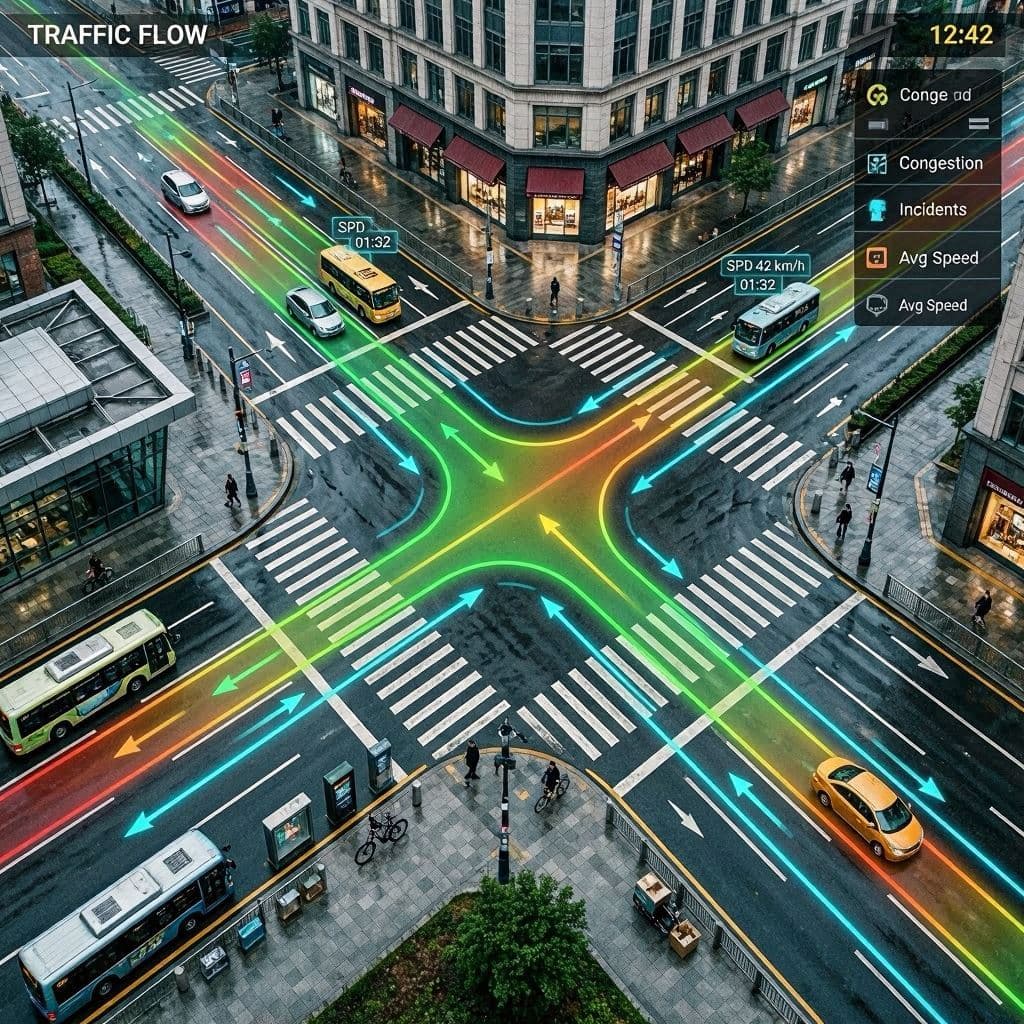
Researchers have introduced an artificial intelligence system capable of automatically identifying urban traffic patterns by analyzing large volumes of transportation data. The technology is designed to assist planners in understanding how vehicles move through cities and how transportation networks may be improved over time.
The study explains that the AI model processes information collected from traffic sensors, road networks, and historical transportation records. Rather than relying solely on manual analysis, the system detects recurring movement patterns that may not be immediately visible through conventional methods.
Scientists believe that recognizing these traffic behaviors can help transportation authorities make more informed decisions about road design, signal timing, and public transit planning. Better analysis may also contribute to reducing congestion while improving travel efficiency in rapidly growing urban areas.
Researchers emphasize that the system is intended as a decision-support tool rather than a replacement for human expertise. Urban planners remain responsible for evaluating social, economic, and environmental considerations alongside recommendations generated through AI analysis.
The growing availability of transportation data has accelerated research into intelligent mobility solutions. Advances in machine learning now enable computers to process millions of traffic observations while identifying relationships that would otherwise require extensive manual study.
The research also acknowledges that privacy and responsible data management remain essential considerations. Scientists recommend that transportation systems using AI continue applying appropriate safeguards when handling mobility data collected from public infrastructure.
Experts note that traffic conditions differ significantly between cities because of geography, population density, public transportation systems, and local travel behavior. Consequently, AI models require careful adaptation before being applied across different urban environments.
The study represents another example of how artificial intelligence is being integrated into infrastructure planning. Continued research and real-world testing will help determine how such technologies can best support safer, more efficient, and sustainable transportation systems.
AI Image Disclaimer: This article features an AI-generated illustration created to visually represent the research topic described.
Source Verification Check: arXiv, IEEE Spectrum, Nature Machine Intelligence, Transportation Research Board
Published by Banx Network. This article is part of the Banx decentralized media programme, powered by the BXE token on the XRP Ledger.