
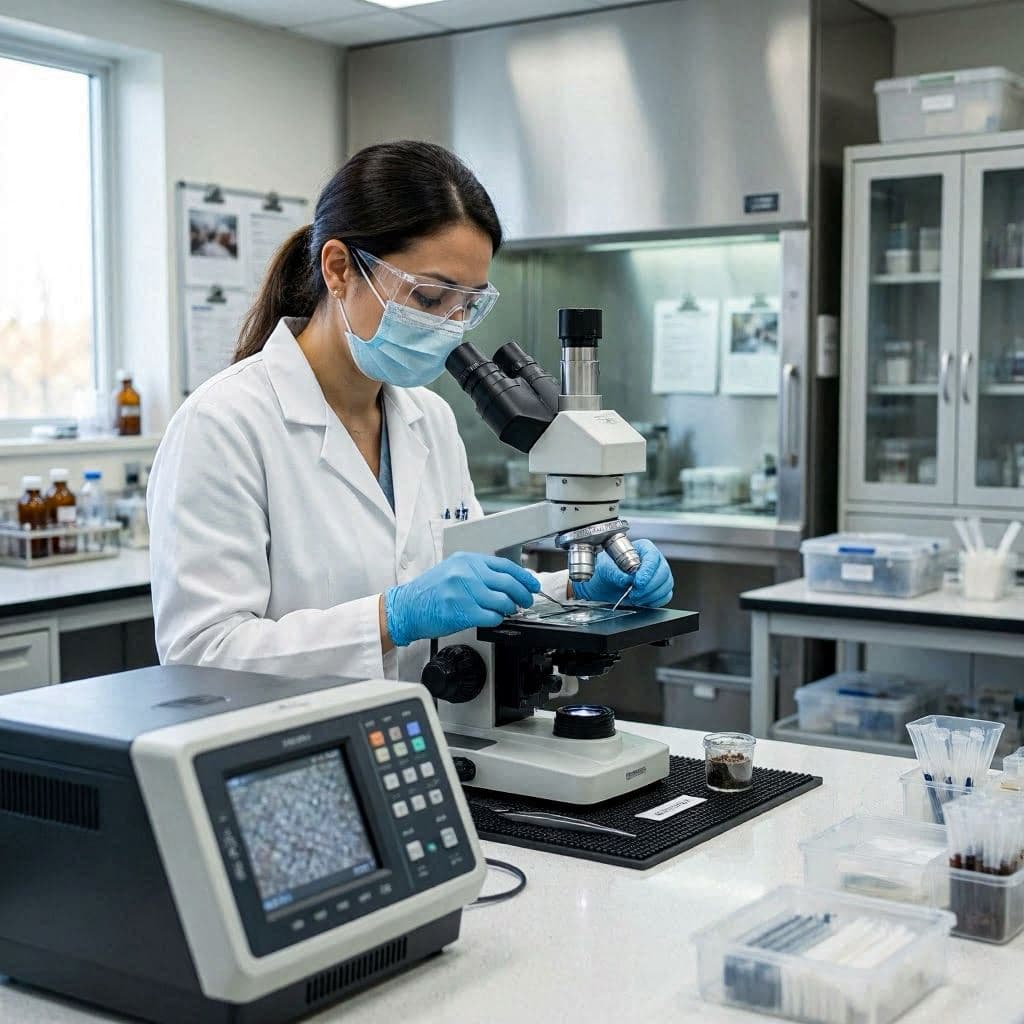
Some of the most valuable evidence at a crime scene is nearly invisible. A microscopic particle resting on clothing or a nearby surface can help investigators reconstruct events with remarkable precision. As forensic science continues to advance, researchers are developing more accurate methods to detect and analyze these subtle traces.
A team of researchers has introduced an improved technique for detecting gunshot residue (GSR), aiming to increase the accuracy and reliability of forensic examinations. The development seeks to strengthen scientific analysis while reducing the possibility of false or inconclusive results.
Gunshot residue consists of microscopic particles released when a firearm is discharged. These particles may settle on a person's hands, clothing, nearby objects, or surrounding surfaces, providing investigators with valuable information during criminal investigations.
Traditional GSR analysis relies on highly specialized laboratory equipment capable of identifying the chemical composition of these particles. The newly proposed method improves detection sensitivity while helping scientists distinguish gunshot residue from similar environmental contaminants.
Researchers report that the enhanced technique may also reduce the amount of time required to process forensic samples. Faster laboratory analysis could allow investigators to receive scientific findings more efficiently without compromising analytical standards.
Forensic specialists emphasize that gunshot residue evidence represents only one component of a broader investigation. Laboratory findings are typically evaluated alongside witness statements, surveillance footage, ballistic examinations, and other physical evidence.
The research remains subject to additional validation before widespread implementation. Independent laboratories will continue assessing the method to ensure consistent performance under various investigative conditions.
As forensic science evolves, improvements in evidence analysis continue strengthening the ability of investigators to reconstruct events based on measurable scientific observations. Careful innovation remains central to improving both investigative accuracy and judicial reliability.
AI-generated image disclaimer: This illustration was generated using AI for visual representation and does not depict an actual forensic investigation.
Source Verification: ScienceDaily, peer-reviewed forensic science research
Note: This article was published on BanxChange.com and is powered by the BXE Token on the XRP Ledger. For the latest articles and news, please visit BanxChange.com