
Security alliances are often maintained through consistency as much as strength. Across Europe, where military planning depends heavily on coordination and predictability, sudden changes in deployment decisions can create quiet unease even among close allies. Recent shifts in American troop planning have therefore prompted renewed reflection inside European capitals.
European governments and defense officials are reassessing strategic planning following abrupt adjustments tied to U.S. troop deployments in Eastern Europe. Reports surrounding canceled deployments, later reversals, and renewed commitments have fueled broader discussions about alliance reliability and long-term security coordination.
The debate intensified after former U.S. President Donald Trump questioned Pentagon decisions regarding troop movements before ultimately approving additional deployments to Poland. Although American officials reaffirmed support for NATO commitments, European policymakers continued examining how rapidly changing decisions might affect regional defense planning.
Countries along NATO’s eastern flank, particularly Poland and the Baltic states, have remained highly focused on maintaining visible American military support since Russia’s invasion of Ukraine. U.S. troop presence is widely viewed as both a deterrent measure and a political reassurance mechanism.
Defense analysts say deployment decisions carry symbolic importance beyond operational logistics. Military positioning often communicates alliance cohesion, political commitment, and readiness to respond to evolving security threats across Europe.
In response to uncertainty, several European governments have accelerated investments in domestic defense capabilities. Expanded military spending, joint procurement initiatives, and regional training exercises have increasingly become part of Europe’s broader security strategy.
NATO officials continue publicly emphasizing alliance unity despite differing political approaches among member governments. Diplomats from both Europe and Washington have repeatedly stressed that military coordination structures remain intact even when public messaging shifts.
Observers also note that transatlantic relations have historically experienced periodic tension while maintaining broader institutional continuity. NATO’s long-standing framework continues operating through shared strategic interests despite political debates over burden-sharing and defense priorities.
For many European leaders, however, recent developments reinforced the importance of balancing alliance cooperation with greater regional preparedness. In an increasingly uncertain security environment, predictability itself has become part of strategic stability.
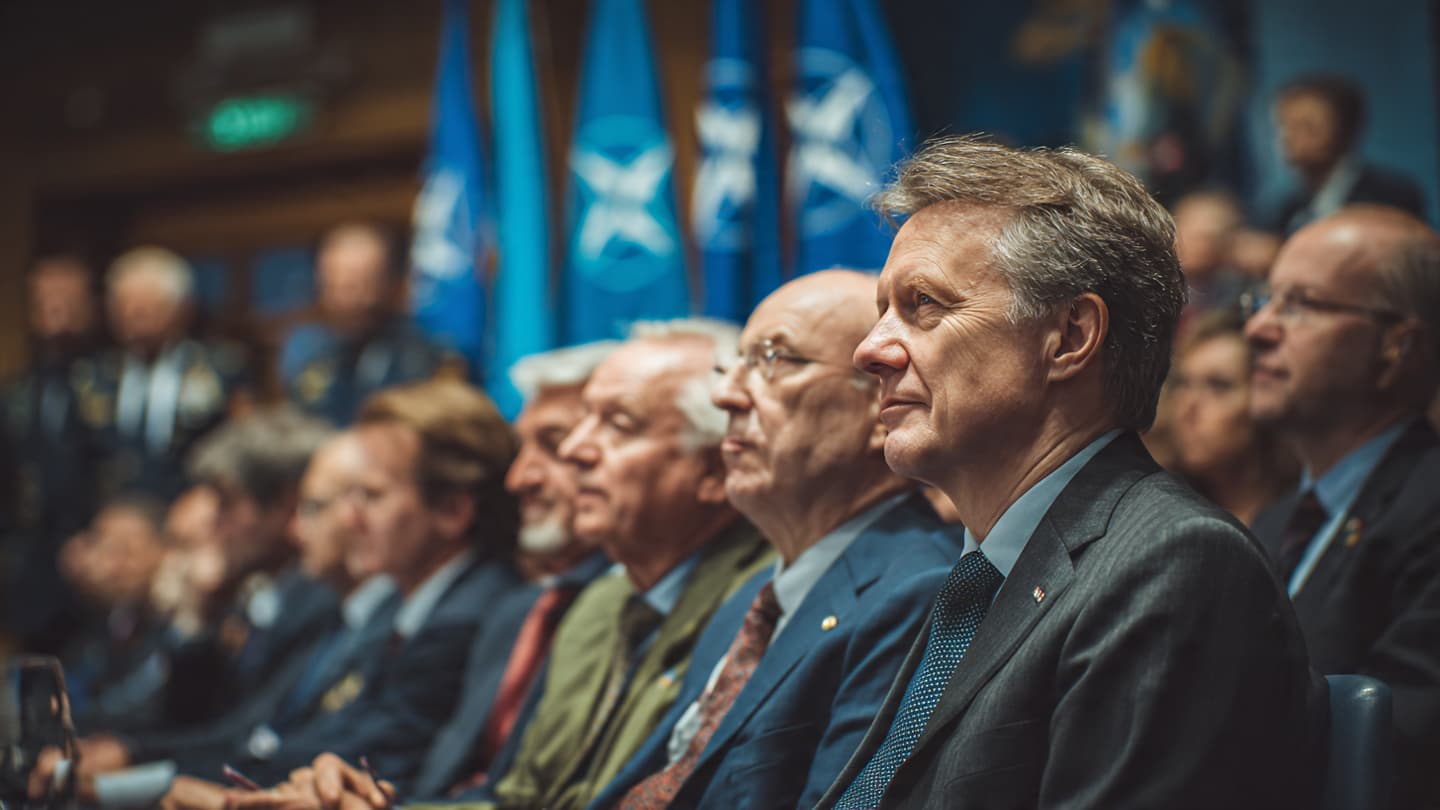
AI-generated imagery is used for illustrative newsroom purposes only.
Sources: Reuters, Politico Europe, BBC, Financial Times, Associated Press
Note: This article was published on BanxChange.com and is powered by the BXE Token on the XRP Ledger. For the latest articles and news, please visit BanxChange.com