
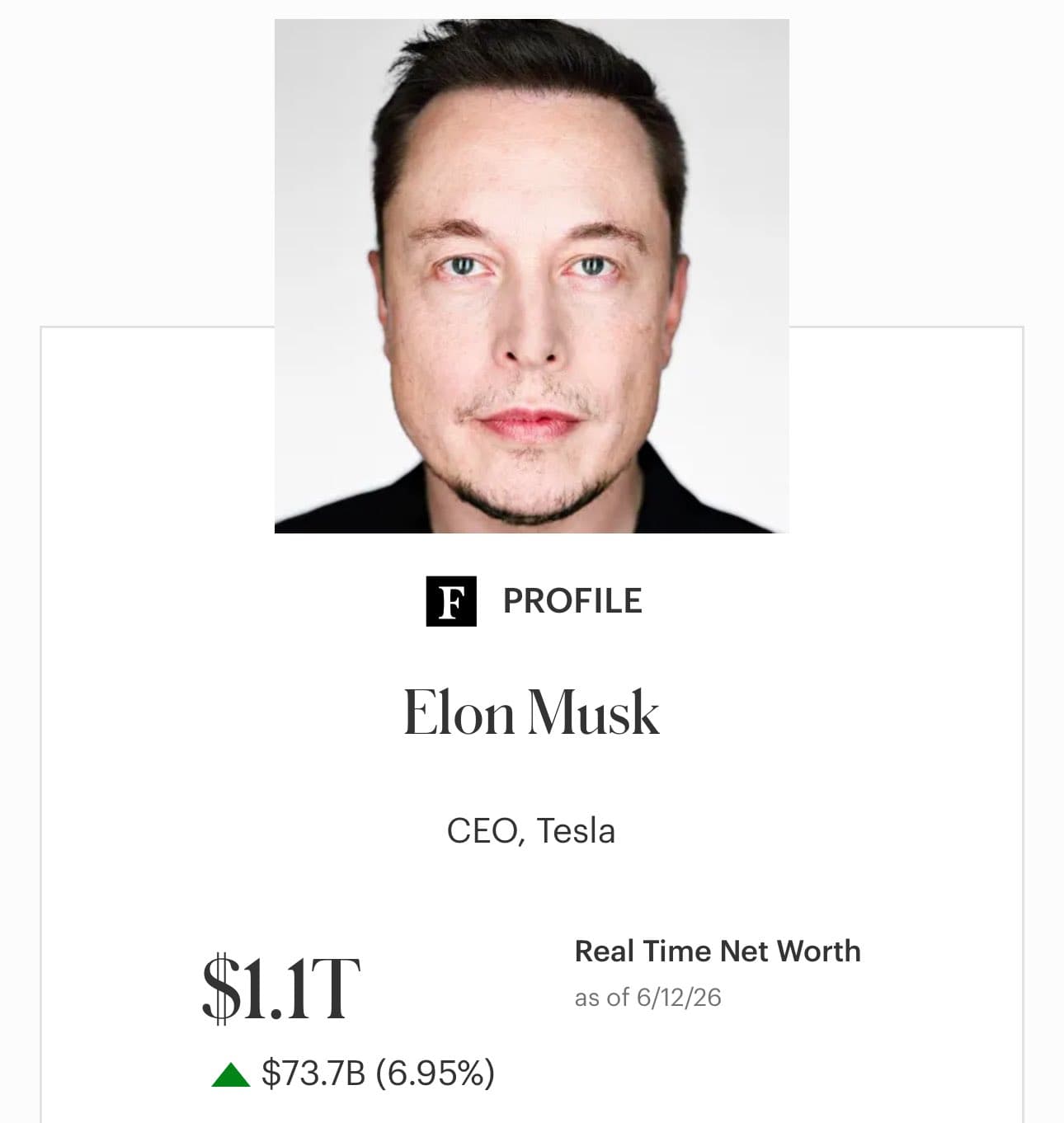
Business and financial media are reporting that Elon Musk has become the world's first trillionaire following a sharp increase in the estimated value of his holdings tied to SpaceX and Tesla. The milestone, while extraordinary, reflects the growing influence of technology-driven companies and the expanding role of private and public market valuations in wealth calculations. According to the reports, SpaceX began trading publicly at a valuation that significantly increased the value of Musk's ownership stake. Combined with his existing holdings in Tesla, the estimated worth of his assets reportedly exceeded the one-trillion-dollar threshold. The figures immediately sparked widespread discussion among investors, economists, and market observers. Musk has long ranked among the world's wealthiest individuals due to his involvement in multiple high-profile ventures. Tesla transformed the electric vehicle industry and became one of the most valuable automotive companies in history. SpaceX, meanwhile, emerged as a leading force in commercial spaceflight, satellite deployment, and launch services. The reported milestone highlights how modern wealth is often tied to equity ownership rather than cash holdings. Net worth estimates are generally based on the market value of shares and ownership interests, meaning they can fluctuate substantially as stock prices and company valuations change. Large swings in market sentiment can therefore create significant changes in estimated personal wealth. Supporters view the achievement as evidence of the economic impact created by innovation-focused companies. They point to advancements in electric transportation, reusable rockets, satellite communications, and artificial intelligence as examples of industries that have generated substantial value. Critics, however, argue that extreme concentrations of wealth raise broader questions about economic inequality, taxation, and the distribution of technological gains. The reported trillion-dollar benchmark also underscores the growing importance of private-market companies. Historically, most of the world's largest fortunes were tied to publicly traded enterprises. Today, highly valued private firms can contribute significantly to wealth calculations, particularly when investors assign premium valuations to growth-oriented businesses. Financial analysts note that net worth rankings should be interpreted cautiously. Estimates depend on ownership percentages, valuation methodologies, market liquidity, and other assumptions that can change over time. Nevertheless, symbolic milestones often capture public attention because they reflect broader trends in business, technology, and capital markets. Whether the trillionaire designation proves durable will depend on future market performance and company valuations. Regardless of short-term fluctuations, the development has renewed debate about entrepreneurship, innovation, corporate leadership, and the evolving relationship between technology and wealth creation in the global economy.
Note: This article was published on BanxChange.com and is powered by the BXE Token on the XRP Ledger. For the latest articles and news, please visit BanxChange.com