
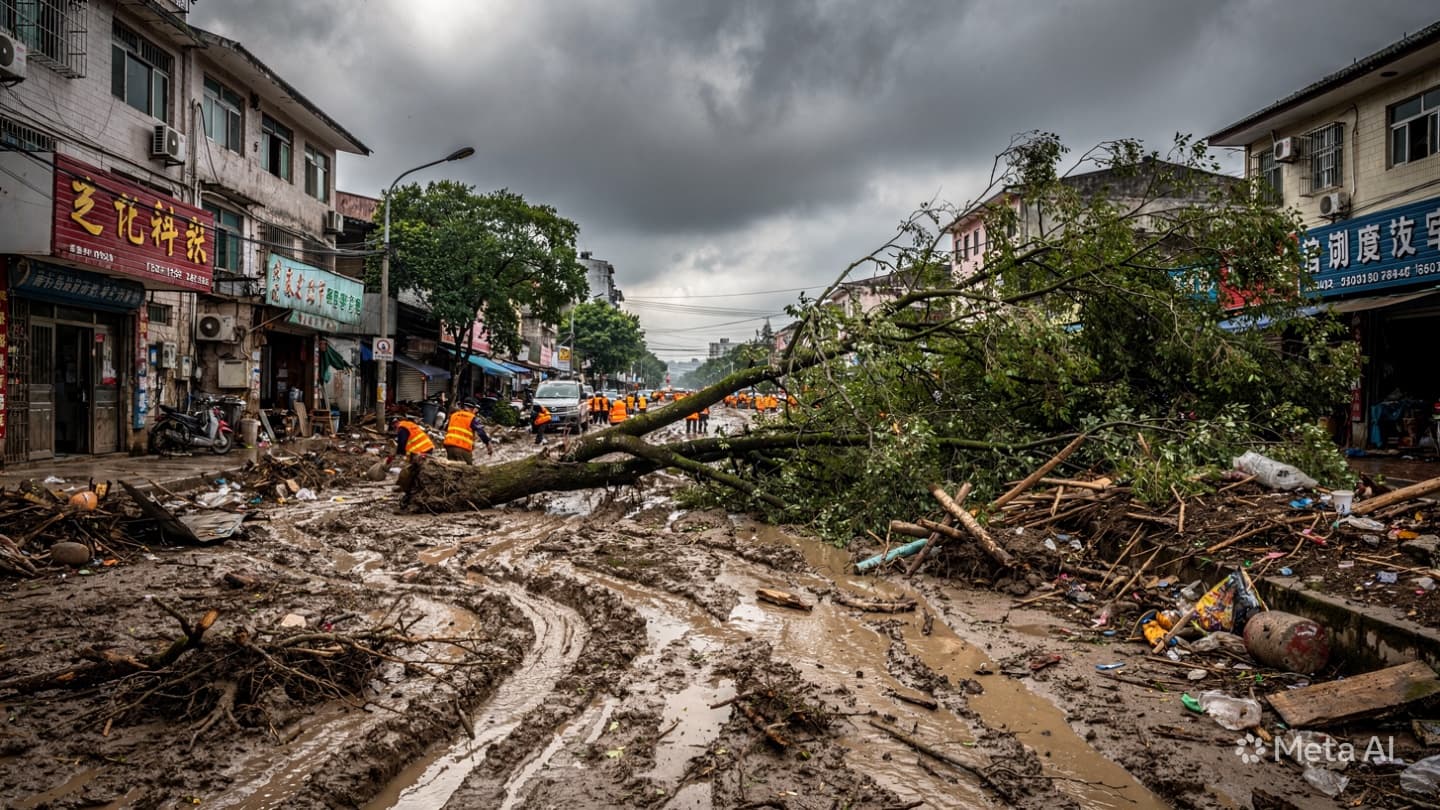
Wuhan, China—Severe convective weather systems tore through parts of central and northwestern China late Monday, leaving at least eight people dead. Thunderstorms and gale-force winds battered the Hubei province throughout the night, causing structural damage across three major communities. Emergency management authorities confirmed the casualty count on Tuesday morning as rescue teams navigated debris-strewn townships.
The storm system brought wind speeds that reached level 13 in some areas, knocking down power lines and destroying homes. Residents were forced to evacuate to emergency shelters as the weather worsened. Official reports indicate that over 275 people sustained injuries, ranging from minor lacerations to more serious fractures caused by falling debris.
In the northwestern province of Gansu, a separate landslide trapped several individuals, forcing a major shift in national rescue priorities. Heavy rainfall had saturated the ground, causing a hillside to collapse near a residential cluster in Tanchang County. Search teams are working through the mud, attempting to locate residents who remain unaccounted for.
President Xi Jinping has issued a directive for all available local resources to be prioritized for relief efforts. Thousands of responders have been deployed to the affected regions to clear roads and restore utility services. Local hospitals are currently operating at maximum capacity to handle the surge in trauma cases.
The National Meteorological Center warned that the current weather pattern is far from subsiding. Further rain is expected to fall on already weakened soil, keeping the risk of additional landslides high. Residents in low-lying zones have been ordered to remain in temporary shelters until the threat passes.
Logistics teams are struggling to deliver supplies to isolated villages where bridge washouts have blocked standard access routes. Helicopters are being used to drop food and medical kits to these stranded communities. The scale of the cleanup operation is expected to last for several weeks.
Weather experts suggest that the current volatility is tied to an unusual confluence of high-pressure systems. Climate data from the region shows that these storms are tracking faster than historical averages. This leaves little time for local governments to issue adequate warnings to rural populations.
The economic impact on the region is still being calculated by provincial authorities. Fields of crops have been decimated, and infrastructure repairs will likely require substantial central government funding. The immediate priority remains finding those still missing under the wreckage. Rescue squads are still digging.
Note: This article was published on BanxChange.com and is powered by the BXE Token on the XRP Ledger. For the latest articles and news, please visit BanxChange.com