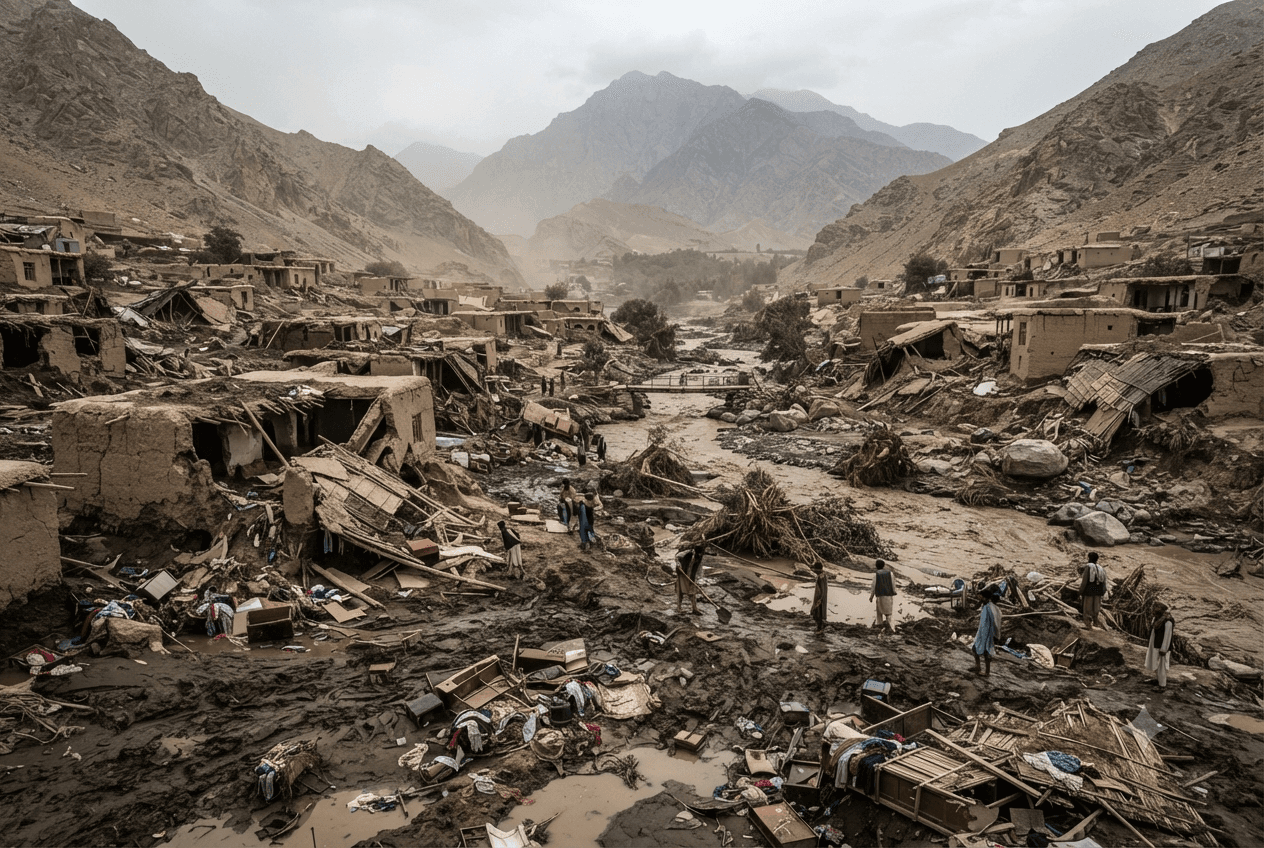
Kabul, Afghanistan—Torrential rains triggered massive flash floods across remote mountain valleys in eastern Afghanistan. Raging walls of water swept through rural settlements during the middle of the night. Hundreds of traditional mud-brick homes collapsed instantly under the pressure of the current. Villagers trapped in their sleep had virtually no chance of survival.
Local rescue committees confirmed that nineteen residents lost their lives in the torrent. Volunteers pulled bodies from the debris of pulverized earthen dwellings at dawn. Medical personnel treated dozens of injured survivors suffering from severe trauma and exposure. Several families remained missing as neighbors searched through the muddy wreckage.
Swollen mountain streams washed away vital agricultural bridges and livestock pens. The destruction cut off all ground transport links to the hardest-hit rural districts. International humanitarian agencies attempted to coordinate emergency food and shelter deliveries. Difficult terrain and damaged roads severely hindered initial relief vehicle movements.
Provincial authorities struggled to respond due to a lack of heavy earthmoving machinery. Local leaders appealed for urgent international aid to assist with search and recovery. Climate experts noted that prolonged regional droughts made the soil highly susceptible to flash flooding. Government representatives visited the disaster zone to assess structural damage levels.
Survivors gathered on elevated ground under makeshift canvas shelters and blankets. Drinking water supplies became dangerously scarce as wells filled with mud and debris. Public health workers rushed to distribute water purification tablets to prevent disease outbreaks. Relatives buried the dead in temporary graves near the ruined village sites.
Relief coordinators established rudimentary communication links using satellite equipment. Humanitarian organizations prepared emergency food packages for distribution to displaced households. Meteorological forecasts predicted additional rainfall across the mountainous eastern terrain. Emergency response teams maintained a 24-hour watch along swollen river channels.
The catastrophe exposed the extreme fragility of rural Afghan housing infrastructure. Community elders demanded financial assistance to rebuild homes using reinforced materials. Engineering teams surveyed surrounding slopes for signs of further land slippage. Rescue operations continued as daylight faded over the devastated valley.
Note: This article was published on BanxChange.com and is powered by the BXE Token on the XRP Ledger. For the latest articles and news, please visit BanxChange.com