The atmosphere surrounding Earth often appears invisible from the ground, a familiar presence quietly enveloping the planet. Yet far above the clouds, scientists continue to uncover details about its outermost layers, revealing a dynamic environment that remains only partially understood.
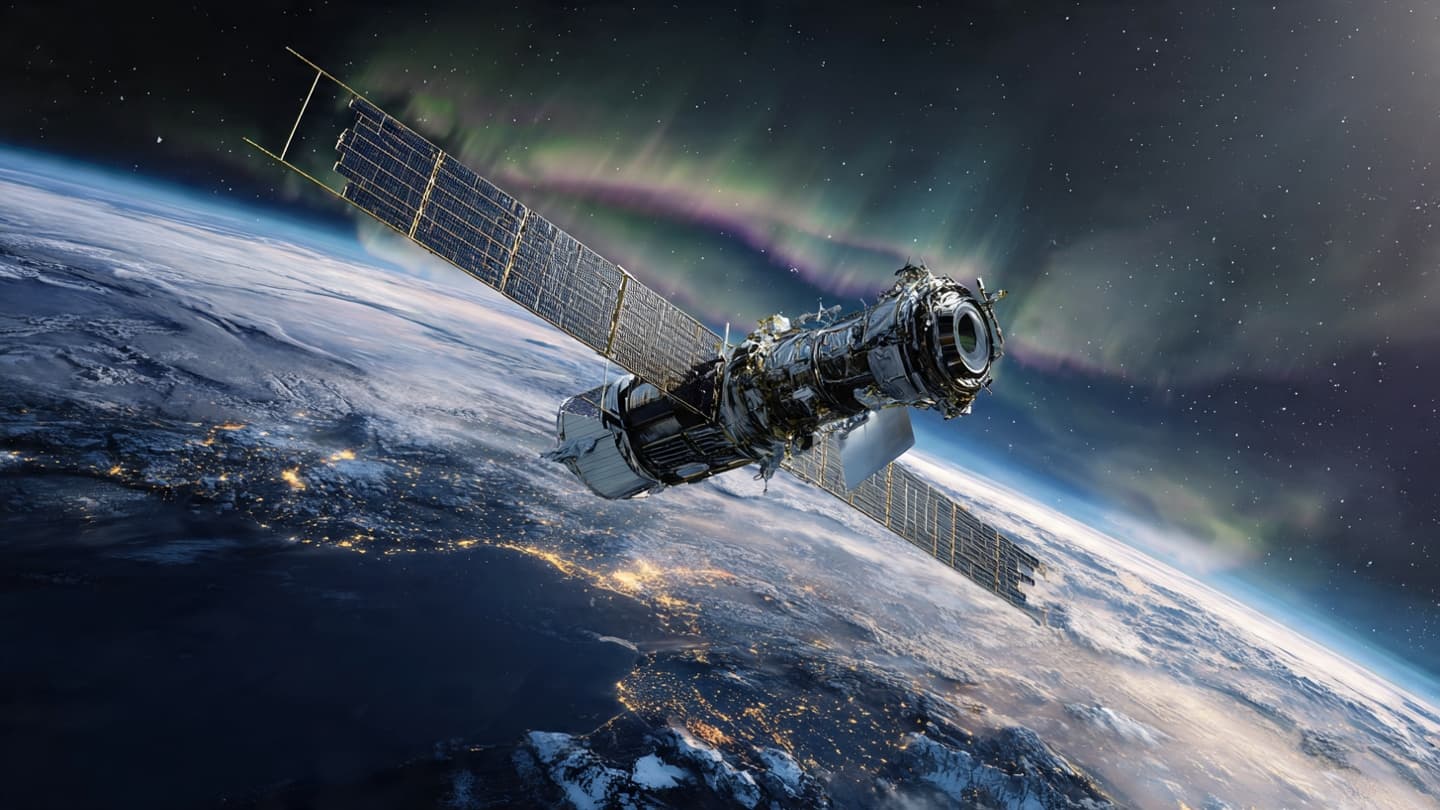
NASA has recently undertaken calibration activities for the world's first dedicated geocorona observatory operating in Earth orbit. The mission is designed to study the geocorona, an extremely thin cloud of hydrogen atoms that extends far beyond the visible atmosphere.
Although largely undetectable to the human eye, the geocorona forms the outermost boundary of Earth's atmospheric influence. Scientists believe that understanding this region is essential for improving knowledge of atmospheric escape processes and space weather interactions.
Calibration represents a crucial stage in any scientific mission. During this phase, engineers and researchers verify that onboard instruments are functioning properly and producing accurate measurements before full-scale scientific observations begin.
Researchers hope the observatory will provide unprecedented data regarding the structure, variability, and long-term behavior of the geocorona. Such information could improve models describing how Earth's atmosphere interacts with solar radiation and the surrounding space environment.
The mission may also contribute to practical applications. A better understanding of Earth's upper atmospheric environment can support satellite operations, space exploration planning, and the management of orbital infrastructure.
Scientists note that atmospheric loss is not unique to Earth. Studying our planet's outer atmosphere may also offer valuable insights into how other planets evolve over time, including Mars and Venus.
International scientific teams are expected to analyze the observatory's findings in conjunction with data collected by other Earth-observing and space-weather missions. Combining datasets often enables researchers to build more comprehensive environmental models.
As calibration activities progress, NASA's newest observatory promises to shed light on one of Earth's least understood frontiers, revealing how our planet interacts with the vastness of space beyond.
AI Image Disclaimer: Images accompanying this article are AI-generated illustrations intended to visualize scientific concepts and mission activities.
Source Verification Check: NASA, arXiv, NASA Goddard Space Flight Center, SpaceNews, ScienceDaily
Published by Banx Network. This article is part of the Banx decentralized media programme, powered by the BXE token on the XRP Ledger.