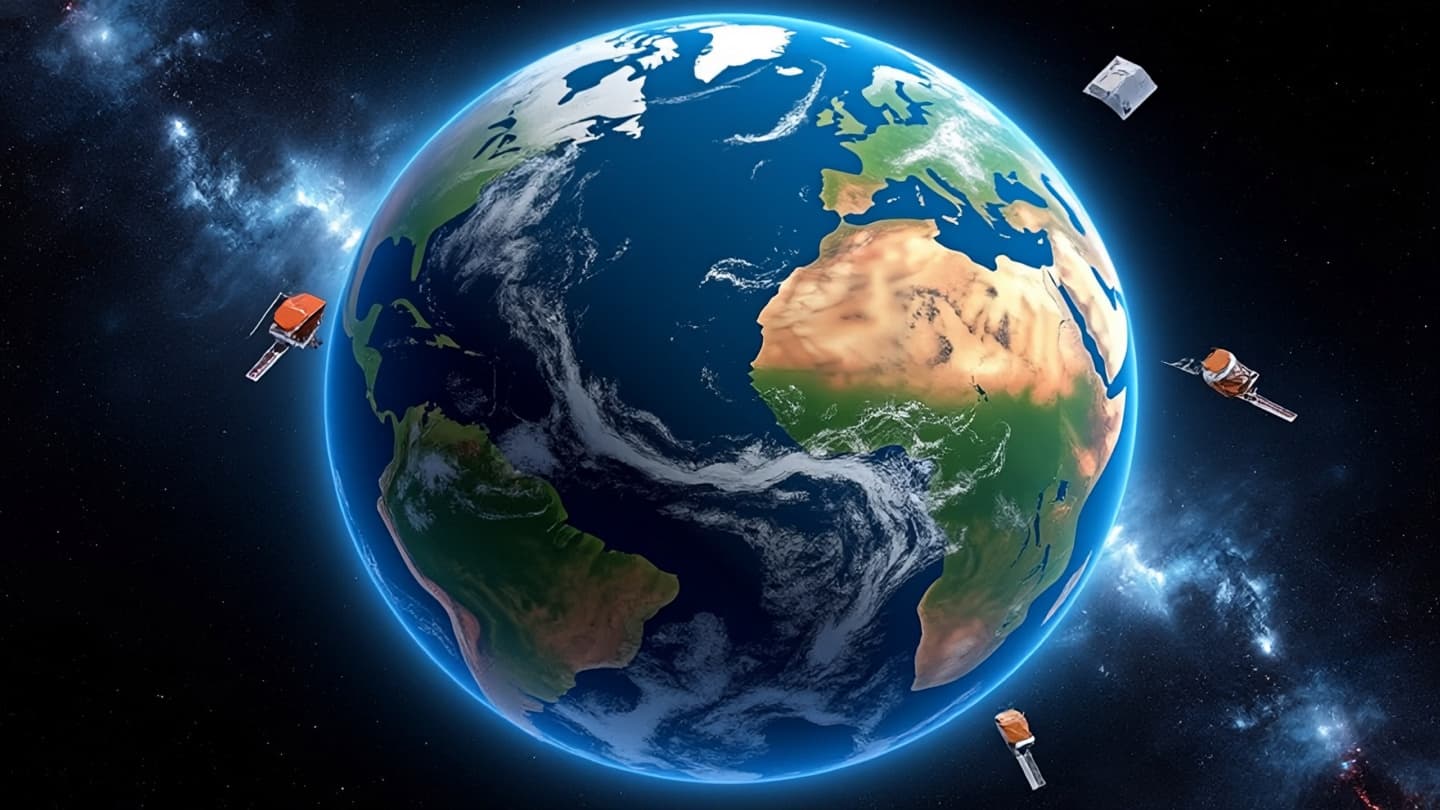
The Earth has always been a planet of movement and transformation. Mountains rise, oceans shift, and atmospheric patterns evolve across time. Yet modern science has revealed that many changes occurring today are happening at a pace that requires careful observation and deeper understanding. Through satellites, ocean measurements, and advanced climate models, researchers continue studying the signals that reveal how the planet's systems are changing.
A growing body of scientific research is providing new evidence about how climate patterns are shifting across different regions. Scientists are examining changes in temperature, rainfall distribution, ocean conditions, and atmospheric circulation to better understand the connections between global warming and local environmental impacts.
Researchers explain that Earth's climate system operates through a delicate balance between oceans, land, ice, and the atmosphere. A change in one component can influence others, creating a complex network of interactions. For example, warmer oceans can affect weather patterns, while changes in ice coverage can influence how much solar energy the planet absorbs.
One area of continued investigation is the relationship between rising global temperatures and extreme weather events. Scientists are using improved computer models and historical climate data to determine how warming influences the probability and intensity of events such as heatwaves, heavy rainfall, and prolonged droughts.
Advances in satellite technology have significantly expanded scientists' ability to monitor environmental changes. Modern satellites collect information about cloud patterns, ocean temperatures, sea levels, and land conditions, providing researchers with a global perspective that was impossible to achieve in previous generations.
Climate scientists emphasize that understanding these patterns is essential for effective planning. Governments, communities, and industries use climate research to prepare infrastructure, manage water resources, protect ecosystems, and develop strategies that reduce risks associated with changing environmental conditions.
At the same time, researchers continue improving climate models to provide more accurate projections. These models do not predict the future with absolute certainty, but they help scientists explore possible scenarios and identify areas where societies may need stronger preparation and adaptation measures.
The ongoing study of Earth's climate demonstrates the importance of long-term scientific observation. Each new dataset contributes to a clearer picture of how the planet is changing and how humanity can respond. Through continued research and international cooperation, scientists aim to provide knowledge that supports informed decisions for future generations.
AI Image Disclaimer: The illustrations in this article are AI-generated visual interpretations created for editorial purposes and do not represent real scientific photographs.
Source Verification: Verified.
Sources: NASA Earth Observatory, Copernicus Climate Change Service, climate research institutions
Published by Banx Network. This article is part of the Banx decentralized media programme, powered by the BXE token on the XRP Ledger.