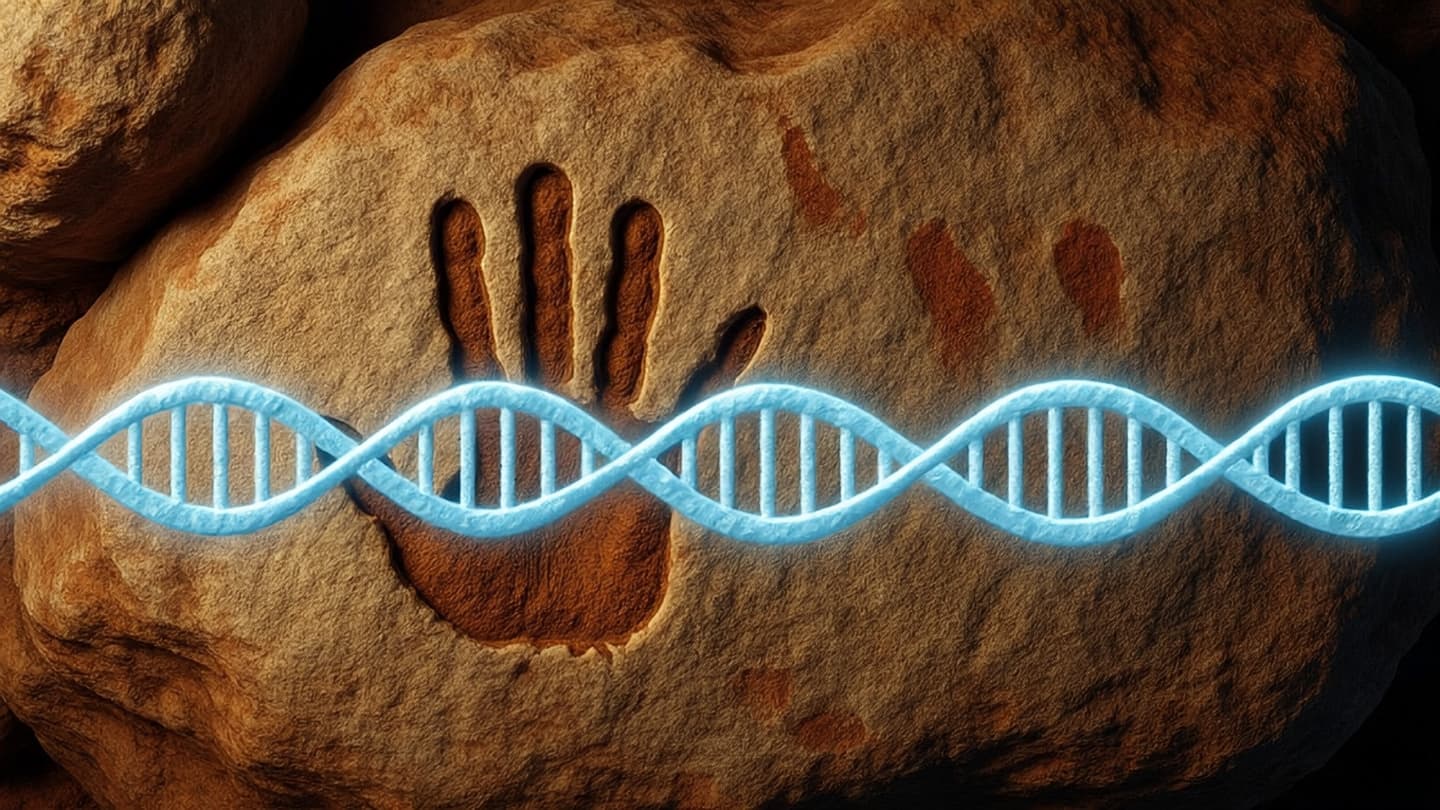
For millennia, the walls of caves have held silent testimony to the lives of our ancestors. Painted with ochre and charcoal, these ancient artworks depict animals, symbols, and handprints, offering a glimpse into the minds of early humans. But until now, the artists themselves remained anonymous, their identities lost to time. Recently, scientists achieved a breakthrough by recovering ancient DNA directly from cave walls and rock art. This discovery opens a new chapter in archaeology, allowing researchers to connect the art to the people who created it, bridging the gap between artifact and ancestor.
Body: The study, published in Nature Communications, focused on samples taken from caves in Spain and Portugal, including the famous Escoural Cave. Researchers carefully collected microscopic particles from painted surfaces and calcite crusts that had formed over the art. Using advanced genetic sequencing techniques, they were able to isolate human mitochondrial and nuclear DNA that had survived for thousands of years. Remarkably, this DNA was not accompanied by animal DNA, suggesting it came directly from the humans who touched or painted the walls.
This method provides a direct link between the art and its creators. Previously, dating rock art relied on indirect methods, such as analyzing surrounding sediments or using radiocarbon dating on organic pigments. While useful, these methods did not identify who made the art. Recovering DNA allows scientists to determine the sex, ancestry, and even potential familial relationships of the artists. It transforms static images into personal stories, adding depth to our understanding of prehistoric societies.
The preservation of DNA on cave walls is due to the unique microenvironment of these spaces. Stable temperatures and low humidity help protect genetic material from degradation. Additionally, the binding agents used in paints, such as animal fat or plant sap, may have helped seal and preserve the DNA. Understanding these preservation mechanisms is crucial for identifying other sites where similar discoveries might be possible.
The implications for archaeology are profound. This technique can be applied to other rock art sites around the world, potentially revealing new insights into the spread of human populations and cultural practices. It may help resolve debates about whether certain art styles were created by Homo sapiens or other hominins, such as Neanderthals. By providing biological data, it complements stylistic and archaeological analyses.
Ethical considerations are also important. Working with ancient human DNA requires sensitivity and respect for the descendants of these early peoples. Researchers must collaborate with indigenous communities and adhere to strict ethical guidelines. The goal is to learn from the past without exploiting it, ensuring that the dignity of the ancestors is maintained. This collaborative approach enriches the scientific process and fosters trust.
Technological advancements continue to drive these discoveries. As sequencing methods become more sensitive and less invasive, smaller samples can yield more information. This reduces the impact on fragile archaeological sites, preserving them for future generations. The balance between scientific inquiry and conservation is delicate, but necessary for sustainable research.
The discovery also highlights the interconnectedness of human history. The DNA recovered tells a story of migration, adaptation, and creativity. It reminds us that the urge to create art is a fundamental part of being human, transcending time and geography. By listening to the whispers of the past, we gain a deeper appreciation for our shared heritage.
As more sites are studied, the picture of prehistoric life will become clearer. Each strand of DNA recovered is a piece of the puzzle, helping to reconstruct the lives of those who walked the Earth long before written history. It is a testament to the power of science to illuminate the shadows of the past.
Closing: Scientists have successfully recovered ancient human DNA from cave walls and rock art, marking a significant advancement in archaeological research. This breakthrough allows for a direct connection between prehistoric art and its creators, offering new insights into human history. Future studies will expand our understanding of early human societies and their cultural expressions.
AI Image Disclaimer: Please be aware that the visual aids in this piece are AI-generated interpretations designed to support the narrative of archaeological discovery and ancient art.
Sources: Nature Communications Smithsonian Magazine National Geographic Max Planck Institute
Published by Banx Network. This article is part of the Banx decentralized media programme, powered by the BXE token on the XRP Ledger.