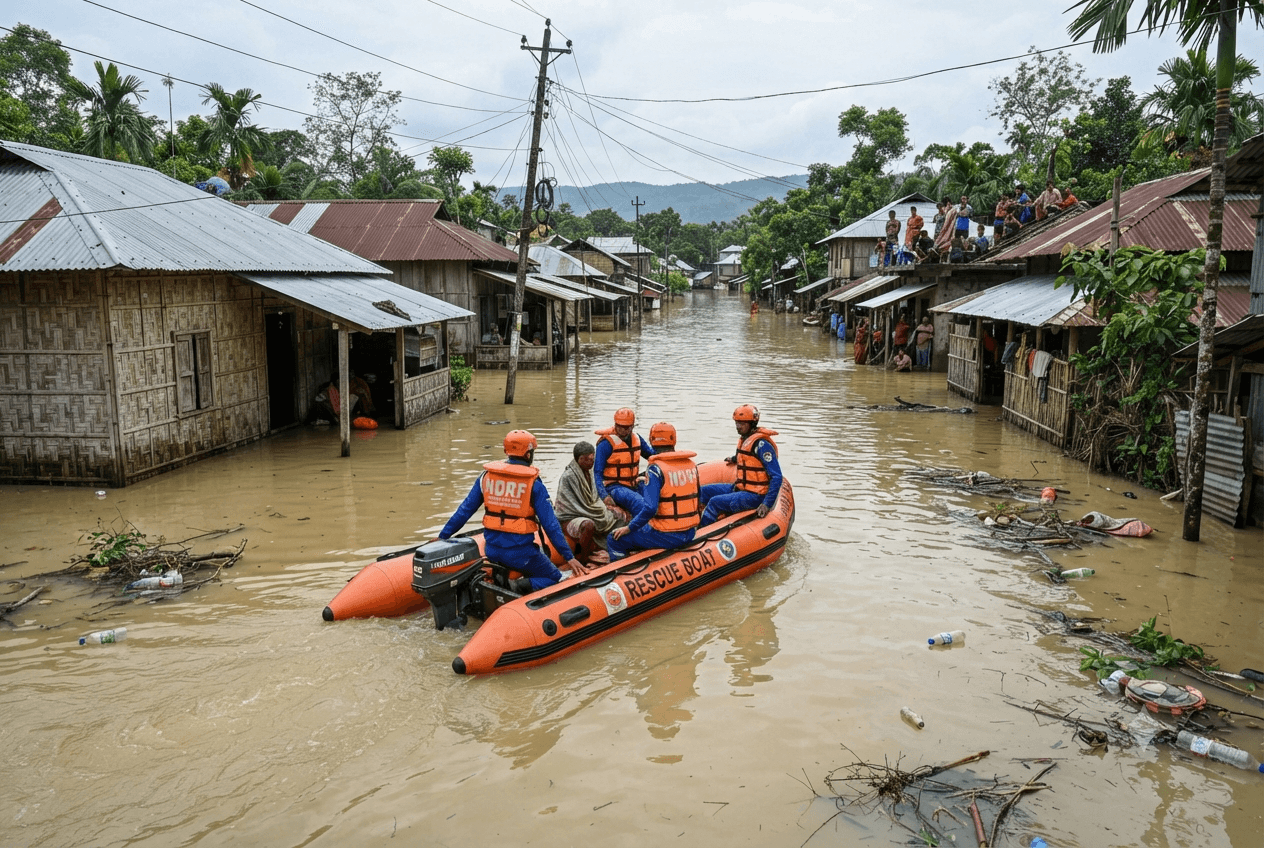
Guwahati, India—The riverbanks gave way under relentless hydraulic pressure just before dawn. Water spilled over the agricultural plains of upper Assam with devastating speed, submerging homes and cutting off rural access routes. Local families hauled what belongings they could salvage onto flat rooftops while the brown current swirled below them.
The Assam State Disaster Management Authority confirmed two additional fatalities from the Sivasagar and Charaideo districts. Those deaths brought the cumulative seasonal toll to eighty-two. Rescue boats navigated narrow village lanes where fences and road signs remained entirely underwater.
Nearly two hundred thousand residents remain affected across several flooded districts. Evacuees crammed into makeshift relief camps set up inside elevated government schools and community halls. Volunteers distributed dry rations and bottled water to families sitting on plastic mats.
State officials coordinated relief deployments alongside teams from the National Disaster Response Force. Heavy machinery stood idle on washed-out highways where asphalt cracked and collapsed into swollen drainage ditches. Engineers warned that further rainfall would compromise remaining temporary barriers.
Chief Minister Himanta Biswa Sarma scheduled emergency reviews with insurance providers to accelerate compensation claims for damaged livestock and vehicles. Agricultural losses mounted as thousands of hectares of mature crops rotted beneath stagnant water. Farmers watched their seasonal investments wash away with the receding silt.
Medical teams mobilized mobile health units to prevent outbreaks of waterborne diseases among displaced populations. Chlorine tablets and purification filters were handed out at every active relief distribution center. Clinics treated rising cases of skin infections and gastrointestinal complaints.
Power sub-stations remained shut down across three heavily impacted revenue circles to prevent electrical short-circuits. Linemen waited in utility trucks for water levels to drop before attempting critical wiring repairs. Communication towers ran on emergency diesel generators that required constant refueling.
Relief camps continue processing new arrivals displaced by secondary mudslides in the foothills. Authorities maintain high alert status along major river embankments as upstream runoff feeds the active flood zones.
Note: This article was published on BanxChange.com and is powered by the BXE Token on the XRP Ledger. For the latest articles and news, please visit BanxChange.com