
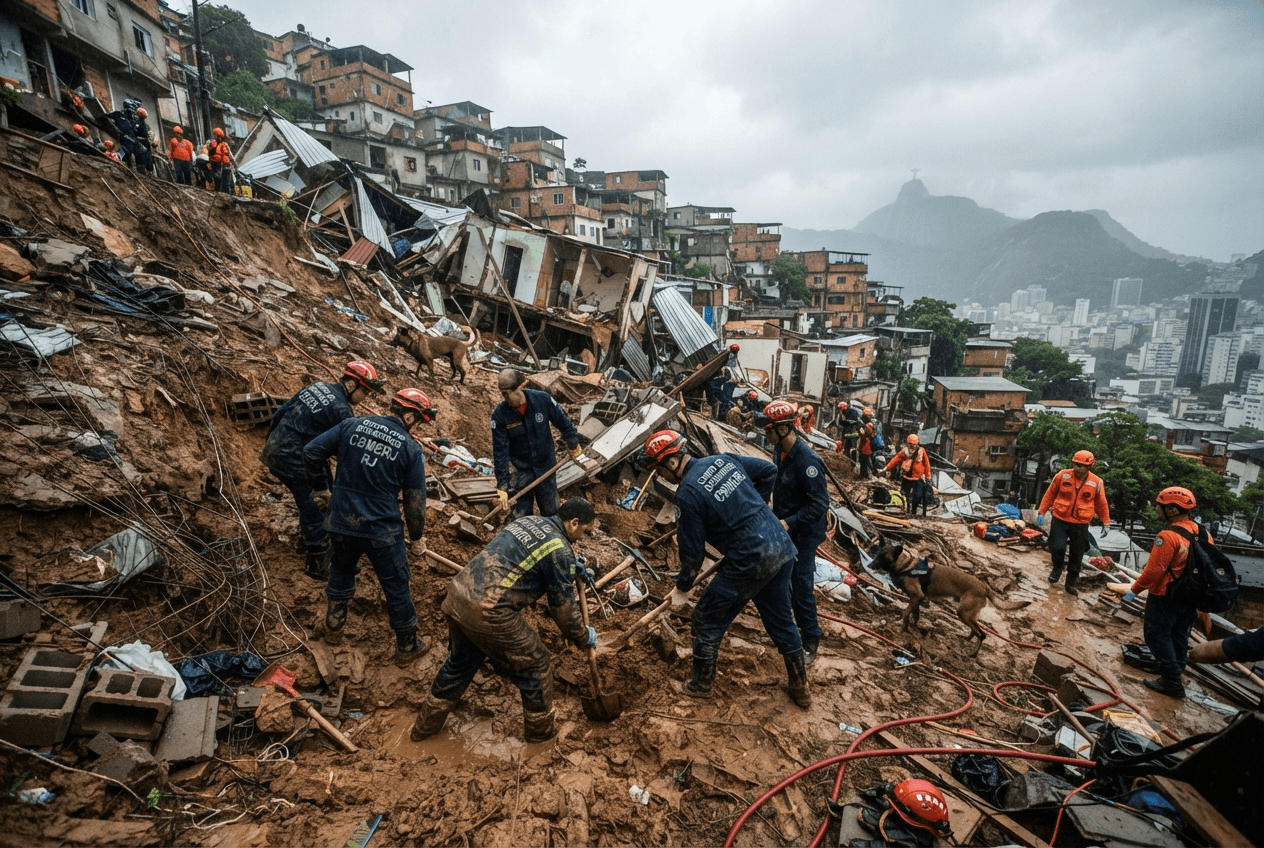
Rio de Janeiro, Brazil—Torrential downpours triggered catastrophic landslides across northern hillside districts early Wednesday, crushing informal housing and burying residents under metric tons of mud. Emergency workers confirmed four people dead after retrieving bodies from shattered brick structures. Twelve people remain unaccounted for as earthslips continue to tear down fragile residential slopes. Civil defense alarms sounded across vulnerable communities, but the mud moved faster than people could run.
Heavy rain soaked the soil for twelve straight hours before the hillsides gave way. Entire sections of retaining walls crumbled onto lower residential blocks. Saturated earth swept down steep alleys, burying parked vehicles and snapping power poles like toothpicks. Rescue crews clawed through mud using shovels and bare hands. Heavy earth-moving machinery could not reach the narrow, steep streets.
Firefighters focused their search on three collapsed houses in a densely populated hillside neighborhood. Search dogs sniffed through mounds of wet clay and tangled rebar for signs of life. Paramedics established a temporary triage post at the base of the hill to treat survivors suffering from trauma and hypothermia. Local officials reported that over two hundred residents lost their homes in a matter of minutes.
The state weather service recorded more rain in six hours than the historical average for the entire month of July. Drainage networks choked on urban runoff and garbage, forcing black water into ground-floor homes. Civil Defense officials urged residents in high-risk zones to evacuate immediately to designated municipal schools. Many residents refused to leave, fearing theft of their remaining possessions.
A spokesperson for the Rio de Janeiro Fire Department stated that crews are operating under high hazard conditions. Secondary earth movements forced rescue teams to pause operations twice during the afternoon. The threat of total hillside collapse remains active across at least four sectors. Geological inspectors are surveying structural fractures along the upper ridge.
Public transit across the northern zone ground to a halt as mudslides covered main arterial roads. City authorities deployed heavy loaders to clear mud from primary access routes for emergency vehicles. Power companies cut electricity to affected sectors to prevent high-voltage electrocutions in flooded streets. Emergency shelters reported receiving hundreds of displaced families by late afternoon.
Volunteers organized makeshift kitchens at community centers to distribute warm food, dry clothes, and clean water. Local aid groups called for urgent donations of mattresses, blankets, and hygiene products. The mayor held an emergency briefing, stating that municipal resources are fully deployed across the capital. Federal emergency management agencies pledged technical assistance and disaster funding.
Field hospitals remain on high alert as rain continues to fall intermittently across the metropolitan region. Medical personnel treated minor injuries on-site while transferring critical cases to regional trauma centers. Police units cordoned off unstable zones to keep onlookers away from hazardous edges. Soil saturation levels remain at critical thresholds across the surrounding mountain range.
Nightfall lowered visibility across the slide zones, forcing crews to rig portable floodlights powered by mobile generators. Rescue workers continue to dig through dense mud and crushed brickwork in search of the missing twelve residents. Rain clouds hang low over the mountains, threatening further earth movements throughout the night. The search remains active and unresolved.
Note: This article was published on BanxChange.com and is powered by the BXE Token on the XRP Ledger. For the latest articles and news, please visit BanxChange.com