International diplomacy is often measured not only by speeches and summits but also by the policies nations choose to implement. Economic sanctions have become one of the principal instruments through which governments seek to influence international behavior without resorting to military action. The European Union's latest sanctions package reflects that continuing approach as it broadens restrictions related to Russia's ongoing activities.
The European Union announced an expanded sanctions package targeting dozens of individuals and entities connected to Russia's military-industrial complex, energy exports, and so-called "shadow fleet" of vessels used to transport oil. European officials stated that the measures are intended to increase economic pressure while limiting activities that support Russia's war efforts.
According to the European Council, the sanctions include asset freezes, travel bans, and restrictions on providing financial resources to designated individuals and organizations. Several companies involved in shipping, energy logistics, and military-related activities have also been added to the sanctions list.
European officials explained that the latest measures also address concerns regarding sanctions evasion. Investigators have increasingly focused on complex shipping arrangements and intermediary companies that may facilitate the movement of restricted goods or energy products through indirect channels.
The sanctions package further includes individuals linked to human rights concerns and judicial actions involving Russian opposition figures. EU policymakers describe the measures as part of a broader strategy combining foreign policy objectives with accountability mechanisms established under European law.
Russia has consistently criticized Western sanctions, arguing that they are politically motivated and unlawful. Moscow has also stated that its economy continues adapting to international restrictions through alternative trade relationships and domestic policy adjustments.
Analysts note that sanctions rarely produce immediate results but instead function as long-term diplomatic instruments. Their effectiveness often depends upon coordination among allied governments, enforcement mechanisms, and the willingness of financial institutions to comply with evolving regulatory requirements.
As geopolitical tensions continue, the European Union has indicated that it will regularly review existing sanctions while monitoring developments related to regional security and international law. Additional measures remain possible should circumstances change in the months ahead.
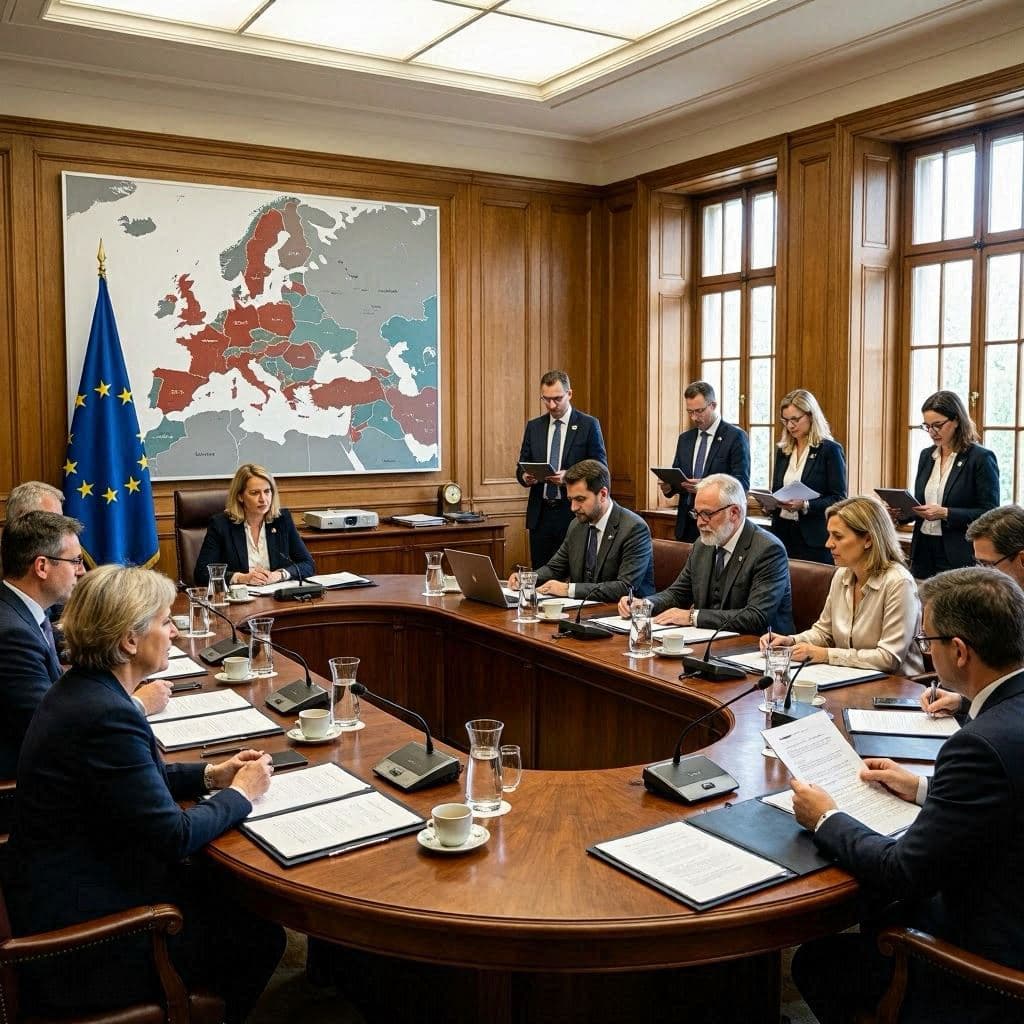
AI-generated image disclaimer: This illustration was created using artificial intelligence for editorial visualization and does not depict an actual European Union meeting.
Source Verification Check: Reuters, Council of the European Union
Note: This article was published on BanxChange.com and is powered by the BXE Token on the XRP Ledger. For the latest articles and news, please visit BanxChange.com