
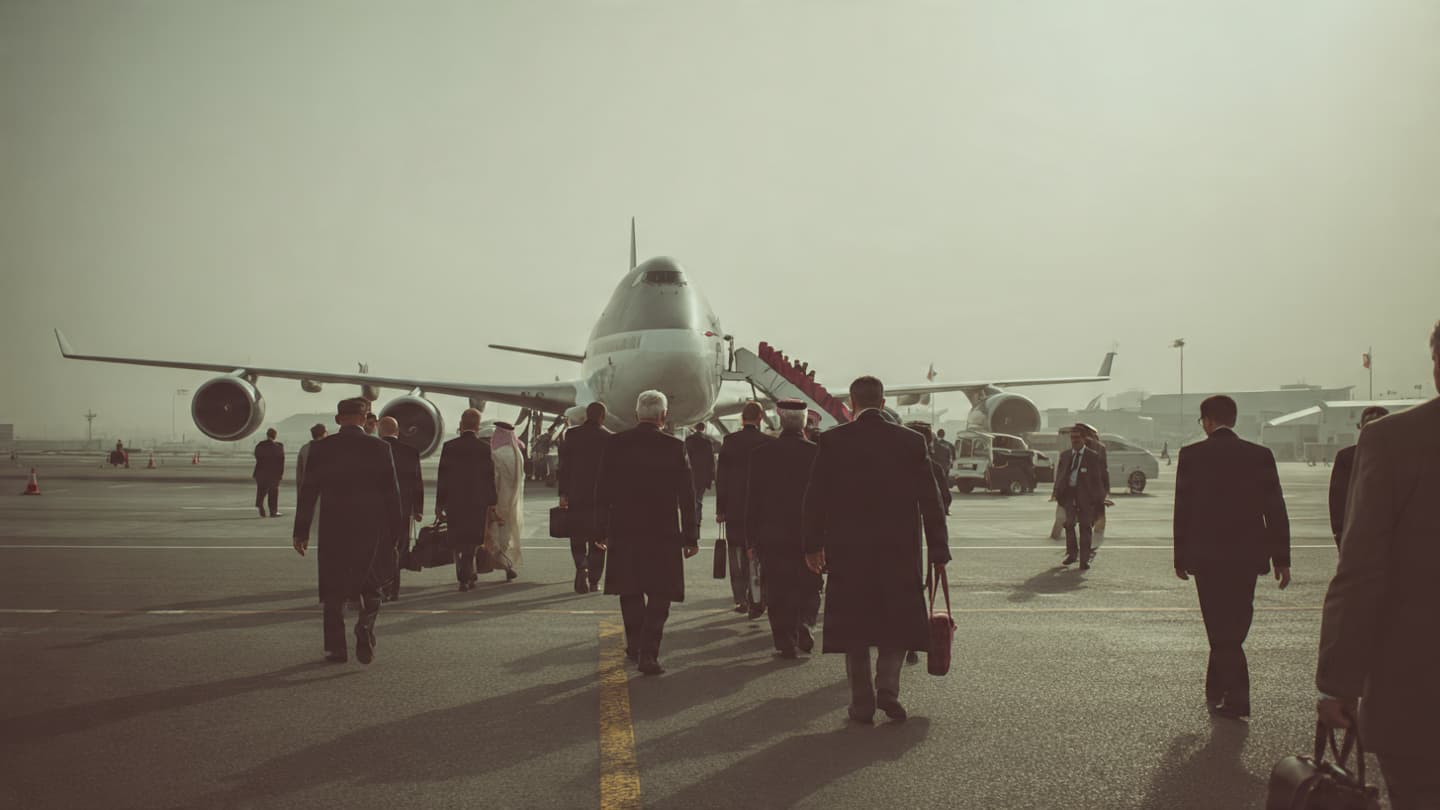
Diplomacy often arrives quietly, even when the world has grown loud with uncertainty. In moments shaped by military tension and anxious headlines, the image of negotiators stepping off aircraft can carry the weight of something larger than politics itself — the possibility that conflict may still bend toward conversation. As reports emerged that senior Iranian negotiators had arrived in for peace discussions, attention once again turned toward the fragile architecture of Middle Eastern diplomacy.
The reported talks come amid heightened regional tensions involving and international powers. Qatar has frequently positioned itself as a mediator in sensitive negotiations across the region, maintaining diplomatic channels with multiple governments and political actors.
Officials familiar with the discussions indicated that the meetings were expected to focus on de-escalation, security arrangements, and broader efforts to prevent further military confrontation. While few details were publicly confirmed, the arrival of senior negotiators signaled that diplomatic engagement remained active despite the tense atmosphere.
Regional conflicts often unfold in layers, combining military, economic, and political pressures that stretch far beyond national borders. Analysts noted that even preliminary dialogue can influence energy markets, international alliances, and humanitarian planning throughout the Middle East.
Qatar’s role in facilitating negotiations has expanded over the past decade. The Gulf nation has hosted talks involving ceasefire efforts, hostage negotiations, and broader diplomatic outreach, becoming an increasingly important venue for indirect communication between rival powers.
Observers cautioned that peace negotiations involving Iran have historically faced complex obstacles, including disagreements over sanctions, military activity, and regional influence. Previous rounds of diplomacy have often alternated between cautious optimism and periods of renewed confrontation.
Still, the movement toward dialogue reflected a recognition shared by many governments that prolonged instability carries heavy costs. Energy markets remain sensitive to developments in the Gulf, while neighboring countries continue monitoring the situation with concern over potential spillover effects.
As negotiators met behind closed doors in Doha, international attention followed closely. Whether the discussions produce immediate agreements or merely open the door to further talks, the gathering itself underscored a familiar truth in global affairs: even in periods of deep tension, diplomacy rarely disappears entirely.
AI Image Disclaimer: Certain visuals associated with this article were created using AI-assisted newsroom illustration tools.
Sources: Reuters, Al Jazeera, Associated Press, BBC News, Bloomberg
Note: This article was published on BanxChange.com and is powered by the BXE Token on the XRP Ledger. For the latest articles and news, please visit BanxChange.com