
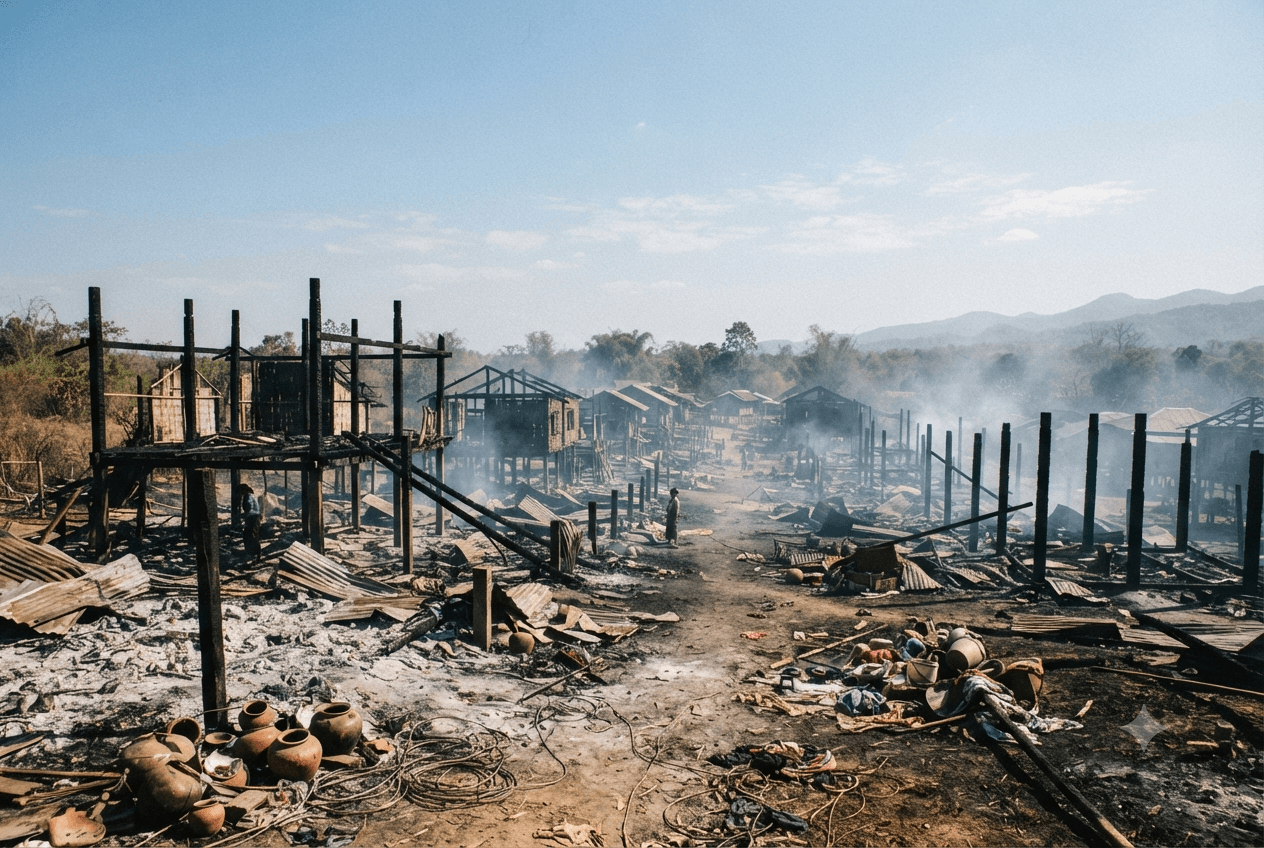
Sagaing Region, Myanmar—A large-scale military offensive on July 9, 2026, resulted in a fire that consumed dozens of homes in a rural village. Residents fled into the surrounding fields as flames spread rapidly through the timber and thatch structures. The blaze broke out shortly after government infantry moved into the area to engage local resistance forces. By mid-afternoon, the center of the village was reduced to ashes and smoldering ruins.
Eyewitnesses reported that troops arrived early in the morning, prompting a brief but intense skirmish. Following the withdrawal of the resistance fighters, the soldiers remained in the village for several hours. Fires were seen erupting in multiple locations simultaneously, leading many displaced villagers to conclude that the destruction was a deliberate act of arson. This pattern of damage has become a common outcome in regions targeted by recent government sweeps.
The displaced population has now retreated to nearby makeshift camps in the jungle. They lack clean water, food, and adequate shelter against the onset of the rainy season. Local community leaders are struggling to account for all families, as the evacuation happened in extreme haste. Many residents report losing all their belongings, including tools and stored grain, in the fire.
Military spokespeople have not commented on the destruction of civilian property during this operation. Official narratives instead emphasize the success of the mission in securing the area from armed groups. There is no mention of the civilian families who now face an uncertain future in the wilderness. The discrepancy between the state’s account and the visible reality on the ground remains vast.
Regional NGOs are attempting to deliver emergency aid to the displaced, but military checkpoints are preventing the passage of supplies. Trucks loaded with tarpaulins and rice have been turned back at the edge of the district. The humanitarian crisis is deepening as the government maintains strict control over movement into the burned-out zone. Aid groups warn that the lack of resources will lead to severe shortages within days.
The fire serves as a stark example of the secondary costs of the ongoing civil conflict. While the direct toll of combat is high, the destruction of civilian infrastructure is causing long-term damage to the region’s stability. Entire communities are being forced to relocate permanently, contributing to a growing wave of internal refugees. The village, which once sustained a small local economy, is now effectively erased.
Neighbors from adjacent villages have tried to provide food, but they fear attracting the attention of military patrols. The fear of reprisal is widespread, silencing those who might otherwise speak out about the fire. Information from the ground remains sparse as mobile networks in the area were disabled during the military advance. A profound sense of isolation permeates the site of the destruction.
Recovery of the village appears impossible in the near term. The scorched area remains under the occupation of military forces, preventing residents from returning to salvage any remaining items. Families are instead looking for long-term options for shelter, knowing that their previous lives have been dismantled. The cycle of fire and displacement continues to define the reality for this rural population.
Note: This article was published on BanxChange.com and is powered by the BXE Token on the XRP Ledger. For the latest articles and news, please visit BanxChange.com