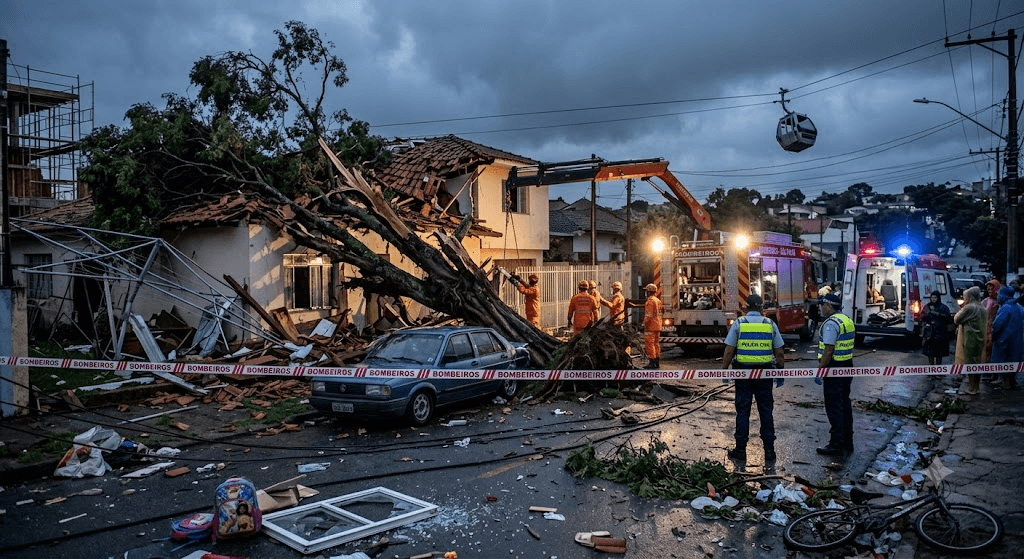
RIO DE JANEIRO, BRAZIL — A ferocious weather system packing intense, destructive gale-force winds swept through southeastern Brazil on Wednesday, July 29, 2026 leaving at least five people dead and triggering widespread infrastructural chaos across Rio de Janeiro and São Paulo state.
The sudden tempest, driven by a powerful oceanic cold front, caught entire metropolitan regions off guard right before the morning rush hour. The resulting disaster left thousands stranded, cut electricity to numerous neighborhoods, and brought the industrial heartland's public transit networks to an absolute standstill.
The violent winds, which exceeded speeds of 100 km/h in Rio and topped 120 km/h in parts of São Paulo, proved fatal in several separate incidents.
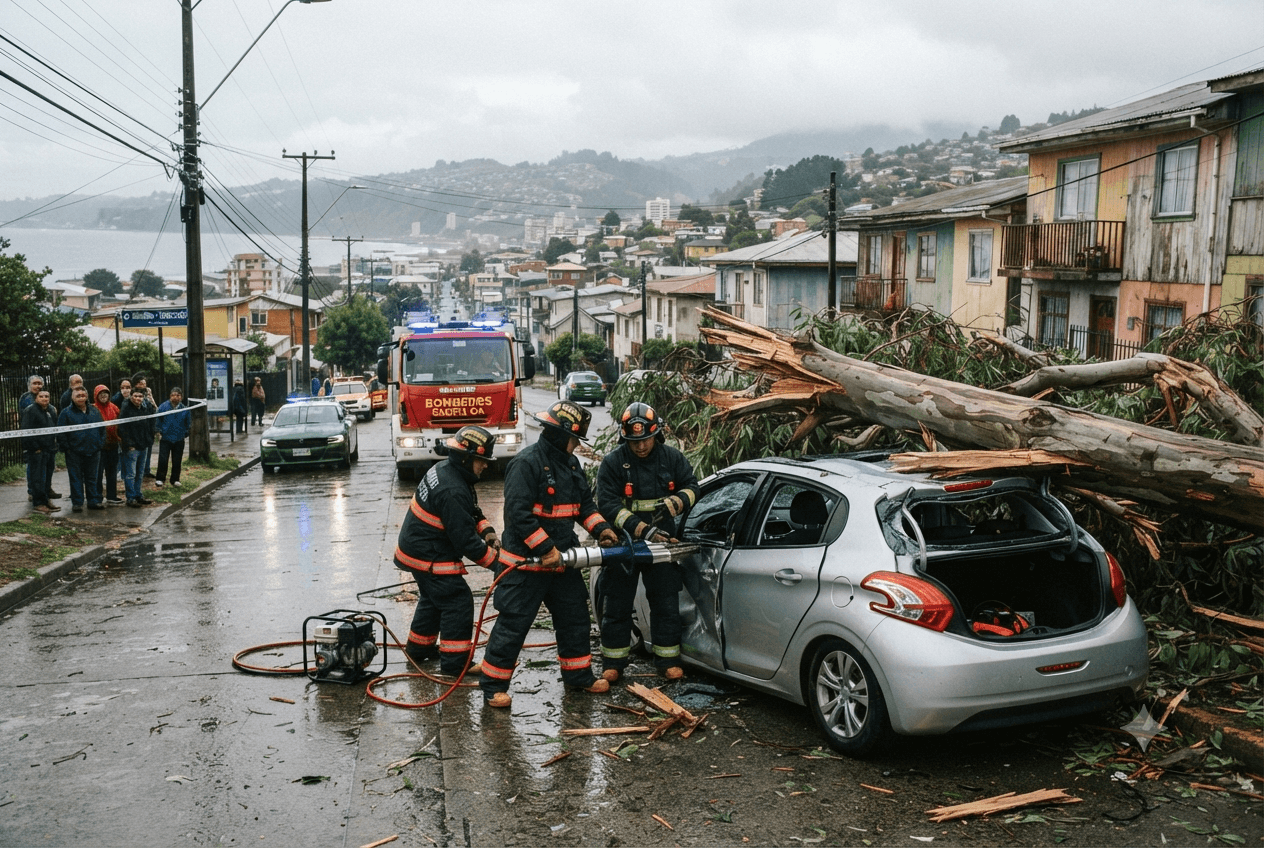
The severe weather claimed three lives across São Paulo state, with destructive falling trees fatally crushing motorists inside their vehicles in both the major port city of Santos and in Sorocaba. Off the coast of São Sebastião, the violent storm proved equally tragic as a fisherman lost his life when his boat capsized in the churning, wind-whipped waters.
Meanwhile, in Rio de Janeiro, the state capital's central Santa Teresa district became the site of further tragedy. Two individuals were killed simultaneously when a heavy residential wall collapsed under the sheer pressure of the wind gusts. Local emergency services also reported a massive search operation for an additional fisherman who went missing during the peak of the storm.
The sheer force of the gales triggered an immediate emergency response as vital infrastructure buckled under the strain. In the city of Rio de Janeiro, commuting ground to a halt as falling trees and debris forced the complete suspension of operations across all three of the city’s major subway lines.
Air and maritime transit fared no better. Takeoffs and landings were severely disrupted at several major domestic and international hubs, including Rio's Santos Dumont airport and Galeão International Airport, where 74 km/h gusts forced multiple incoming flights to divert. On the coast, passenger ferry services were halted entirely, and operations at the Port of Santos—Latin America’s largest shipping hub—were forced into a temporary lockdown to prevent catastrophic accidents.
Social media and local news broadcasts captured surreal, harrowing footage of the storm's peak, showing massive construction scaffolds swaying violently, boats being tossed helplessly at sea, and an occupied cable car cabin rocking precariously high above Rio.
Fire departments across both states have been overwhelmed by emergency dispatches. Within the first several hours of the storm, rescue teams in Rio alone responded to dozens of structural collapses, uprooted trees, and water-logged rescues.
Though the cold front initially slammed into the southern state of Rio Grande do Sul on Tuesday before migrating north, meteorologists warn that the danger is far from over. São Paulo's state government has activated and maintained a specialized crisis cabinet as forecasts indicate the extreme front will persist, bringing heavy rains, hail, and a rapidly escalating risk of flash flooding across the region.
Note: This article was published on BanxChange.com and is powered by the BXE Token on the XRP Ledger. For the latest articles and news, please visit BanxChange.com