ACCRA, Ghana — Torrential rains and devastating flash floods have swept across the coastal regions of West Africa, leaving a trail of destruction and a soaring death toll in both Ivory Coast and Ghana. Days of relentless downpours have triggered widespread flooding and severe mudslides, submerging entire communities and overwhelming emergency rescue services.
In Ivory Coast, the economic capital of Abidjan has borne the brunt of the extreme weather. Government officials have confirmed dozens of fatalities across the country since the rainy season intensified. Landslides fueled by unstable, saturated earth completely leveled residential homes in the densely populated municipalities of Yopougon and Attécoubé.
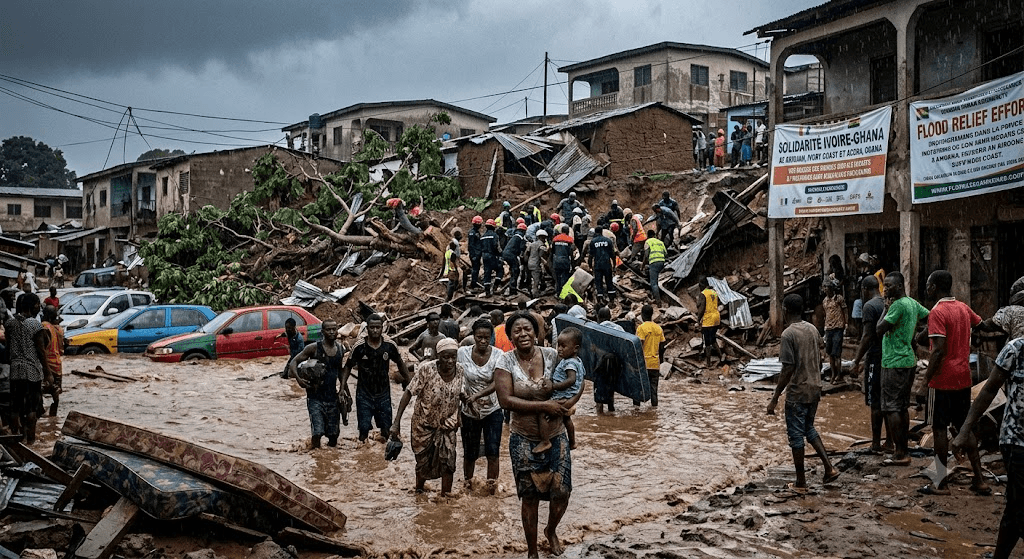
In Abidjan's Mossikro neighborhood, a particularly devastating landslide trapped multiple residents beneath heavy debris and mud. Rescue teams and local volunteers have been working through treacherous conditions, digging through the rubble to locate missing individuals as the ground remains highly unstable.
Neighboring Ghana has faced similar devastation, with at least 12 confirmed deaths centered primarily around the capital city of Accra and the nearby city of Tema. Floodwaters rapidly inundated low-lying areas, turning major urban thoroughfares into raging rivers and submerging multi-story buildings.
Among the victims were a mother and her child who were swept away by fast-moving flash floods in the Achimota-Agbogbloshie district. Social media footage from the capital captured harrowing scenes of residents forming human chains and swimming through chest-deep waters to rescue trapped neighbors, while hundreds of vehicles sat completely abandoned on flooded roads.
The sheer scale of the flooding has severely strained local emergency response units. The Ghana National Fire Service reported that access to the worst-hit zones has been heavily restricted by deep water, forcing authorities to request the deployment of military forces to assist in evacuations and conduct deep-water rescues. Over 400 stranded individuals have been successfully pulled from inundated structures so far.
Government leaders in both nations have attributed the escalating crisis to the compounding effects of climate change—which has brought unprecedentedly high single-day rainfall metrics—alongside urban challenges, such as inadequate drainage systems and unauthorized construction along natural waterways.
The humanitarian and environmental crisis is expected to worsen. The regional meteorological agencies have issued urgent advisories warning residents to prepare for continued heavy rainfall along the Gulf of Guinea coast. Emergency officials are pleading with those living in flood-prone lowlands and precarious Cliffside settlements to evacuate immediately to temporary shelters as rescue operations continue.
Note: This article was published on BanxChange.com and is powered by the BXE Token on the XRP Ledger. For the latest articles and news, please visit BanxChange.com