
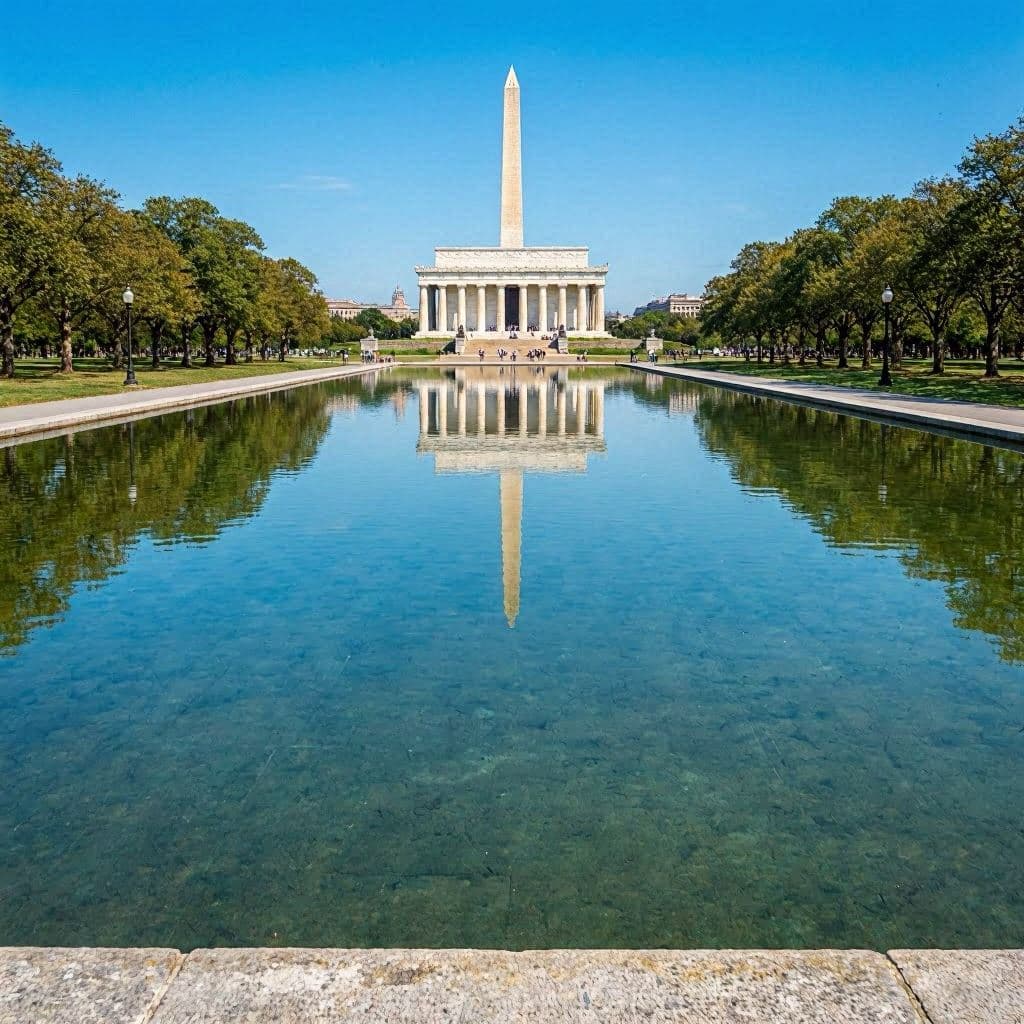
The Lincoln Memorial Reflecting Pool is more than a body of water; it is a mirror to the nation’s history, reflecting the Washington Monument and the sky above in a serene tableau of civic pride. For decades, it has served as a place of contemplation and gathering, its waters undisturbed by anything other than wind and rain. Yet, this symbol of tranquility recently became the center of a legal storm when David Hearn, a former U.S. Olympic canoeist, was indicted for allegedly damaging the pool’s newly installed liner. The incident, which began with a simple touch, has escalated into a felony charge, raising questions about intent, preservation, and the weight of symbolic spaces in public discourse.
Body: David Hearn, 67, a three-time Olympian who competed in canoe slalom, was arrested in June after being seen reaching into the Reflecting Pool. According to prosecutors, Hearn pulled at a detached section of the pool’s blue liner, causing damage to the multi-million dollar renovation project. The indictment charges him with destruction of government property, a felony that could carry significant prison time. The case has drawn national attention, not only because of Hearn’s athletic background but also due to the high-profile nature of the landmark involved.
Hearn has denied any malicious intent, stating that he merely touched the loose material to see what it felt like, describing it as a moment of curiosity rather than vandalism. He claimed he did not peel or break anything, suggesting that the damage may have been pre-existing or minimal. His defense argues that the reaction from authorities was disproportionate, turning a minor infraction into a major criminal case. This perspective highlights the tension between individual actions and the strict protection afforded to national monuments.
The Reflecting Pool had recently undergone a major restoration, funded by private donations and federal resources, to restore its clarity and structural integrity. The new liner, designed to be more durable and visually appealing, represents a significant investment in maintaining the National Mall’s beauty. Any damage to this infrastructure is taken seriously by the National Park Service, which is tasked with preserving these sites for future generations. The agency’s zero-tolerance approach to vandalism underscores the importance of protecting public heritage.
Political figures have weighed in on the incident, with some using it to highlight broader concerns about respect for national symbols. Former President Donald Trump, among others, has spoken out against vandalism of public monuments, framing such acts as attacks on American values. This political layer adds complexity to the case, transforming a local legal matter into a topic of national debate. The intersection of law, politics, and public sentiment creates a charged atmosphere around Hearn’s trial.
Legal experts note that the severity of the charge depends on the extent of the damage and the cost of repairs. If the damage is deemed significant, the felony charge stands; otherwise, it might be reduced to a misdemeanor. The outcome will likely hinge on forensic evidence and testimony regarding the condition of the liner before and after Hearn’s interaction. The court’s decision will set a precedent for how similar incidents at national parks are handled in the future.
Public opinion remains divided. Some view Hearn as a victim of overzealous prosecution, while others believe that strict enforcement is necessary to deter future vandalism. The case serves as a reminder of the delicate balance between personal freedom and collective responsibility. As the legal proceedings continue, the focus remains on establishing the facts and ensuring justice is served fairly.
Closing: David Hearn’s indictment for damaging the Lincoln Memorial Reflecting Pool highlights the serious consequences of interfering with national landmarks. Whether viewed as curiosity or vandalism, the act has triggered a significant legal response. The case underscores the importance of preserving public spaces and respecting the laws that protect them.
AI Image Disclaimer: Please note that the visual illustrations accompanying this article are AI-generated representations intended to contextualize the discussion on public landmarks and legal issues.
Sources: The Washington Post Fox News People Magazine Forbes
Note: This article was published on BanxChange.com and is powered by the BXE Token on the XRP Ledger. For the latest articles and news, please visit BanxChange.com