
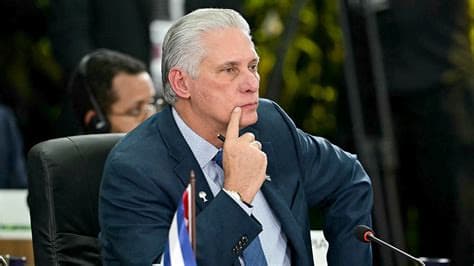
Cuban President Miguel Díaz-Canel announced on March 13, 2026, that his government is in initial negotiations with the Trump administration to address ongoing disputes between the two nations. However, he expressed concerns about the sincerity of these talks, suggesting that the U.S. is not negotiating in good faith.
Díaz-Canel highlighted a particularly dire situation in Cuba, noting that no fuel has entered the country in three months. The lack of fuel has caused escalating blackouts and destabilized the electricity grid, which heavily relies on imported oil. The U.S.'s strict sanctions and embargoes have greatly contributed to this crisis, leading to a collapse of Cuba’s energy infrastructure.
President Trump has threatened further actions, including tariffs on countries that provide oil to Cuba, and labeled the situation there as indicative of a failing regime. U.S. officials speculate that the Cuban government may fall under pressure from U.S. sanctions, but thus far, Cuba has maintained its grip on power.
Despite the critical circumstances, discussions continue, with the U.S. advocating that Cuba must make a deal before it is too late. The complexities of these negotiations are compounded by the historical context of U.S.-Cuba relations, which have been marred by mistrust and antagonism since the 1959 Cuban Revolution.
Looking ahead, the outcome of these talks remains uncertain, as both governments navigate the tricky waters of international diplomacy amidst internal pressures.
Note: This article was published on BanxChange.com and is powered by the BXE Token on the XRP Ledger. For the latest articles and news, please visit BanxChange.com