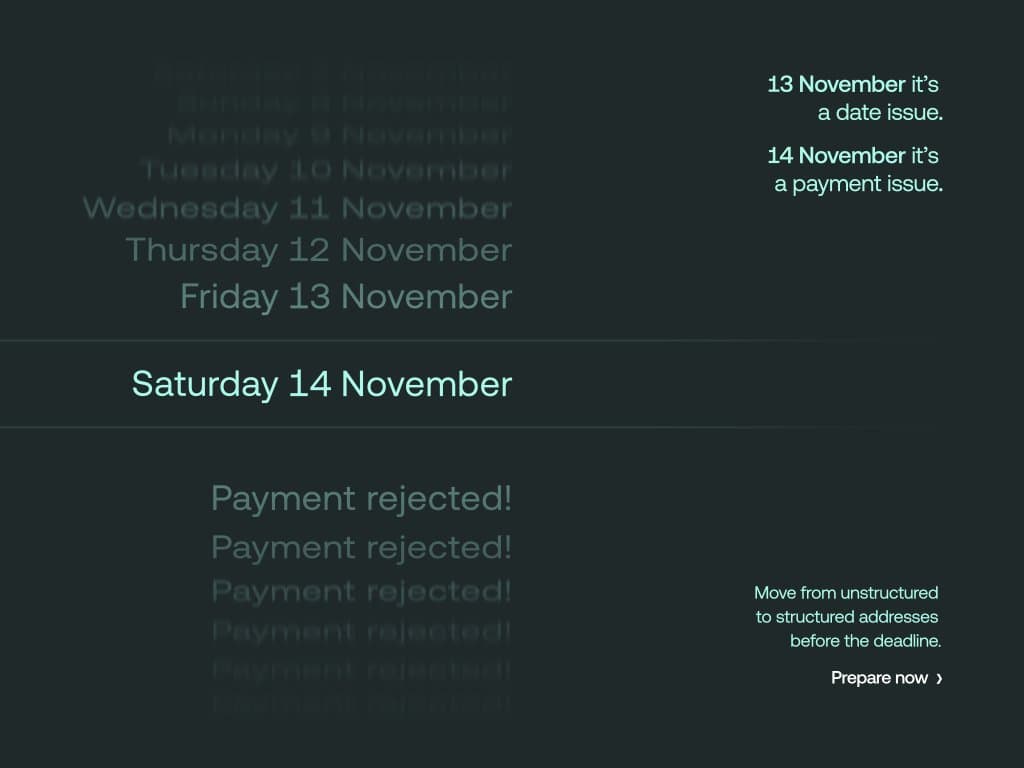
The global payments industry is moving toward a new standard in which structured address information replaces traditional free-form text fields in cross-border transactions. Financial institutions, payment providers, and corporate treasury departments are increasingly preparing for ISO 20022 requirements designed to improve data quality, compliance efficiency, and transaction transparency. For decades, payment messages relied heavily on unstructured information. While flexible, these formats often created challenges for automated processing because institutions interpreted address details differently. Small inconsistencies in spelling, abbreviations, or formatting could trigger manual reviews, compliance alerts, or transaction delays. Structured data seeks to solve these problems by requiring specific information to be entered into dedicated fields. Instead of placing an entire address in a single text box, separate fields are used for city, postal code, country, street information, and other identifiers. This enables systems across multiple jurisdictions to read and validate information consistently. Banks argue that structured data significantly increases straight-through processing rates, reducing operational costs and minimizing human intervention. Compliance teams also benefit because sanctions screening and anti-money laundering checks become more accurate when information is standardized. The transition is particularly important as payment volumes continue to rise and regulators demand greater transparency throughout financial networks. Structured data can help institutions identify errors earlier while improving the reliability of transaction monitoring systems. Corporate treasurers are being encouraged to review customer databases and payment infrastructure before implementation deadlines. Organizations that delay modernization risk payment disruptions, rejected transactions, and increased operational friction. The broader transformation reflects the financial sector's ongoing digitization. As payments become faster and more interconnected, the quality of underlying data becomes increasingly important. Structured information may appear like a technical change, but its impact could extend across global commerce, banking operations, and regulatory compliance for years to come.
Published by Banx Network. This article is part of the Banx decentralized media programme, powered by the BXE token on the XRP Ledger.