
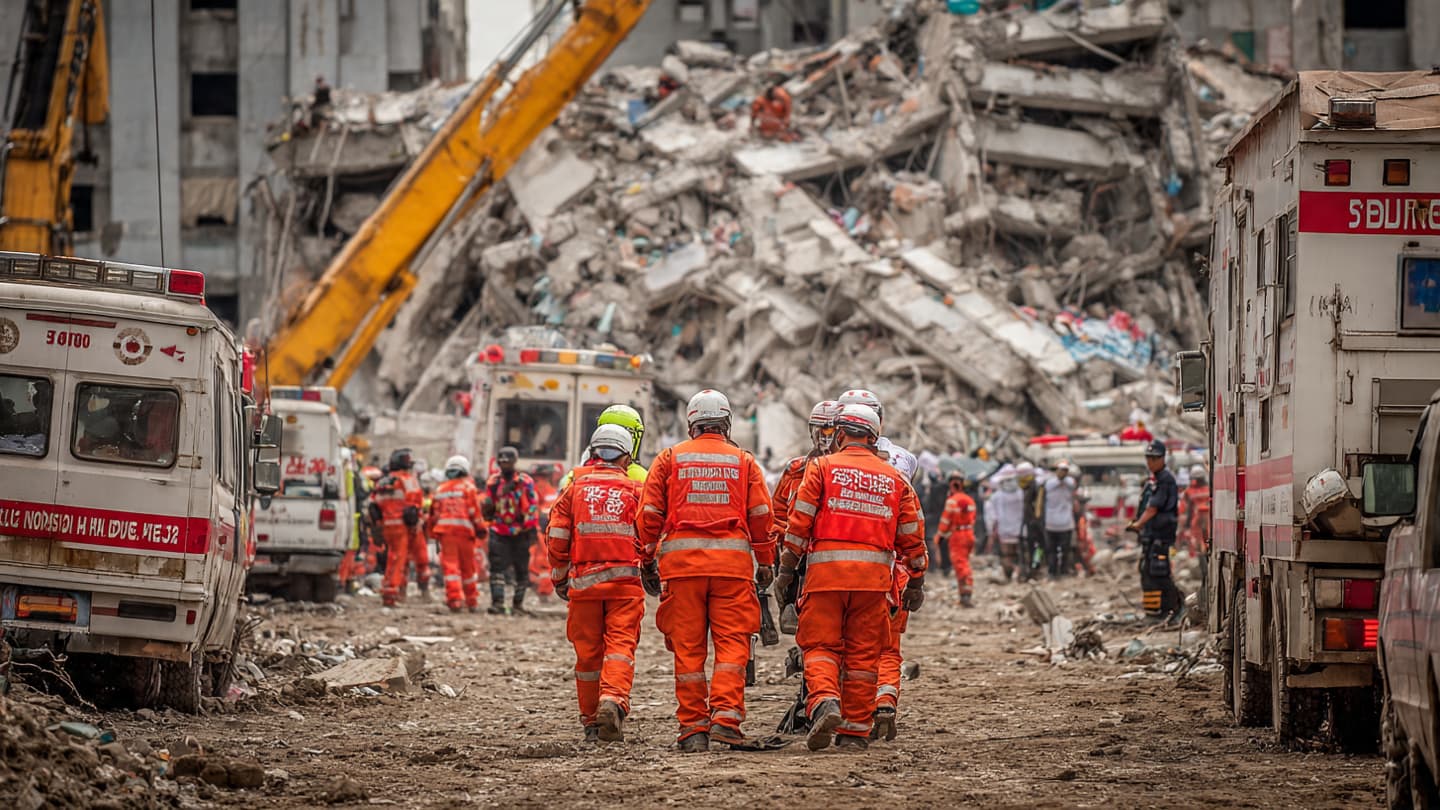
Cities are built upon repetition. Doors open each morning, elevators rise quietly, and crowded streets move with familiar rhythm. Yet in moments of structural failure, those ordinary patterns can disappear within seconds. In the Philippines, emergency crews rushed to the scene after a building collapsed, trapping at least 30 people beneath concrete and debris.
Authorities reported that rescue operations began immediately as firefighters, medical teams, and volunteers worked carefully through unstable rubble. Witnesses described loud cracking sounds before sections of the structure gave way, sending dust across nearby streets and causing panic among residents and workers in the surrounding area.
The exact cause of the collapse was not immediately confirmed. Engineers and investigators began assessing structural conditions while officials focused first on rescue operations and the safety of nearby buildings. Heavy equipment was brought to the site as teams searched for survivors trapped beneath fallen concrete slabs.
Building collapses often expose broader concerns involving construction standards, urban planning, maintenance practices, and rapid development pressures. In densely populated cities, aging infrastructure and uneven enforcement of safety regulations can increase risks for both workers and residents.
Rescue operations remained delicate because unstable debris can shift unexpectedly during recovery efforts. Emergency personnel reportedly used specialized tools and listening devices to detect signs of movement or trapped individuals within the wreckage. Families gathered nearby, waiting anxiously for updates from officials.
The Philippines regularly faces infrastructure challenges connected to rapid urban growth, natural disasters, and population density in major metropolitan areas. Authorities have increasingly emphasized the importance of building inspections and emergency preparedness as cities continue expanding.
For survivors and witnesses, the emotional impact of structural disasters often extends far beyond the immediate event. Homes, workplaces, and daily routines can disappear instantly, leaving communities struggling with uncertainty while rescue efforts continue.
Officials later confirmed that search and rescue operations would continue around the clock until all trapped individuals were accounted for. Investigators are expected to review the building’s construction history and safety compliance as emergency teams remain focused on recovery and survivor assistance.
AI Image Disclaimer: Some images accompanying this report were AI-generated to illustrate urban rescue operations and structural collapse scenes.
Sources: Reuters, ABS-CBN News, Associated Press, BBC
Note: This article was published on BanxChange.com and is powered by the BXE Token on the XRP Ledger. For the latest articles and news, please visit BanxChange.com