
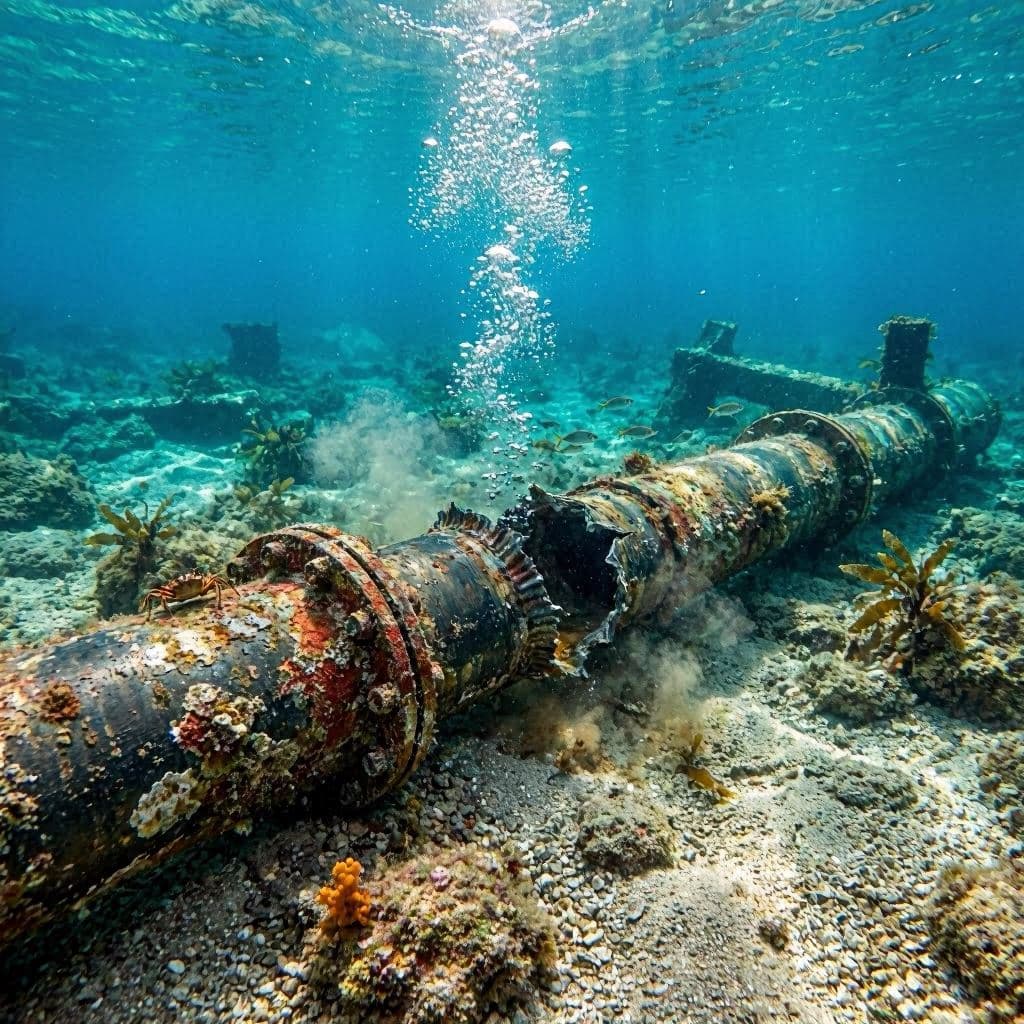
The seabed of the Baltic Sea holds the silent remnants of a geopolitical earthquake. When the Nord Stream pipelines were ruptured in September 2022, the resulting gas leaks sent shockwaves through Europe’s energy landscape and international relations. For months, speculation swirled regarding the perpetrators, with various theories pointing fingers at different state and non-state actors. Now, German prosecutors have announced a significant development in their investigation, stating that evidence points to Ukraine as having ordered the sabotage. This revelation adds a complex layer to the ongoing narrative of the war in Ukraine and its broader international implications.
Body: The announcement by the German Federal Prosecutor General’s Office is based on extensive forensic analysis and intelligence gathering. Investigators have traced the planning and execution of the attack to a group of individuals with ties to Ukraine. While the report does not explicitly accuse the Ukrainian government of direct involvement, it suggests that the operation was authorized by figures within the Ukrainian sphere. This distinction is crucial, as it differentiates between state-sponsored terrorism and actions by independent or semi-independent actors.
The sabotage of the Nord Stream pipelines was a major event that disrupted gas supplies from Russia to Europe, exacerbating the energy crisis triggered by the war. At the time, many Western nations condemned the act as a threat to critical infrastructure, though no immediate accusations were made against Ukraine. The new findings challenge previous assumptions and may strain diplomatic relations, particularly between Germany and Ukraine, which has been a key ally in the conflict against Russia.
Ukrainian officials have strongly denied any involvement in the attacks, labeling the allegations as disinformation or a Russian propaganda effort. They argue that Ukraine has no motive to damage its relationship with European partners who provide crucial military and financial support. The denial highlights the sensitivity of the issue and the potential for political fallout. Trust between allies is fragile, and such accusations can undermine the unity required to sustain long-term support.
The investigation has been lengthy and complex, involving multiple countries and agencies. The technical difficulty of accessing and analyzing evidence from the deep sea has slowed progress, but recent breakthroughs have allowed prosecutors to build a more concrete case. The use of specialized diving equipment and explosive devices was identified, linking the operation to specific logistical networks. These details provide a clearer picture of how the attack was carried out.
International reaction to the news has been cautious. Other European nations are reviewing their own intelligence and assessing the implications for regional security. The focus remains on maintaining stability and ensuring that the war in Ukraine does not spiral into a broader conflict. Diplomats are working to manage the tensions arising from the allegations, emphasizing the need for evidence-based conclusions and fair legal processes.
The legal proceedings against the suspects are expected to continue, with potential extradition requests and trials in Germany. The outcome will have significant legal and political ramifications, setting precedents for how such acts of sabotage are prosecuted in international law. It also raises questions about accountability and the rules of engagement in hybrid warfare.
As the story unfolds, it serves as a reminder of the hidden dimensions of modern conflict. Infrastructure attacks can have far-reaching consequences, affecting economies and alliances long after the initial explosion. Understanding the truth behind the Nord Stream blasts is essential for restoring trust and ensuring the security of critical energy supplies.
Closing: German prosecutors have indicated that Ukraine ordered the Nord Stream pipeline sabotage, based on new evidence. This development complicates diplomatic relations and highlights the complexities of the conflict. Investigations continue to establish full accountability and legal consequences.
AI Image Disclaimer: Please be aware that the visual aids in this piece are AI-generated interpretations designed to support the narrative of the investigation.
Sources: Reuters BBC News The New York Times Deutsche Welle
Note: This article was published on BanxChange.com and is powered by the BXE Token on the XRP Ledger. For the latest articles and news, please visit BanxChange.com