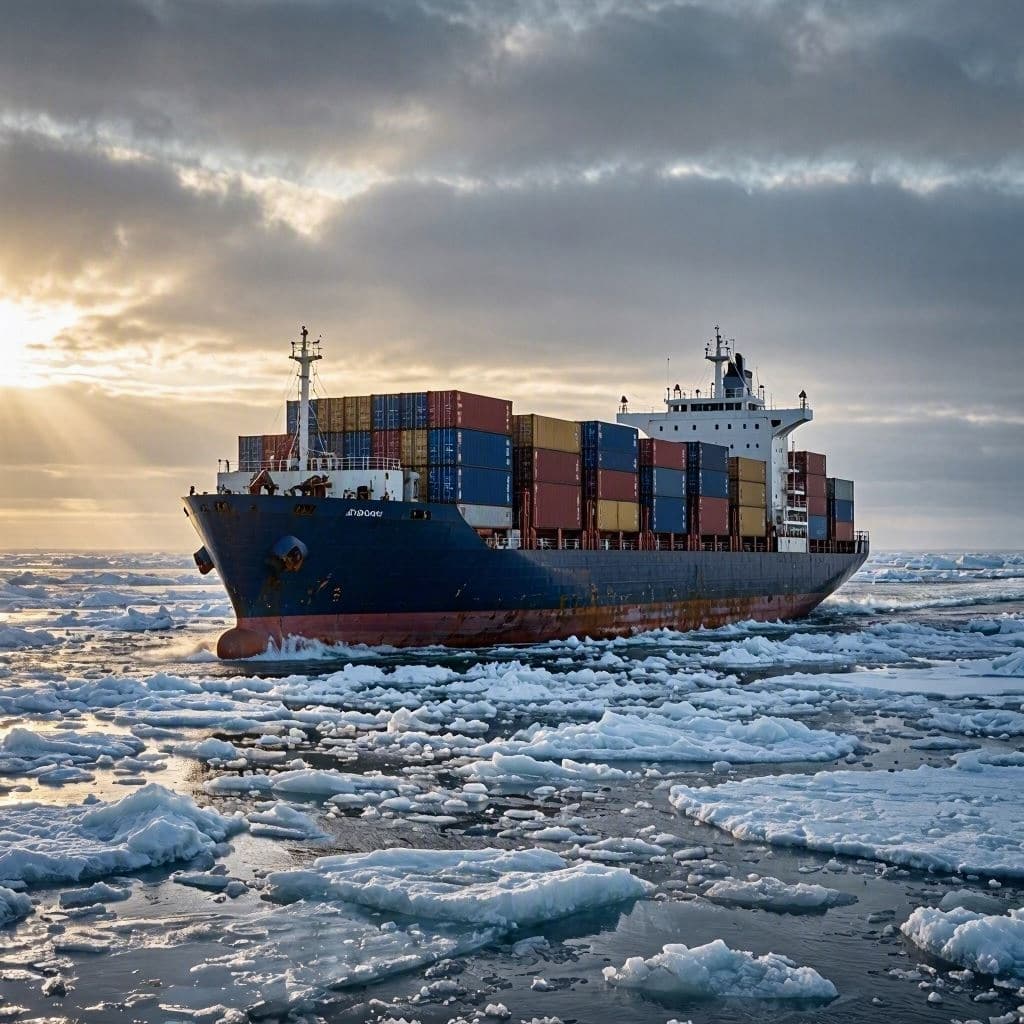
The Arctic, once a remote and inaccessible frontier, is becoming a new artery of global commerce. China has launched the first regular cargo shipping route through the Arctic Ocean, connecting Ningbo in eastern China to Felixstowe in the United Kingdom. This development invites reflection on the changing climate, the shifting dynamics of international trade, and the geopolitical implications of new maritime pathways. It is a moment where ice yields to opportunity, reshaping the map of global logistics.
The route, known as the "Ice Silk Road," follows Russia’s Northern Sea Route and reduces travel time between Asia and Europe by up to ten days compared to traditional Suez Canal passages. Speed defines advantage. Ice opens paths.
Operated by the Chinese shipping company Sea Legend, the service aims to provide a reliable alternative amid global supply chain uncertainties. The inaugural voyage took approximately 20 days, demonstrating the viability of the passage during the summer melting season. Reliability builds trust. Alternatives ensure resilience.
However, the route is not without challenges. Navigating icy waters requires specialized vessels and experienced crews, and the window for safe passage remains limited to the warmer months. Climate change, while enabling this route, also brings unpredictable weather patterns. Nature sets limits. Technology adapts.
Environmental concerns persist, as increased shipping traffic in the fragile Arctic ecosystem could accelerate melting and disrupt wildlife habitats. Critics argue that the short-term economic gains may come at a long-term ecological cost. Progress must balance profit. Ecology demands care.
Geopolitically, the route strengthens ties between China and Russia, raising questions among Western nations about influence in the High North. The Arctic is no longer just a scientific preserve but a strategic corridor for power and trade. Strategy shapes alliances. Trade influences politics.
As the first regular shipments arrive in Europe, the world watches to see if this new path will become a staple of global trade or remain a seasonal novelty. The hope is for sustainable practices and international cooperation in managing this emerging corridor. Cooperation ensures stability. Sustainability protects future.
China has launched the first regular cargo shipping route through the Arctic, connecting Asia to Europe via the Northern Sea Route. The initiative aims to reduce transit times but raises environmental and geopolitical concerns. The hope is for balanced development and international regulatory cooperation.
AI Image Disclaimer: Visuals associated with this article are AI-generated to illustrate the themes of global trade and Arctic navigation.
Sources: The Wall Street Journal BBC News CNN The Telegraph
Note: This article was published on BanxChange.com and is powered by the BXE Token on the XRP Ledger. For the latest articles and news, please visit BanxChange.com