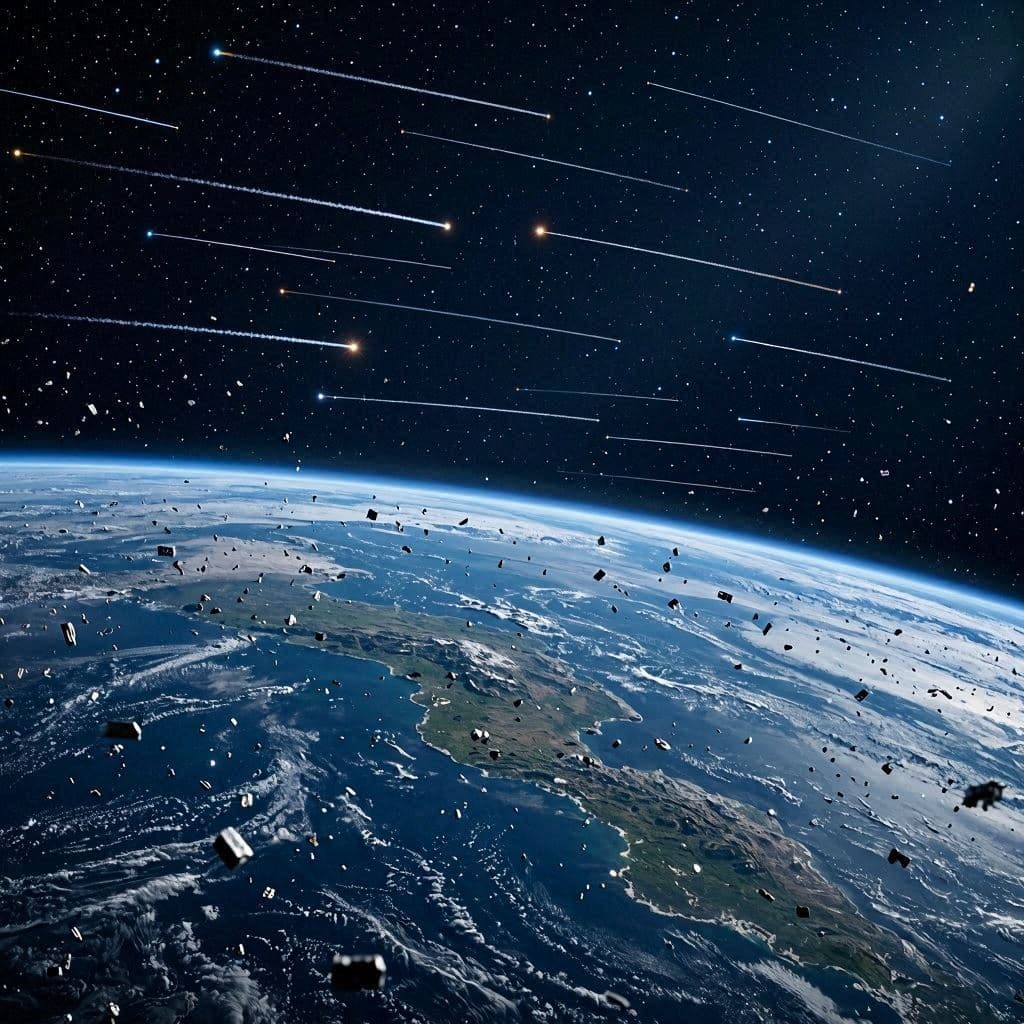
Above our heads, invisible to the naked eye, a silent traffic jam is forming in the vastness of space. Thousands of satellites orbit Earth, facilitating communication, navigation, and scientific discovery. But alongside these technological marvels travels a growing cloud of space debris—tiny fragments of old rockets, defunct satellites, and collision remnants. This accumulation poses a significant threat to the "satellite highway," particularly in Low Earth Orbit (LEO). It invites reflection on the unintended consequences of human innovation, the fragility of our digital infrastructure, and the urgent need for global cooperation to keep the skies clear.
Body: Space debris, often no larger than a paint chip, travels at speeds exceeding 17,000 miles per hour. At such velocities, even a tiny object can cause catastrophic damage to operational satellites. The risk of collision increases as more companies launch constellations of small satellites for internet and data services. This congestion creates a cascade effect known as the Kessler Syndrome, where one collision generates more debris, leading to further collisions. It is a self-perpetuating cycle that could render certain orbits unusable.
The economic implications are profound. Satellites are essential for global finance, weather forecasting, and emergency response. A major collision could disrupt these services, causing widespread chaos. Insurance costs for space missions are rising, and operators must invest in maneuvering capabilities to avoid debris. This adds complexity and expense to space operations, challenging the sustainability of the commercial space industry.
Efforts to monitor and track debris are underway. Agencies like NASA and the European Space Agency use radar and telescopes to catalog objects larger than ten centimeters. However, smaller pieces remain difficult to detect, yet they are equally dangerous. Improved tracking technologies and international data sharing are crucial for enhancing situational awareness. Knowledge is the first step toward mitigation.
Mitigation strategies include designing satellites to de-orbit at the end of their life cycles, ensuring they burn up in the atmosphere rather than becoming long-term hazards. Active debris removal technologies, such as robotic arms and nets, are being developed to capture and dispose of existing junk. These innovations represent a new frontier in space engineering, combining robotics with orbital mechanics.
International cooperation is essential for addressing this global challenge. Space is a common resource, and no single nation can solve the debris problem alone. Treaties and guidelines, such as those from the United Nations Office for Outer Space Affairs, provide a framework for responsible behavior. However, enforcement remains difficult, requiring a shift from voluntary compliance to binding agreements.
Public awareness of space sustainability is growing. As people rely more on satellite technology, understanding the risks becomes important. Educational initiatives help highlight the importance of keeping space clean for future generations. It is a shared responsibility that extends beyond scientists and engineers to policymakers and citizens.
The window for effective action is narrowing. As launches increase, the density of debris grows. Proactive measures today can prevent a crisis tomorrow. The goal is to ensure that space remains accessible and safe for all humanity. It is a vision of stewardship that mirrors our efforts on Earth.
Closing: In the end, the threat of space debris is a call to action for responsible innovation. It highlights the need to balance progress with preservation. As we look to the stars, the hope is that we will protect the orbital environment, ensuring that the satellite highway remains open for future exploration and connectivity.
AI Image Disclaimer: The visual representations associated with this article are AI-generated artistic interpretations designed to illustrate the themes of space technology and environmental stewardship.
Sources: NASA Orbital Debris Program Office European Space Agency (ESA) Scientific American
Published by Banx Network. This article is part of the Banx decentralized media programme, powered by the BXE token on the XRP Ledger.